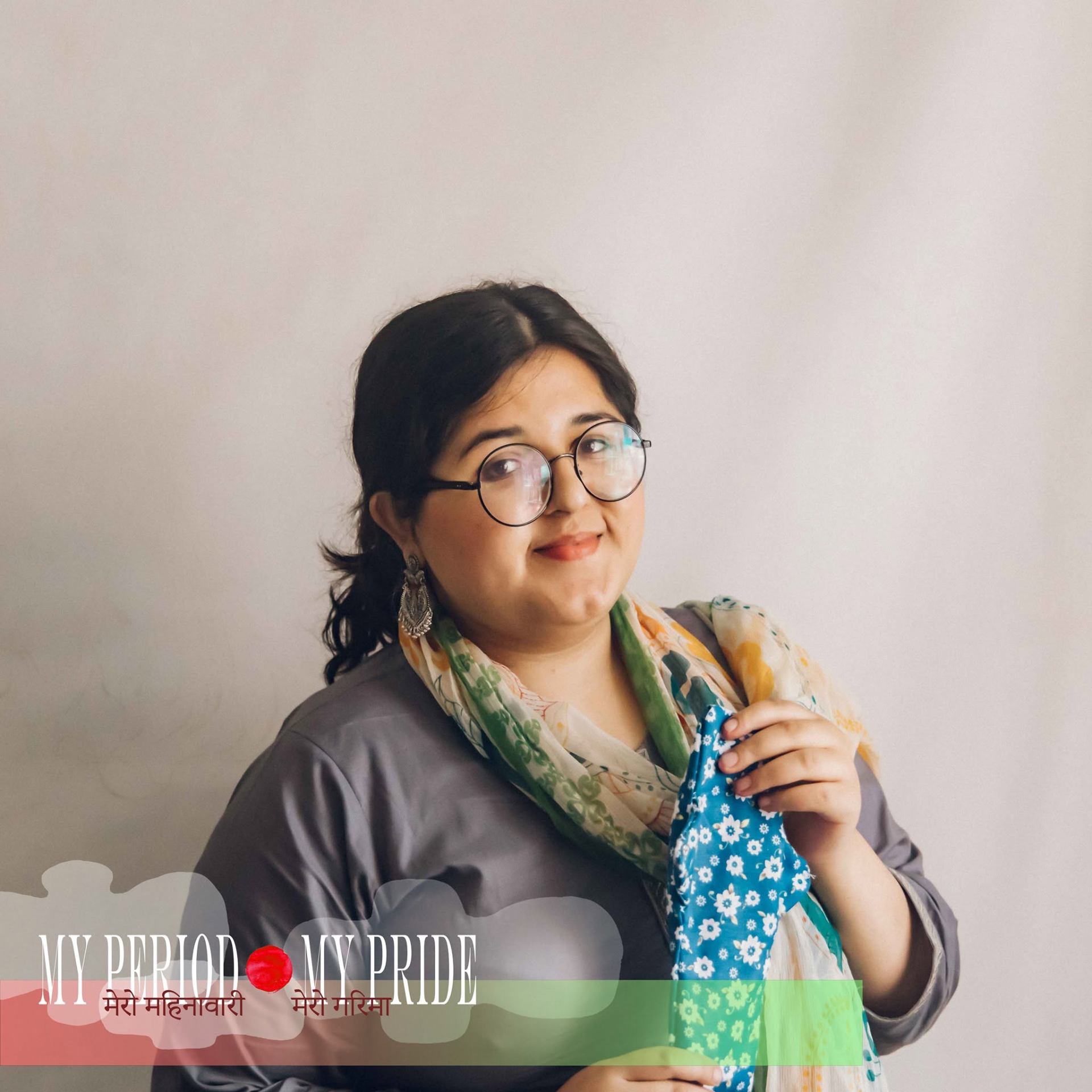
Residency · NexUS Culture Nepal · Kathmandu · 2019
The myth of sanctification.
An illustrated inquiry into the cultural and political mechanisms that decide which bodies are sanctified, and which are quietly disqualified.
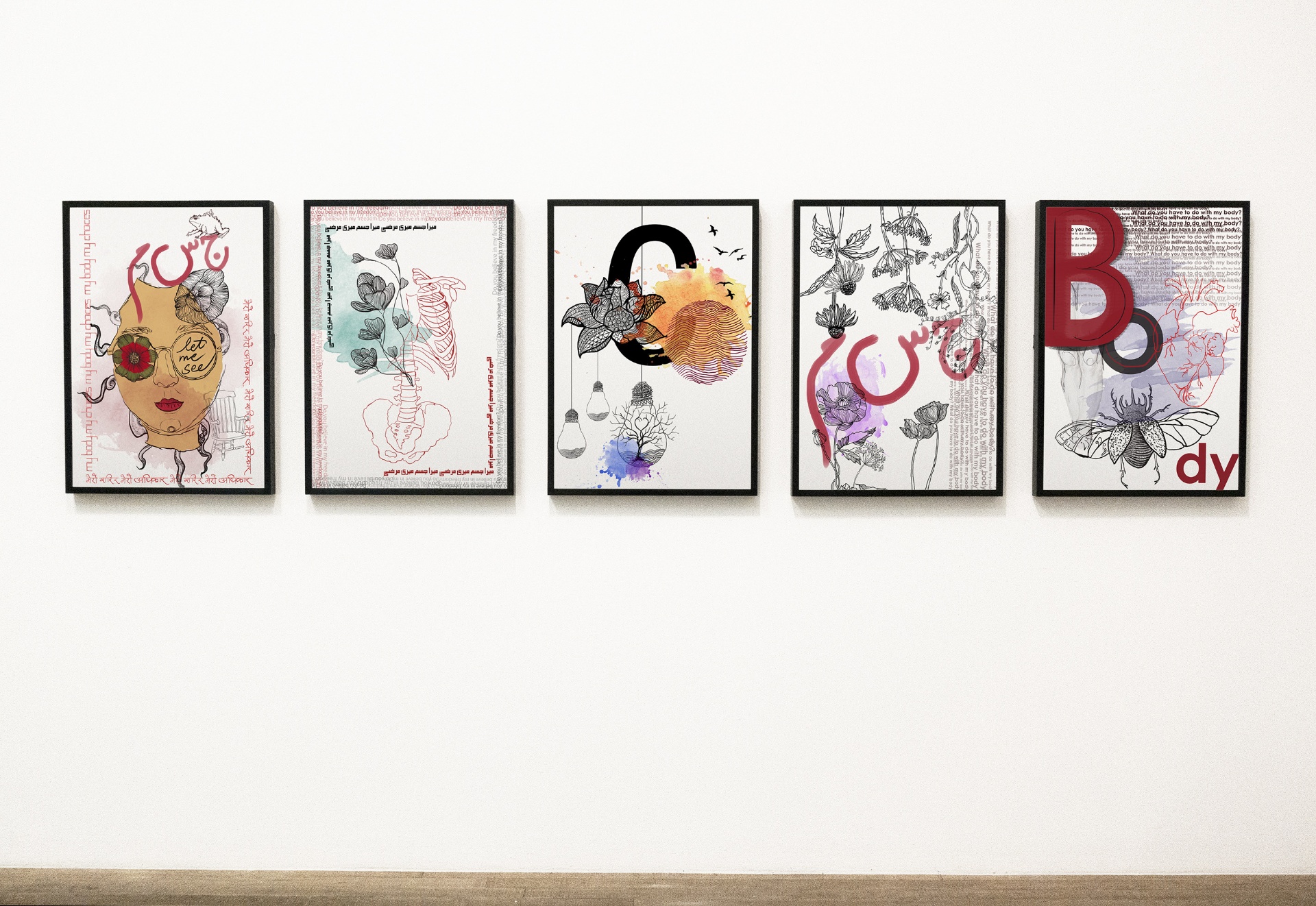
The final series, exhibited as six framed plates during the residency with NexUS Culture Nepal in Kathmandu.
- Role
- Artist in residence
- Context
- Residency · Kathmandu, Nepal
- Curator
- Ashmina Ranjit
- Collaborators
- Three Taiwanese & Nepali artists
- Medium
- Watercolour, ink, Photoshop, Illustrator
- Year
- 2019
Brief
Why do societal norms decide which bodies are 'acceptable', and how do those norms quietly produce inequality?
Myth of Sanctification began with a question I had carried for years: why does a culture sanctify some bodies and not others? Why does weight, skin colour, voice, posture or bloodline determine the dignity a person is given before they have spoken a single word?
The residency in Nepal became a chance to test that question in another context. I used illustration as inquiry: a slow, layered way to interrogate the hierarchies that privilege certain bodies while marginalising others, and to expose the cultural and political mechanisms that sustain those divisions.
Approach
Illustration as a way of asking questions, not just answering them.
I treated drawing as a research method. Each line was a way of staying with a question longer than conversation alone would allow: a way to hold complexity without resolving it too quickly.
Working alongside three Taiwanese and Nepali artists, I compared the body politics I had grown up with in Pakistan against what was named, normalised, or quietly enforced in Nepal. The vocabularies were different. The underlying architecture of acceptability was the same.
Early thinking
Notes from the sketchbook before anything became a plate.
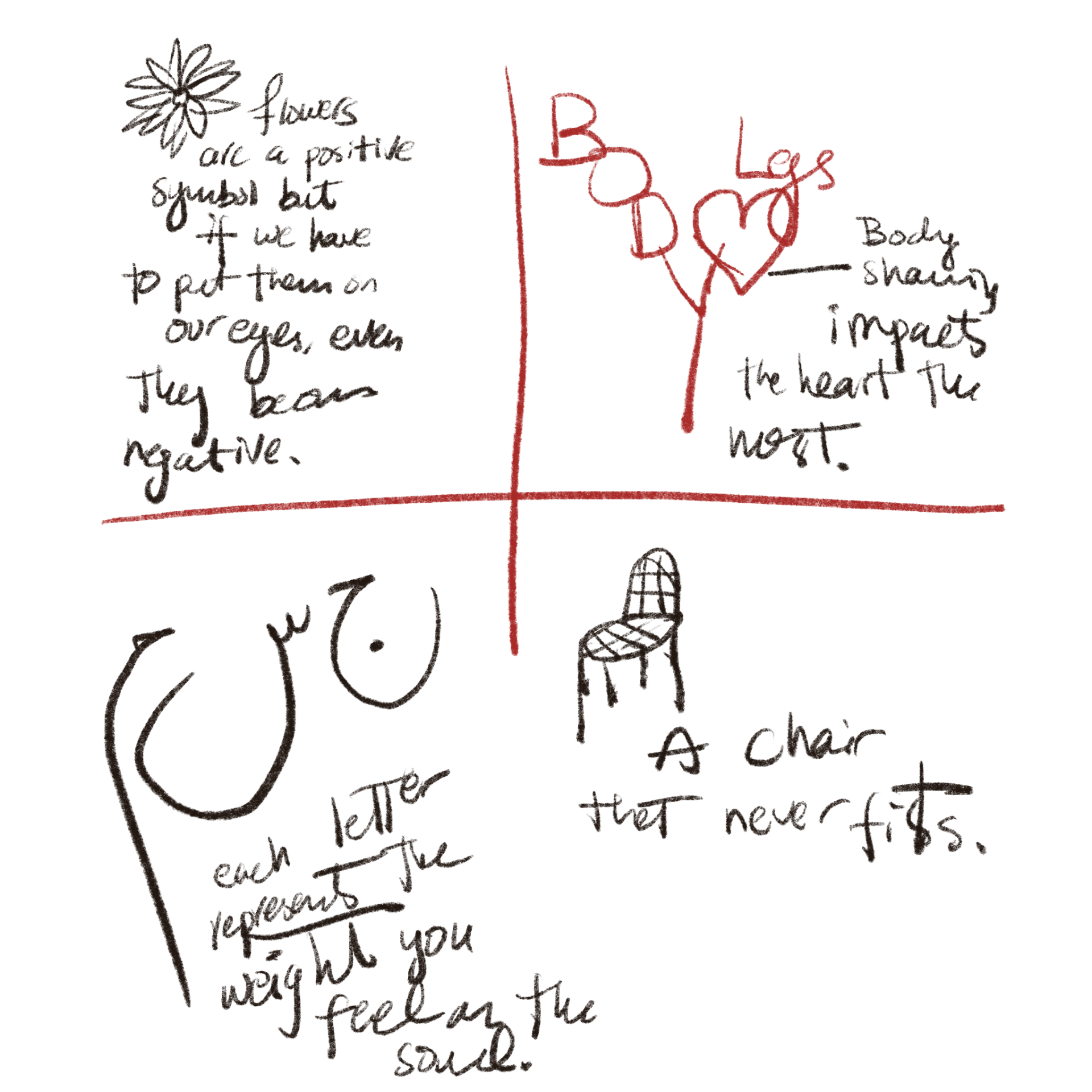
Before the workshop, I sat with the symbols I kept returning to: flowers, bodies, letters, chairs. Each one carried a contradiction worth pulling on.
Workshop
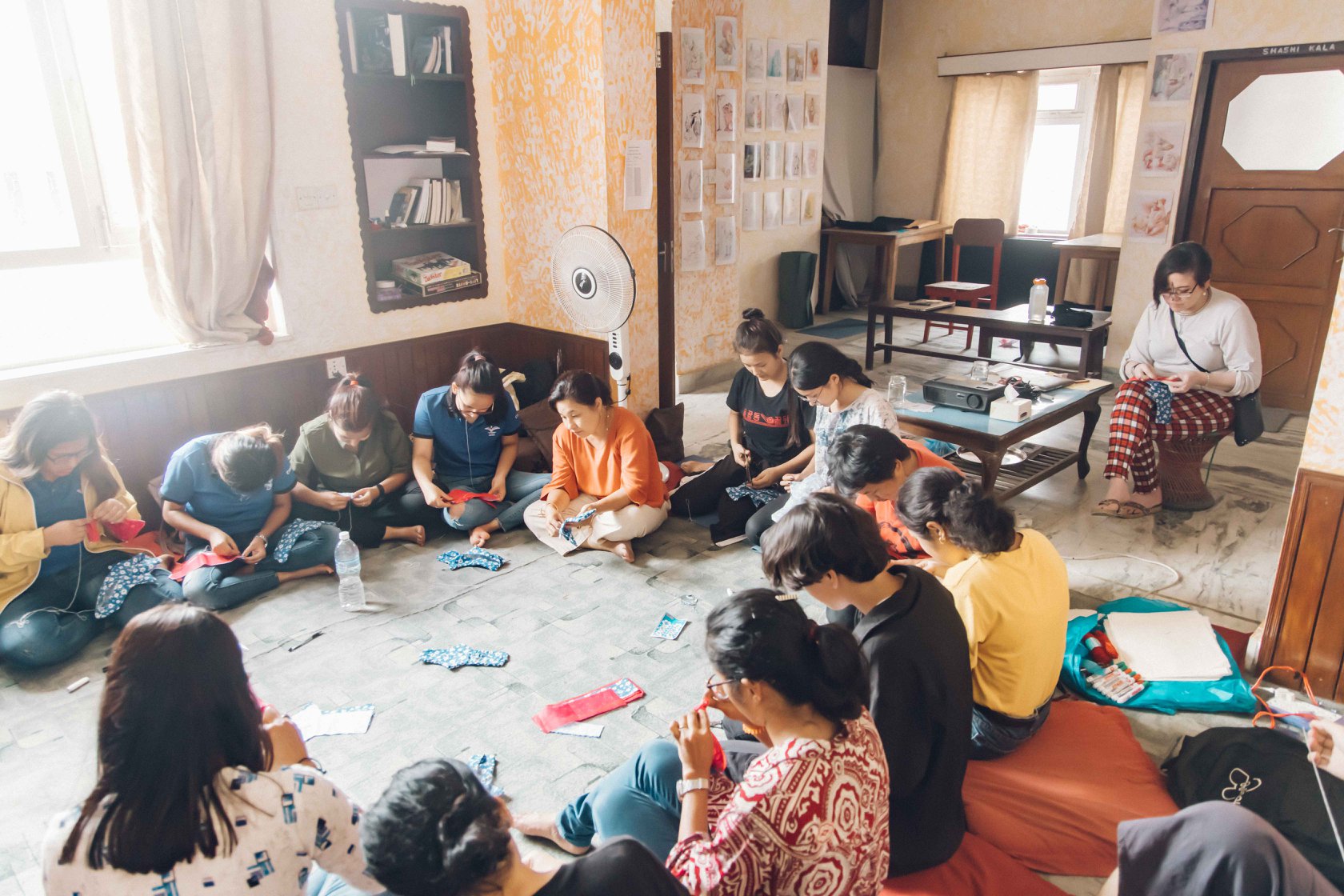
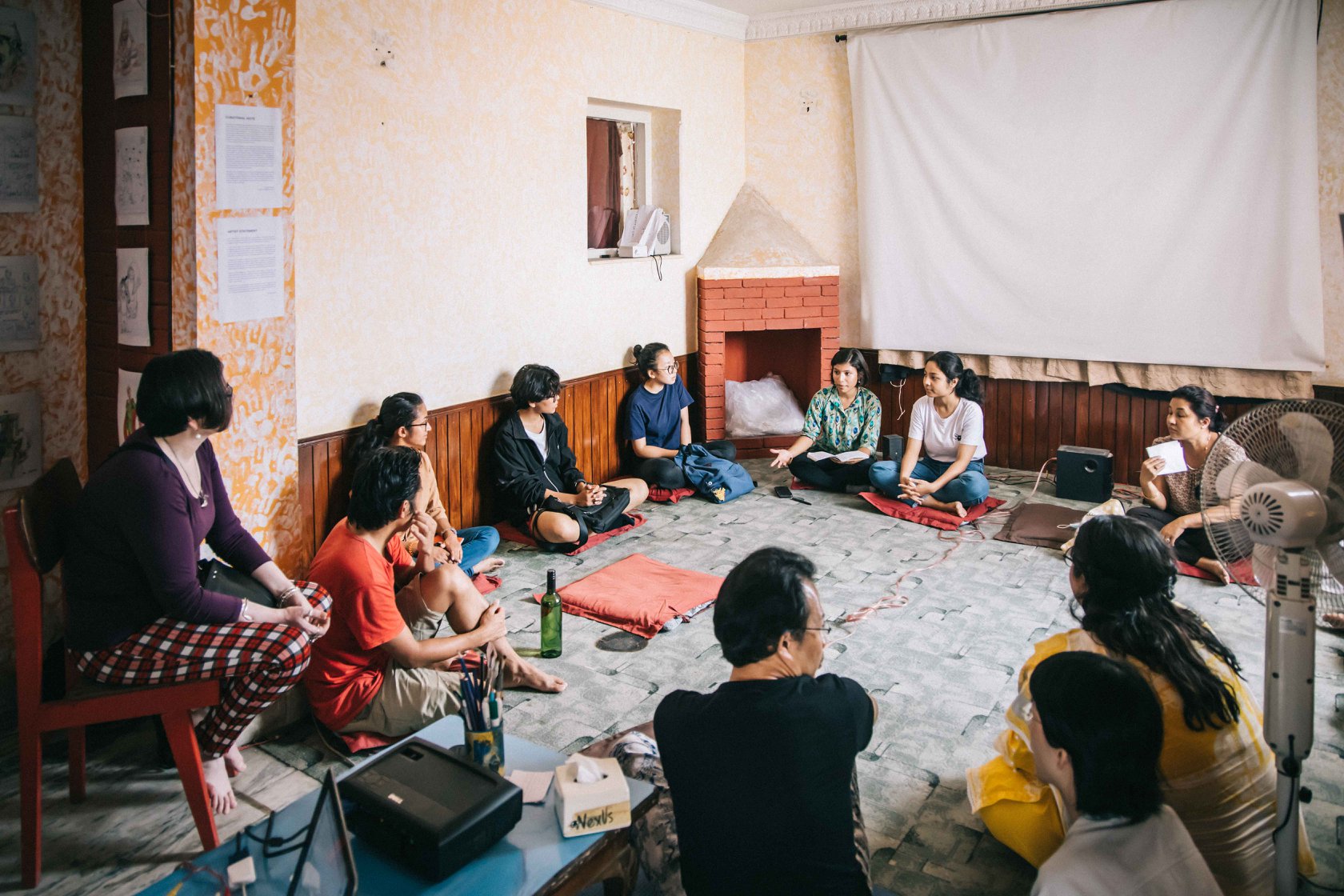
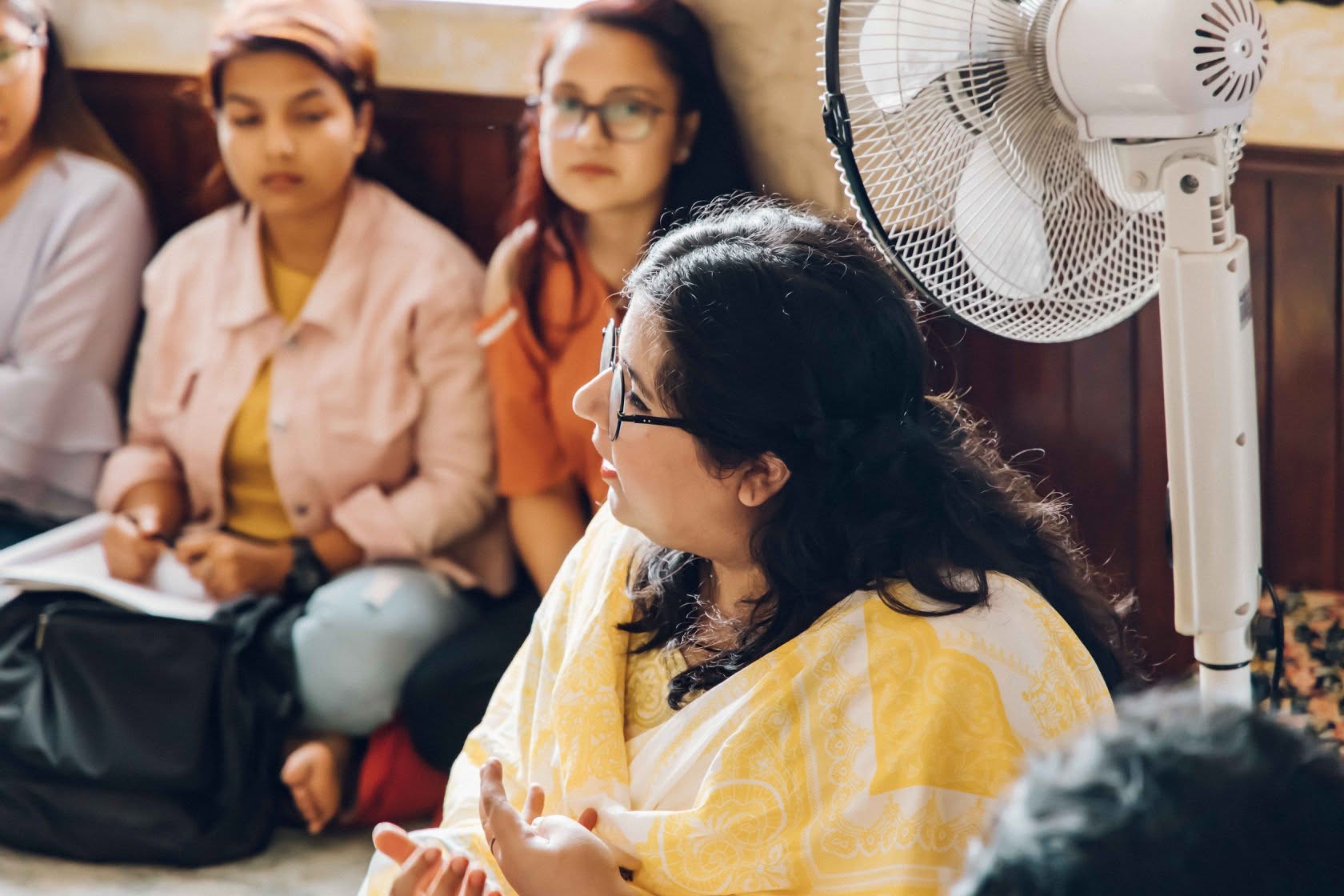
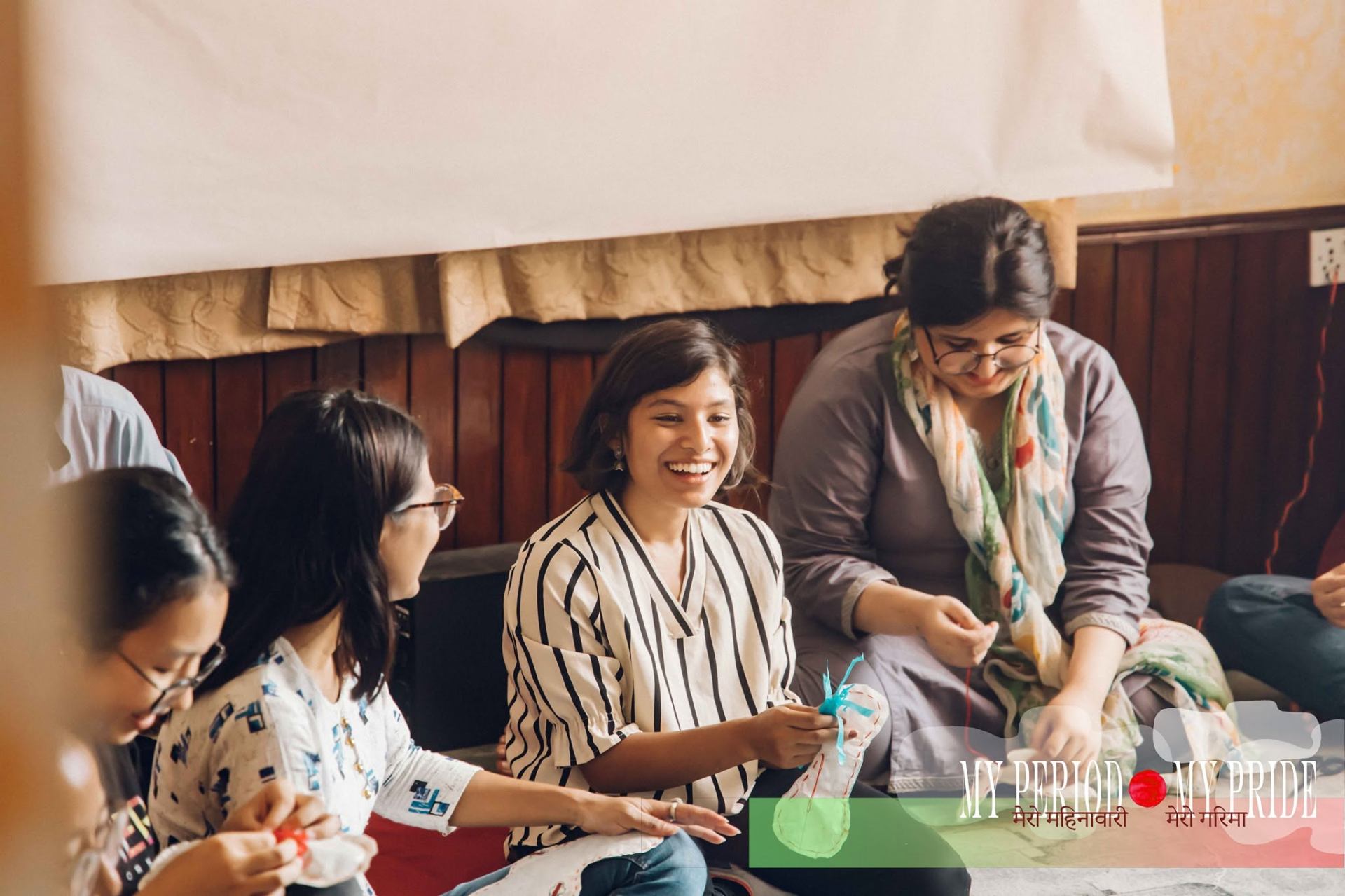
A circle on the floor in Kathmandu, with strangers becoming collaborators.
The workshop was hosted with a local community of women and artists. We sewed, talked, drew, and named the messages we had absorbed about our bodies, across generations, geographies and languages. The room held both laughter and long silences.
Four themes
What surfaced, and became the spine of the series.
The conversations clustered into four organising themes. Each became one plate in the final body of work.
I.Blood
What the body offers, and what it is shamed for offering. Menstruation, bloodline, caste, inheritance: the politics of what flows through us.
II.Flesh
Weight as a moral category. Skin colour as social currency. How much of a body is allowed before it becomes a problem to be solved.
III.Voice
Who is taught to speak softly, and why. The volume permitted to different bodies in the same room.
IV.Space
The physical room a body is allowed to take up: on a bus, in a classroom, at a dinner table, in a public square.
Studio
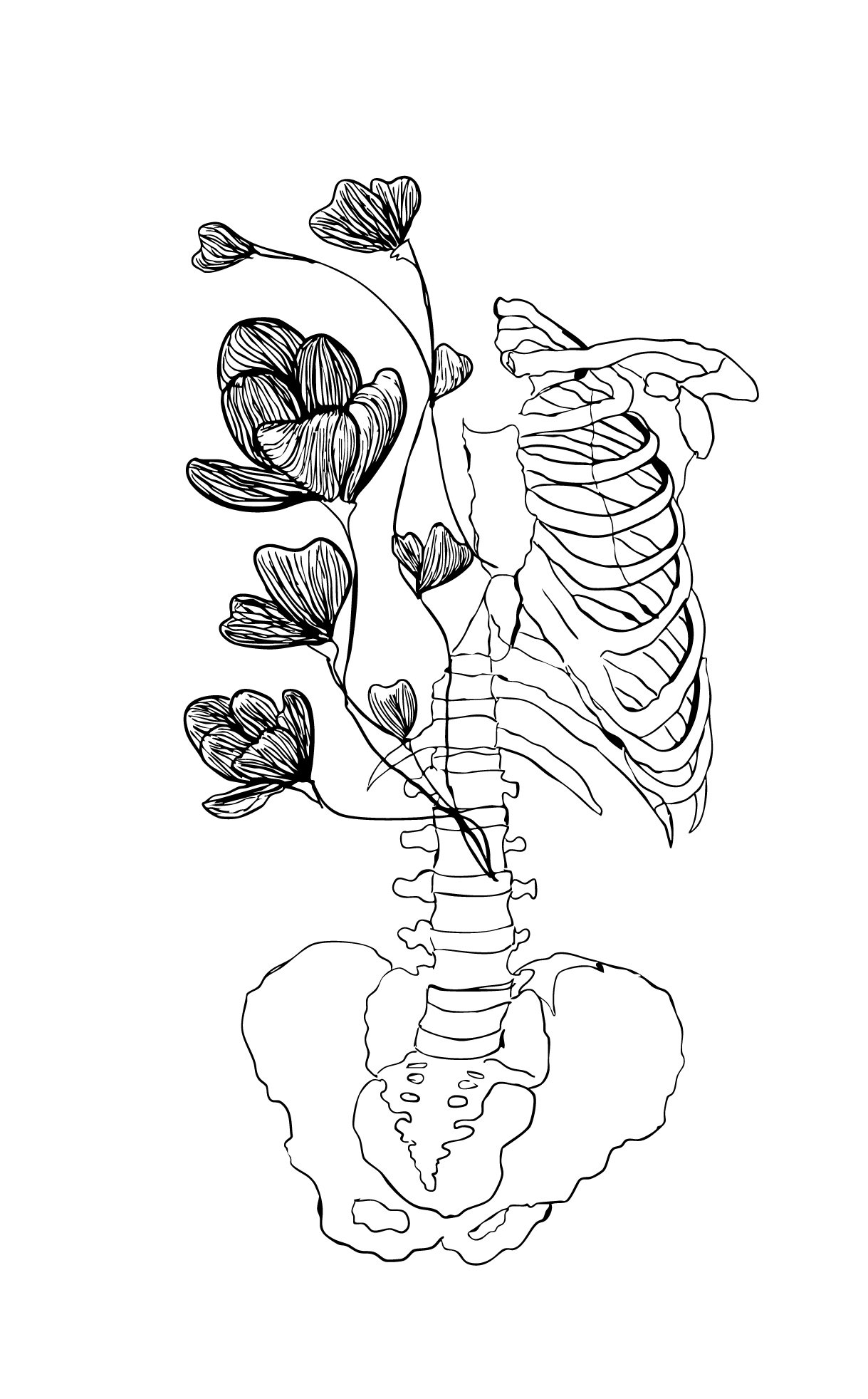
Anatomy meets bloom: translating the themes into ink.
The first plate to emerge was the spine and ribcage entangled with flowers: a body that holds beauty and weight in the same gesture. From here the visual language of the series was set: linework, watercolour stain, and bilingual typography.
Process notes
From workshop to plate.
- 01
Arriving with a question
I came into the residency carrying a question shaped by growing up in Pakistan: why do some bodies feel permitted, and others apologetic? I wanted to test whether that question travelled: whether women in Nepal recognised the same hierarchies in different forms.
- 02
Workshop with the local community
Together with three Taiwanese and Nepali artists, I held a community workshop in Kathmandu. Sitting on the floor, we mapped the messages we had absorbed about weight, skin, voice and space, using drawing, conversation and shared silence as research tools.
- 03
Reading across two cultures
The vocabularies differed; the architecture of bias did not. Fairness creams, marriageability, posture, modesty, bloodline. The same hierarchies showed up wearing different clothes across Pakistani and Nepali contexts.
- 04
From conversation to illustration
I distilled the workshop into four organising themes: blood, flesh, voice, space, and began translating them into visual studies. Anatomy, flora, Urdu and Devanagari script, watercolour stains, and protest typography were layered as overlapping evidence.
- 05
Blending traditional and digital
Watercolour and ink carried the body and the bleed. Photoshop and Illustrator carried the typography and the political grammar. The blend was deliberate: neither folk nor fully contemporary, but the seam where both meet.
The series
Six illustrations: one argument, six questions.
The final body of work reads together as one argument, and apart as six individual questions. Watercolour, ink, anatomy, flora, and bilingual typography stacked as overlapping evidence.
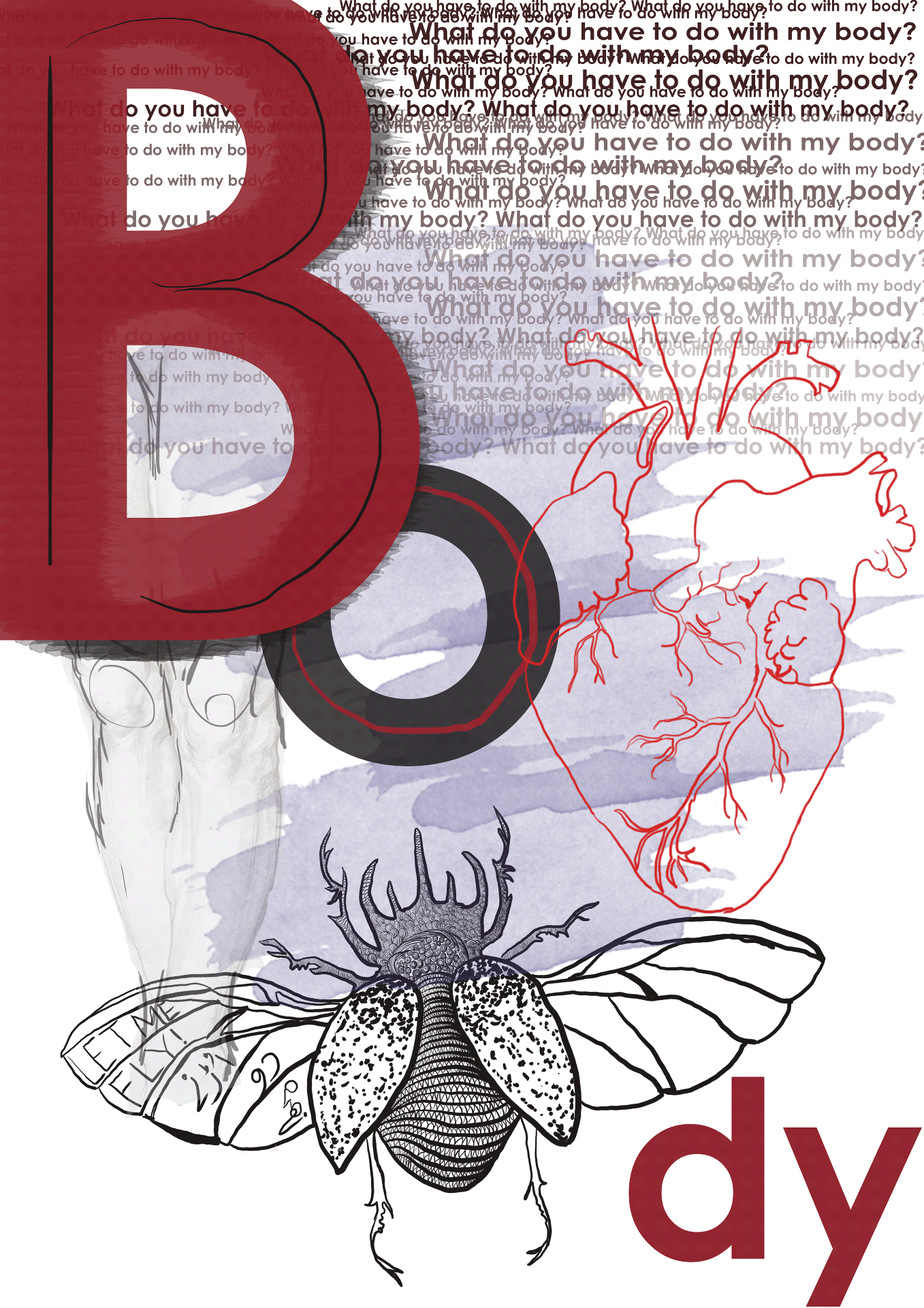
01Body
Anatomy as a site of public negotiation: who gets to touch, weigh, or rule on a body that is already mine.
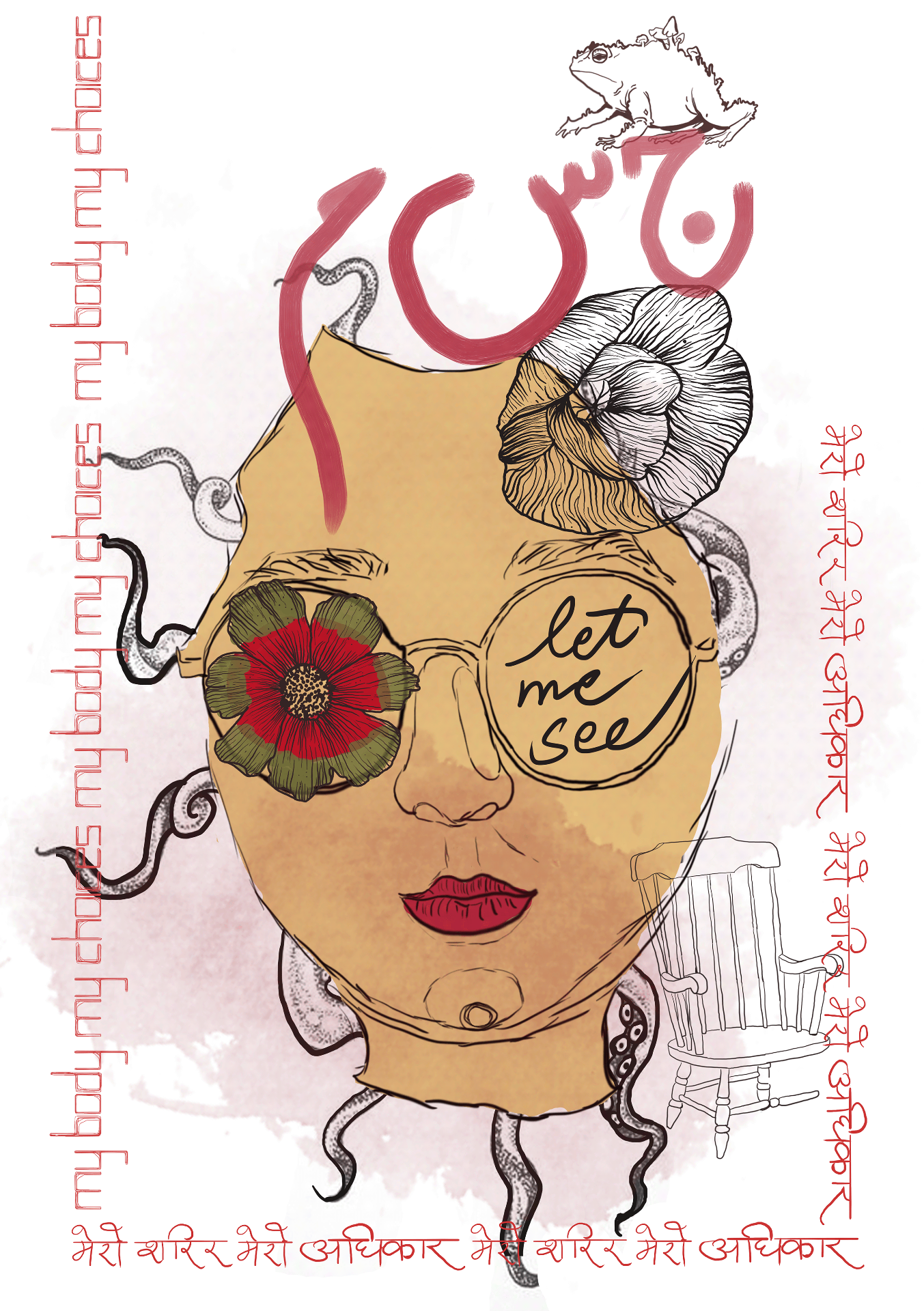
02Let me see
A demand to look, plainly and without permission, at what culture would rather keep half-lit.
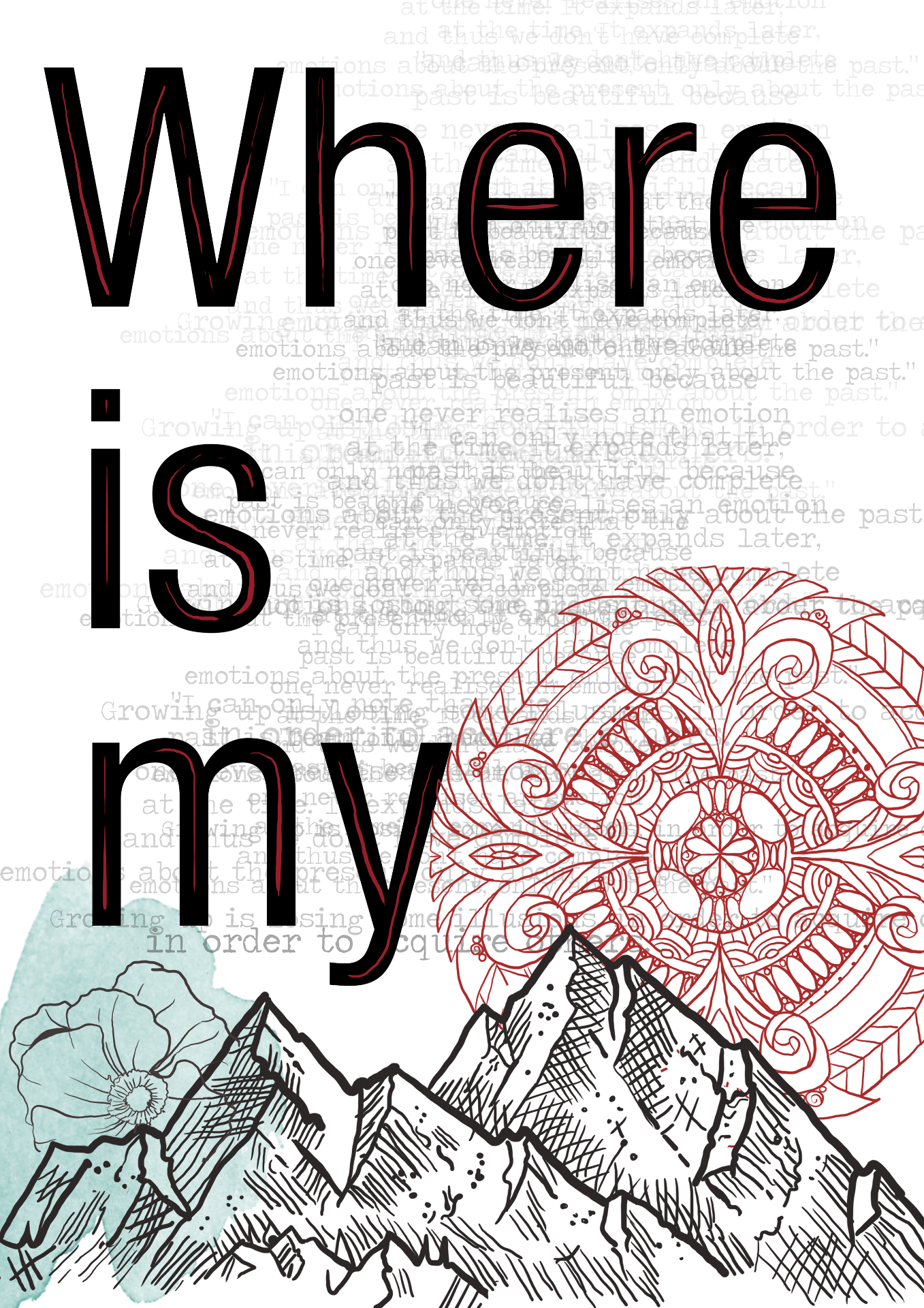
03Where is my…
The slow inventory of things a girl is taught to misplace: appetite, voice, room, refusal.
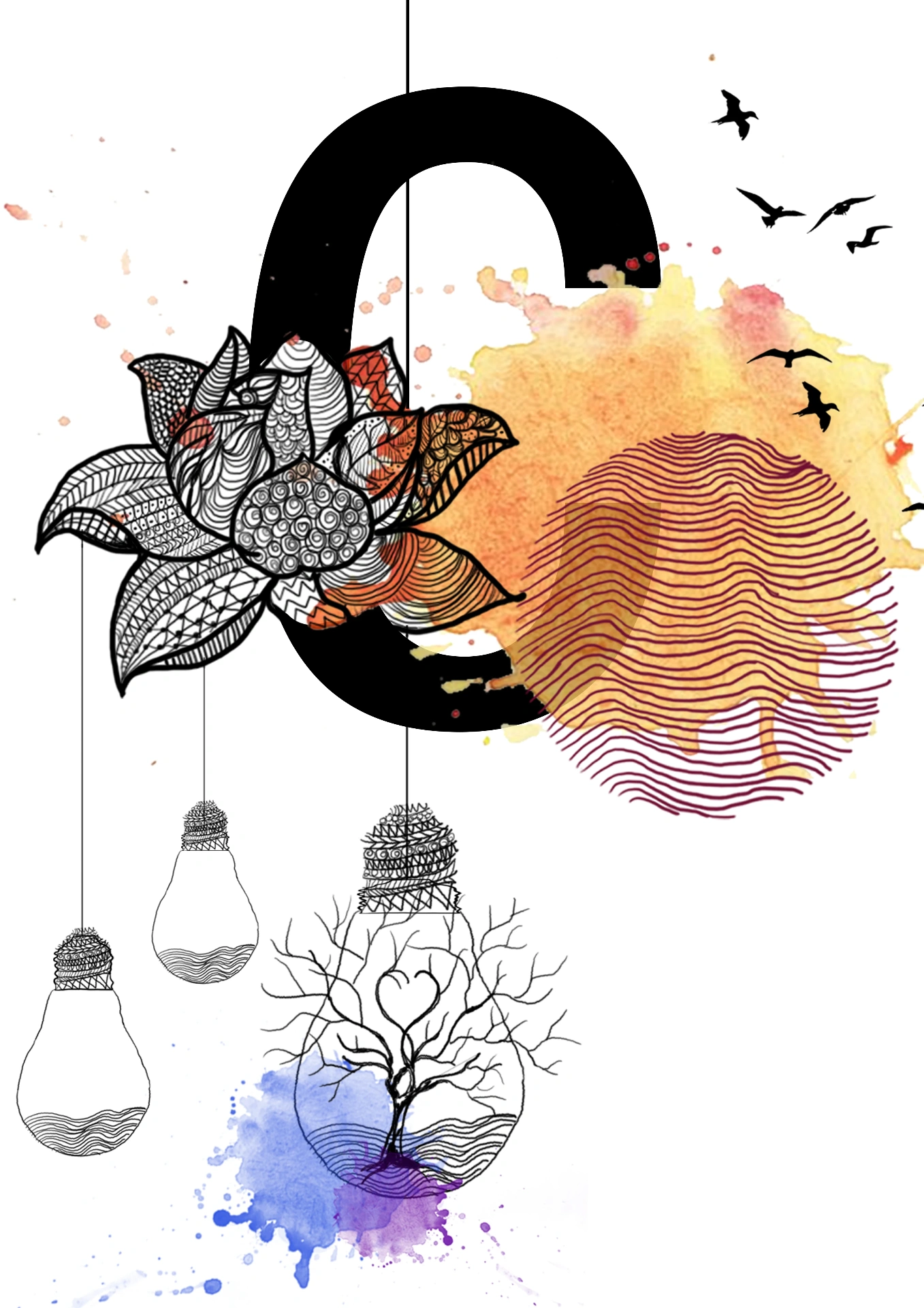
04C for...
An alphabet of double-binds: consent, choice, concern, control; be soft, be sharp, be seen, be silent, all at once.
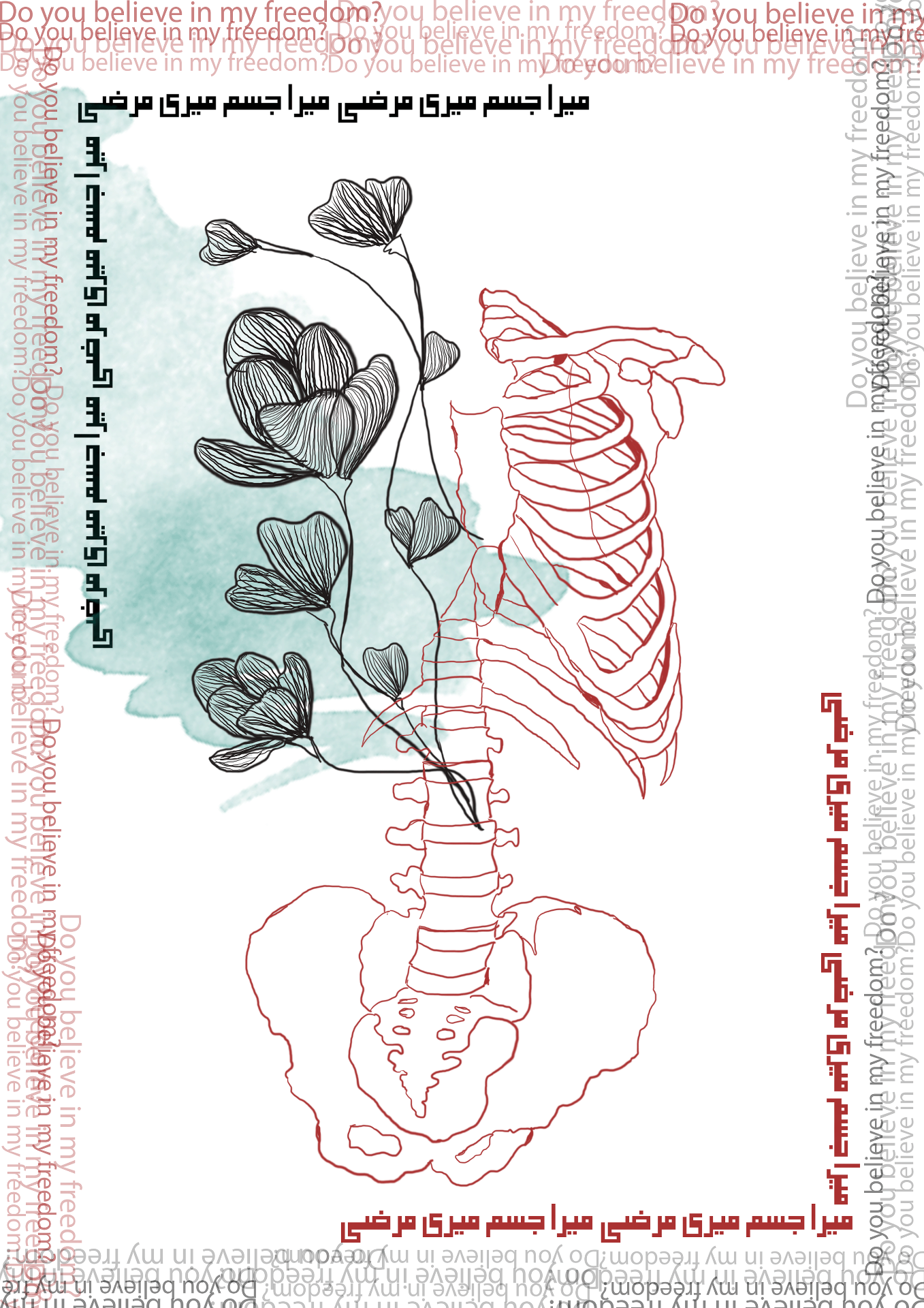
05Freedom
A question disguised as a slogan, asking whether a woman's autonomy is honoured or only tolerated.
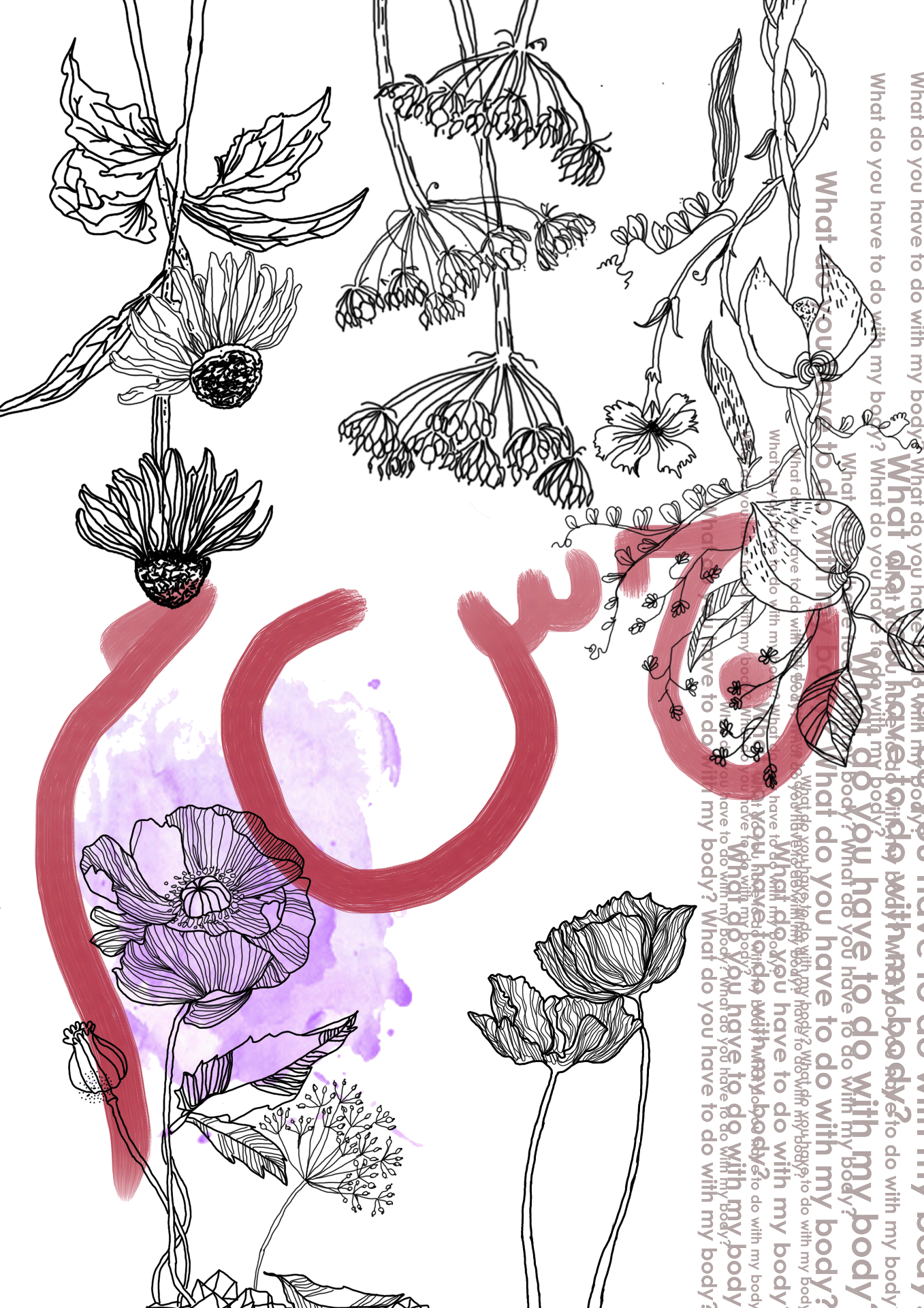
06Mine
Blood, lineage, and ownership: what the body offers, and what it is shamed for offering.
Reflection
What stayed with me after the residency ended.
Myth of Sanctification was exhibited as a set of framed plates blending watercolour, ink, Urdu and Devanagari typography, and digital composition. The work refuses to settle into either folk craft or contemporary critique. It sits at the seam where both meet, which is where the question itself lives.
The work did not end with the exhibition. I also went on to participate in a movement to destigmatise periods, taking the conversation from the gallery wall into the street, from private shame into public dialogue.
The body is not a neutral surface. It is the first political document we carry, and the one we are least allowed to read aloud.