Teach For Pakistan · National recruitment · 2020—2025
Teach For Pakistan
Campaigns.
If educational inequity is a leadership problem, who is going to lead?
For five consecutive recruitment cycles, I led the research and design of Teach For Pakistan's national Fellowship recruitment campaigns. The work combined research, strategy, storytelling and communication design to inspire exceptional graduates to become leaders working towards educational equity in Pakistan.
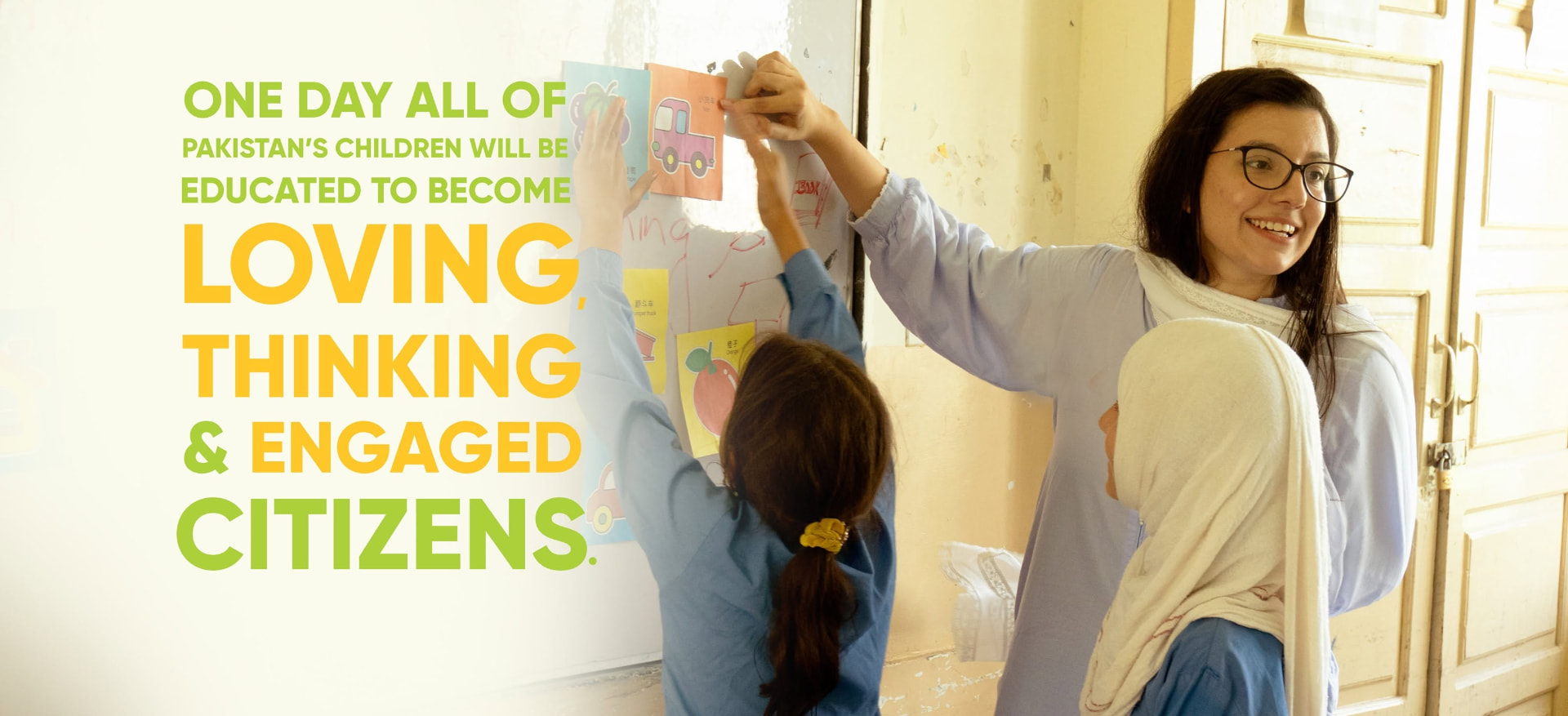
Teach For Pakistan's vision.
- Organisation
- Teach For Pakistan
- Role
- Research, Communication & Design Lead
- Duration
- 2020—2025, five recruitment cycles
- Deliverables
- Campaign identities, posters, films, publications, social, campus collateral
- Reach
- Nationwide, digital and on-ground
- Network
- Teach For All, 60+ countries
Overview
Hope, and a radical kind of love.
Teach For Pakistan is part of the Teach For All global network, present in more than 60 countries, with a shared mission of developing leaders who work towards educational equity in their own contexts. The Fellowship places graduates in under-resourced public schools for two years, with a selection rate of around 3%.
Across five cycles, two ideas held every campaign together: hope and radical love. Hope, because we were asking people to believe something could change in a country that keeps being told otherwise. Radical love, because the commitment we were asking for goes beyond a job. It means choosing other people's children, learning their names, sitting with their families, and staying when it gets hard.
Those two anchors decided the tone of the writing, the way Fellows and students were photographed, who got to speak in a film, and what we refused to say about Pakistan. The strategy came first each year, then the research, then everything the campaign became: films, publications, campus events, social, print.
The work was less about selling a programme and more about making leadership feel like something worth building a life around.
Context
The scale of Pakistan's education crisis.
0+ million
Children are out of school.
0%
Of children aged 10 cannot read and understand a simple text.
0%
Of children enrolled do not receive a quality education.
Educational inequity here is shaped by access, quality, geography and opportunity. Where a child is born still decides most of what happens next.
The challenge
How do you ask a generation to stay and lead?
The question underneath every cycle was simple and hard: how do you get a twenty-two year old to care about educational inequity enough to spend two years inside it? Most of them were choosing their first job at the same time, comparing the Fellowship with management trainee programmes, scholarships abroad and a family already planning the next step for them. The Fellowship had to show up as a real employer, with a salary, training and a career after it.
This generation also came in carrying a lot. They finished university through a pandemic, watched wars and a genocide play out on their phones, and entered a job market being rearranged by AI while the rupee slid. Many were already applying for visas. Telling them the country needs you was not enough. The campaigns had to make hope feel possible without sounding naive about why they had stopped feeling it.
Make inequity personal
Most graduates can quote the statistics. The work was getting them to feel what a classroom in Sihala or Korangi actually asks of an adult.
Compete for a first job
We were up against management trainee programmes, scholarships abroad and a family expecting a certain kind of answer at dinner.
Meet people where they are
This cohort finished university through a pandemic, watched wars and a genocide play out on their phones, and entered a job market being rearranged by AI. Telling them the country needs you was never going to be enough.
Offer hope with a job description
Hope only worked when it came with two years of concrete work, a salary, a cohort and a life after the Fellowship.
My role
Research, Communication & Design Lead.
I sat between the recruitment team and the campaign, turning what they heard on campuses into strategy, narrative and a full communication system.
- Research
- Insight synthesis
- Campaign strategy
- Narrative development
- Creative direction
- Visual identity
- Communication design
- Digital design
- Print design
- Campaign systems
- Cross-functional collaboration
Process
Built with the recruitment team.
Nothing here was made alone. Every cycle was co-created with the recruitment team, from the first brainstorm to the last poster: sitting in on campus visits, reading their notes from information sessions, arguing over what students actually cared about, and shaping the messaging together before a strategy or a layout existed. They knew what young people were asking and worrying about, and that is where each campaign started.
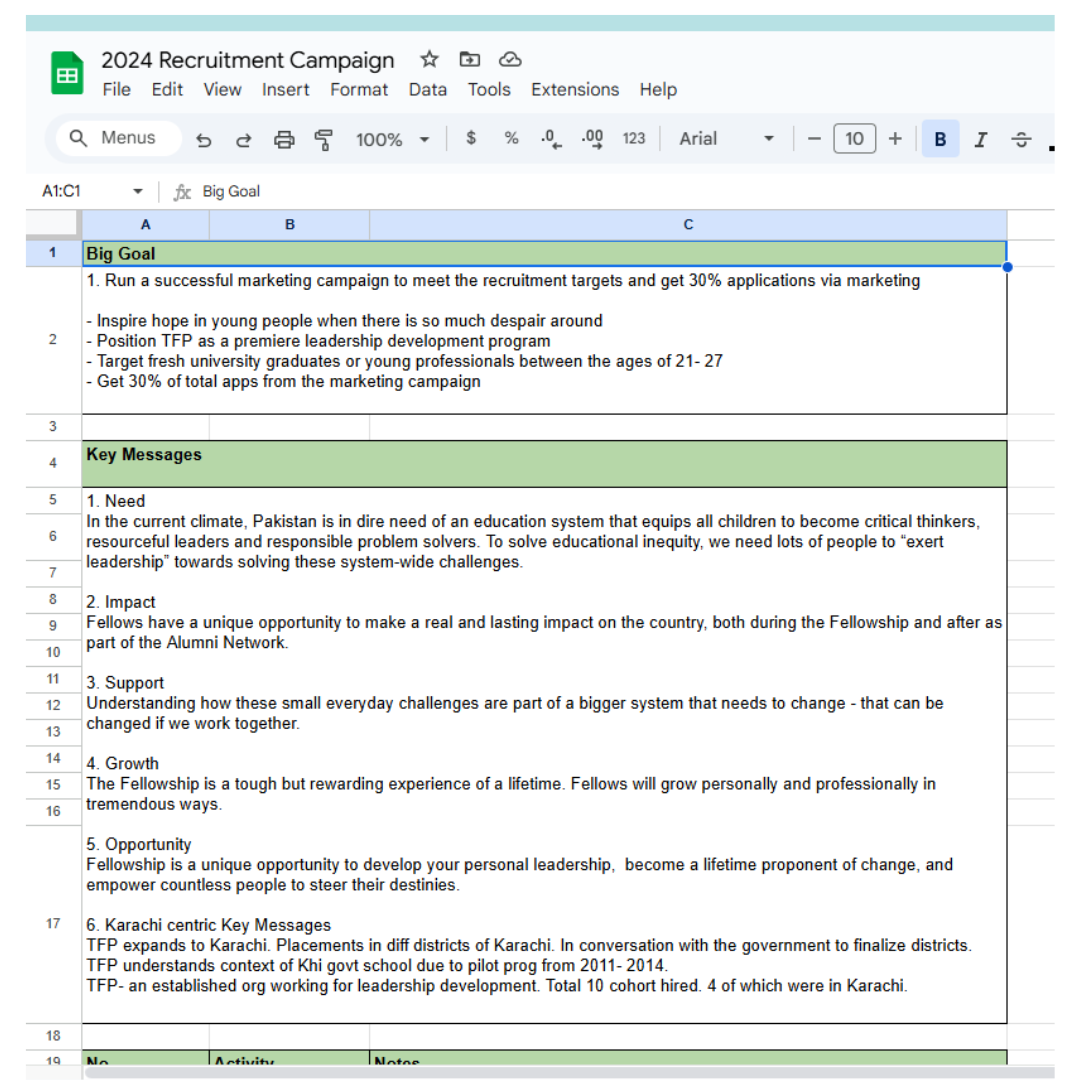
01
Research with recruitment
Months of campus conversations, brought back as raw material.
02
Motivations and barriers
What pulls graduates in, what holds them back.
03
Goals and targets
Recruitment numbers, districts, cohort profile.
04
Strategic messaging
Key messages agreed before a single layout.
05
Campaign narrative
One idea the whole cycle could hang from.
06
Visual identity
Palette, type, image language, motion.
07
Communication system
Templates across print, screen and space.
08
Launch and refine
Six to seven months of live iteration.
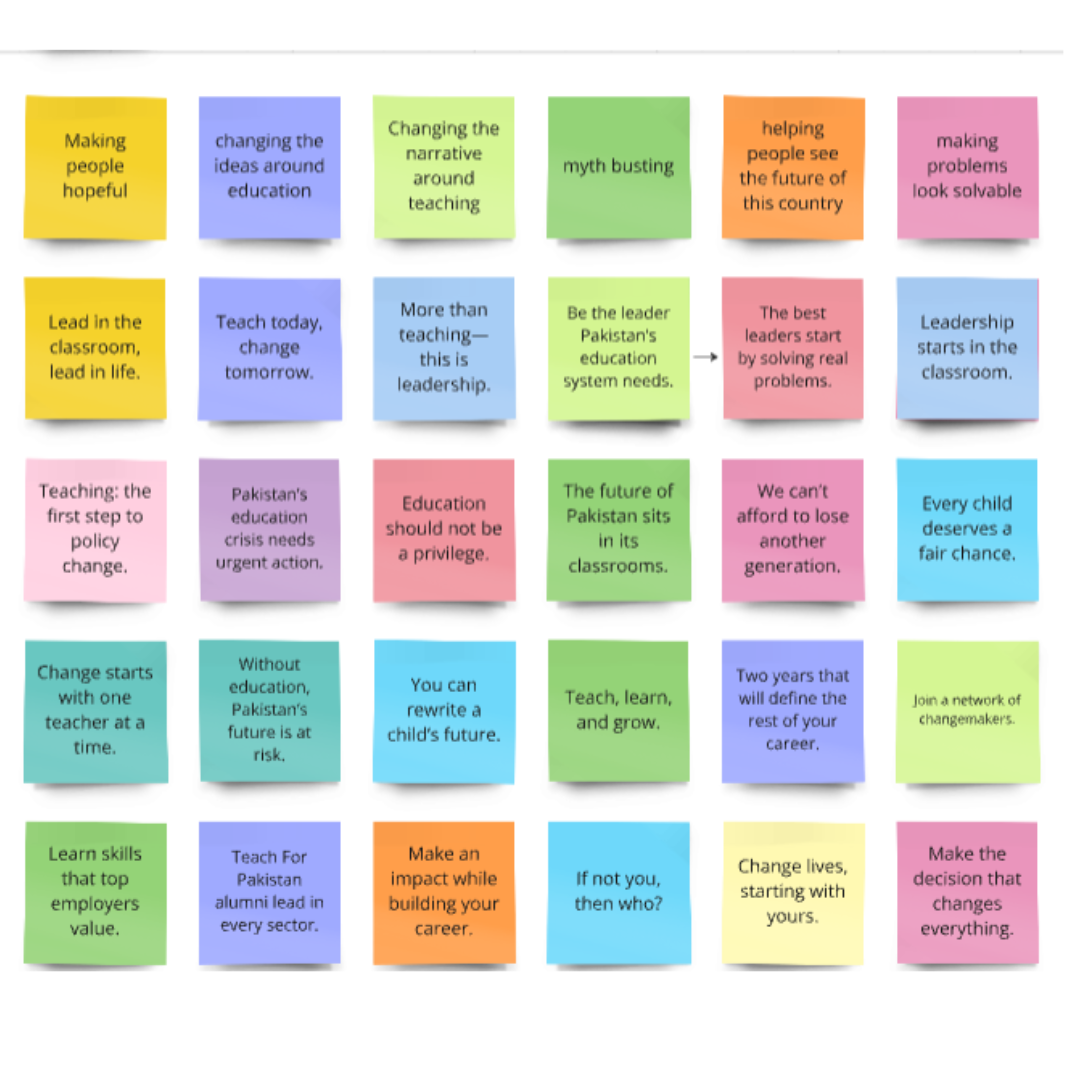
Campaign evolution
How the campaigns changed, year by year.
Chapter 01
2020
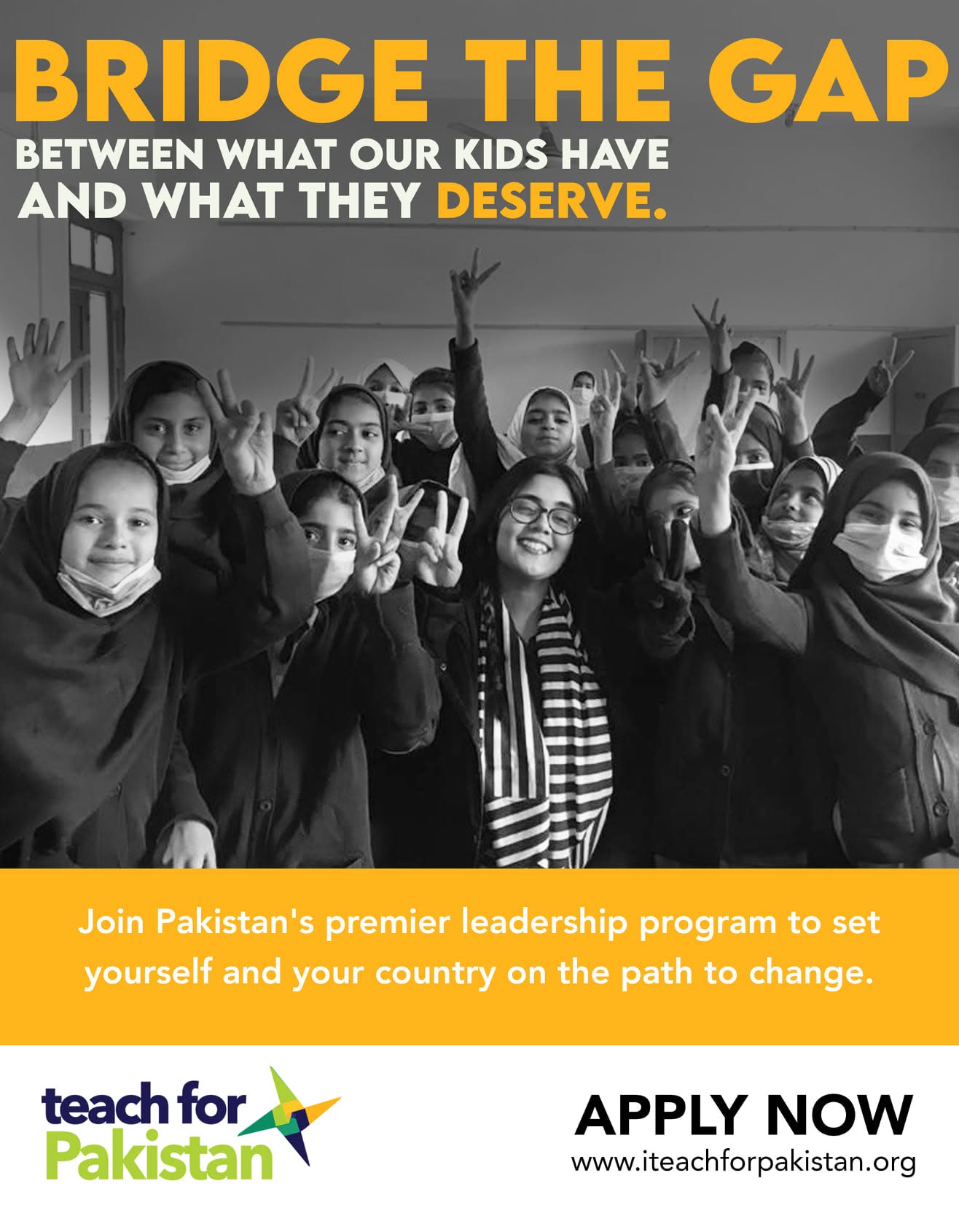
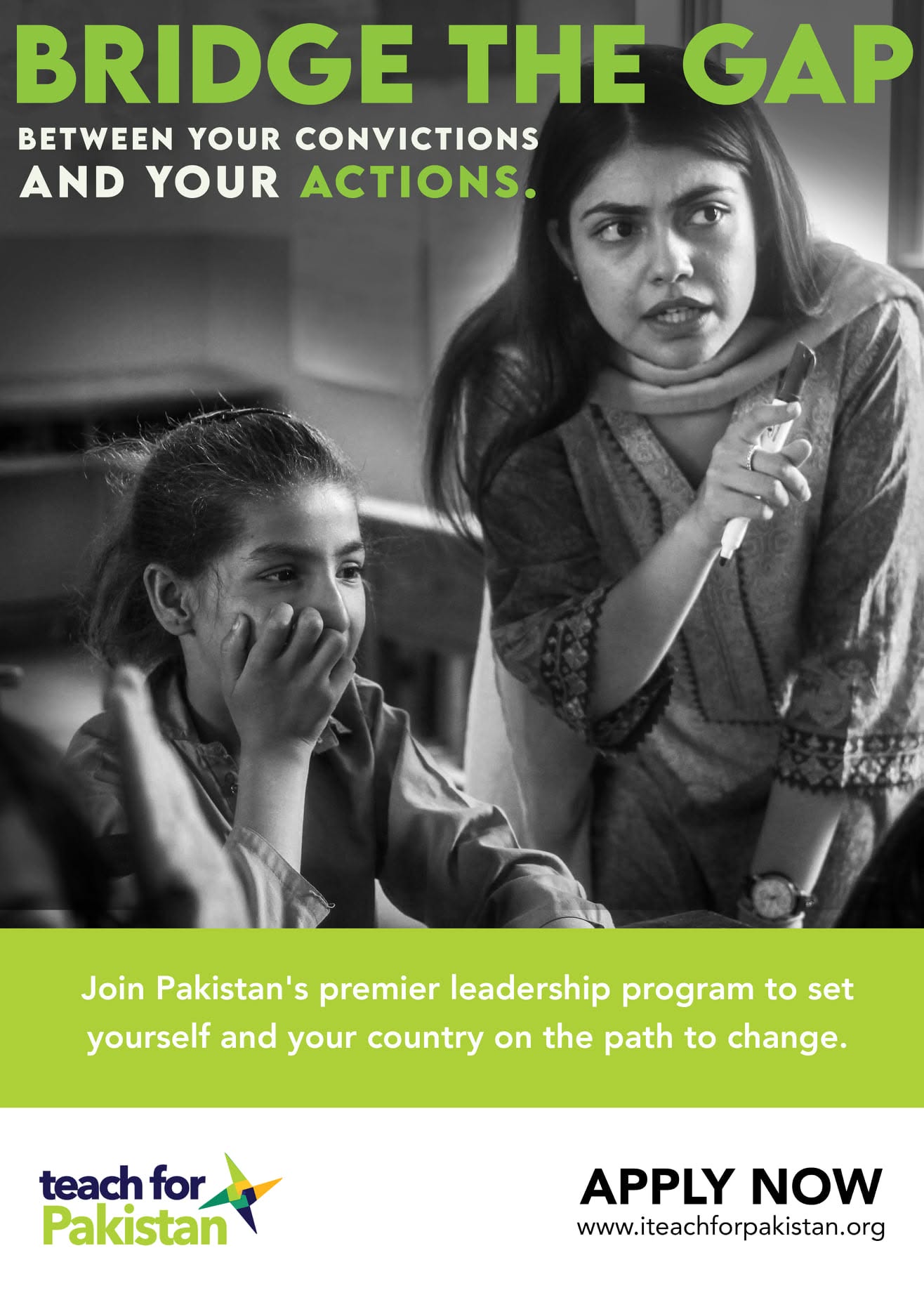
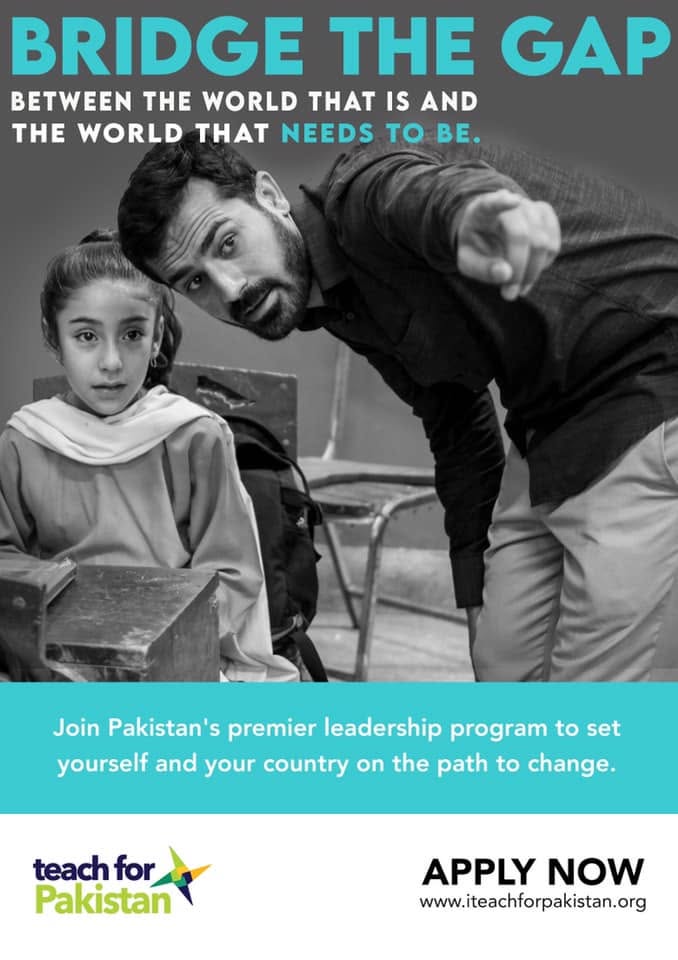
Bridge the Gap
Context
COVID-19 closed schools and the children with the least were the first to disappear from learning. The gap was no longer abstract; it was visible in every household that did not have a laptop, a quiet room, or a parent who could teach.
Narrative
We named the gap plainly and put a Fellow and a child on the same poster. Each line finished the same sentence: bridge the gap between your convictions and your actions, between what our kids have and what they deserve.
Chapter 02
2021—2022
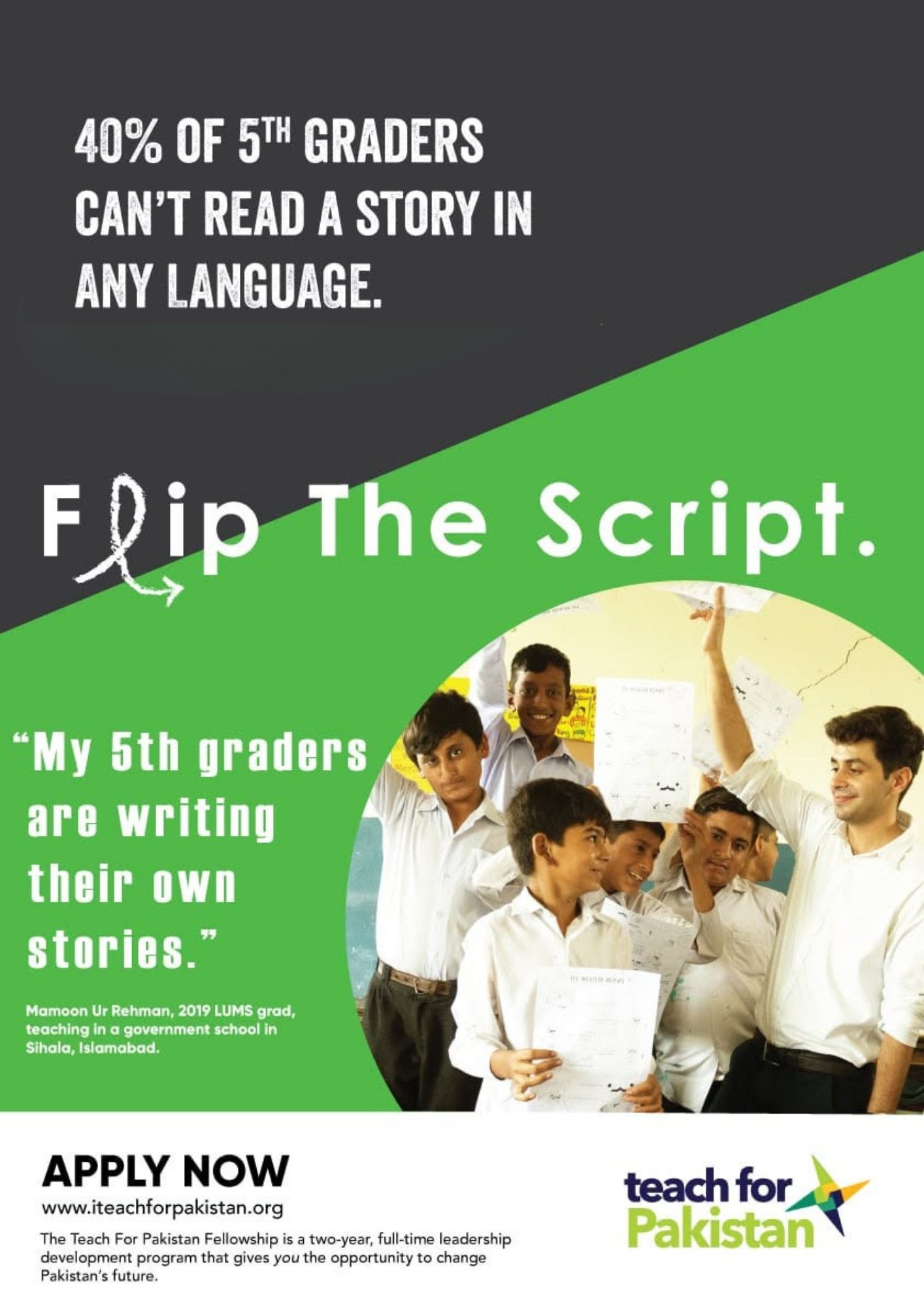
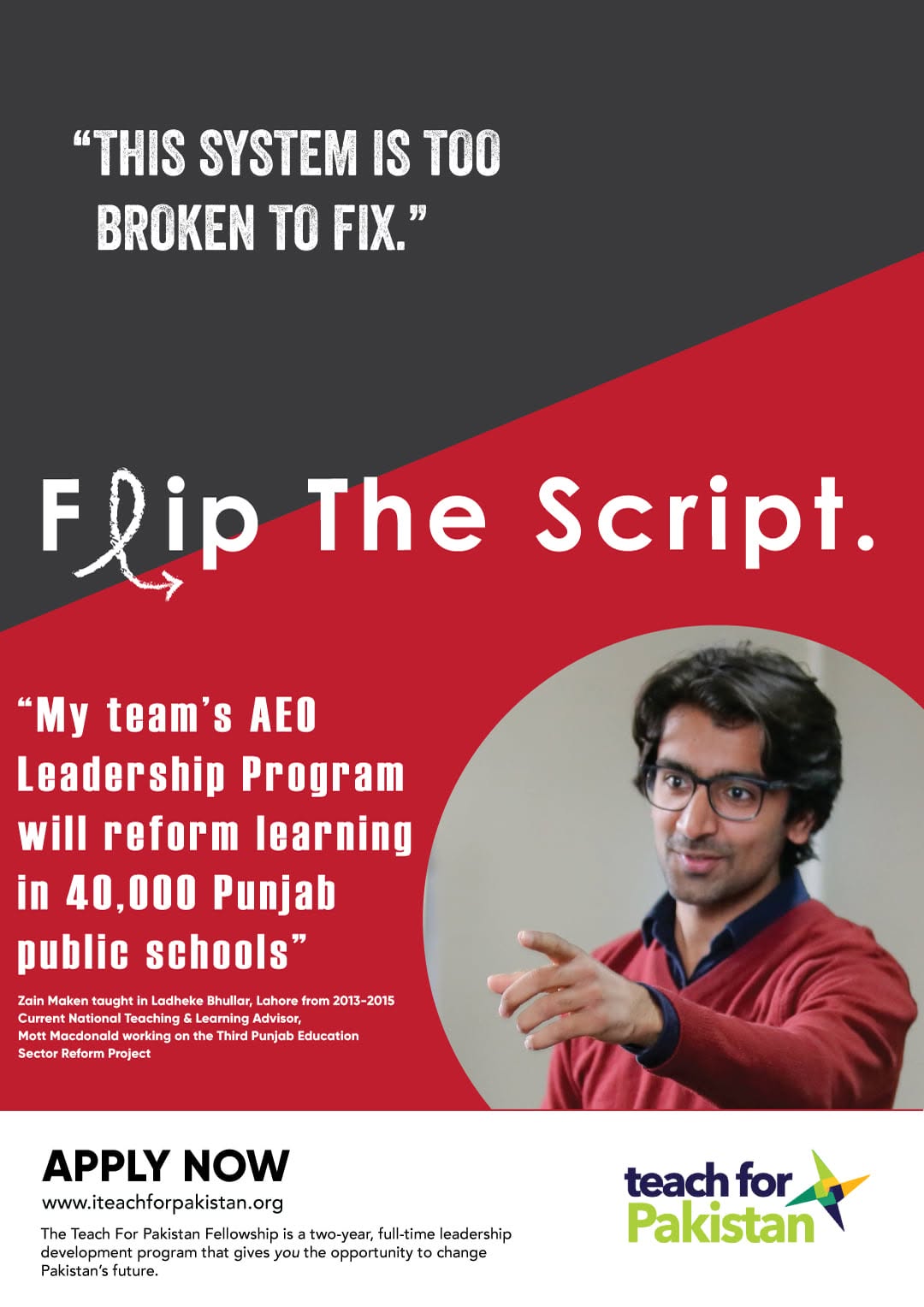
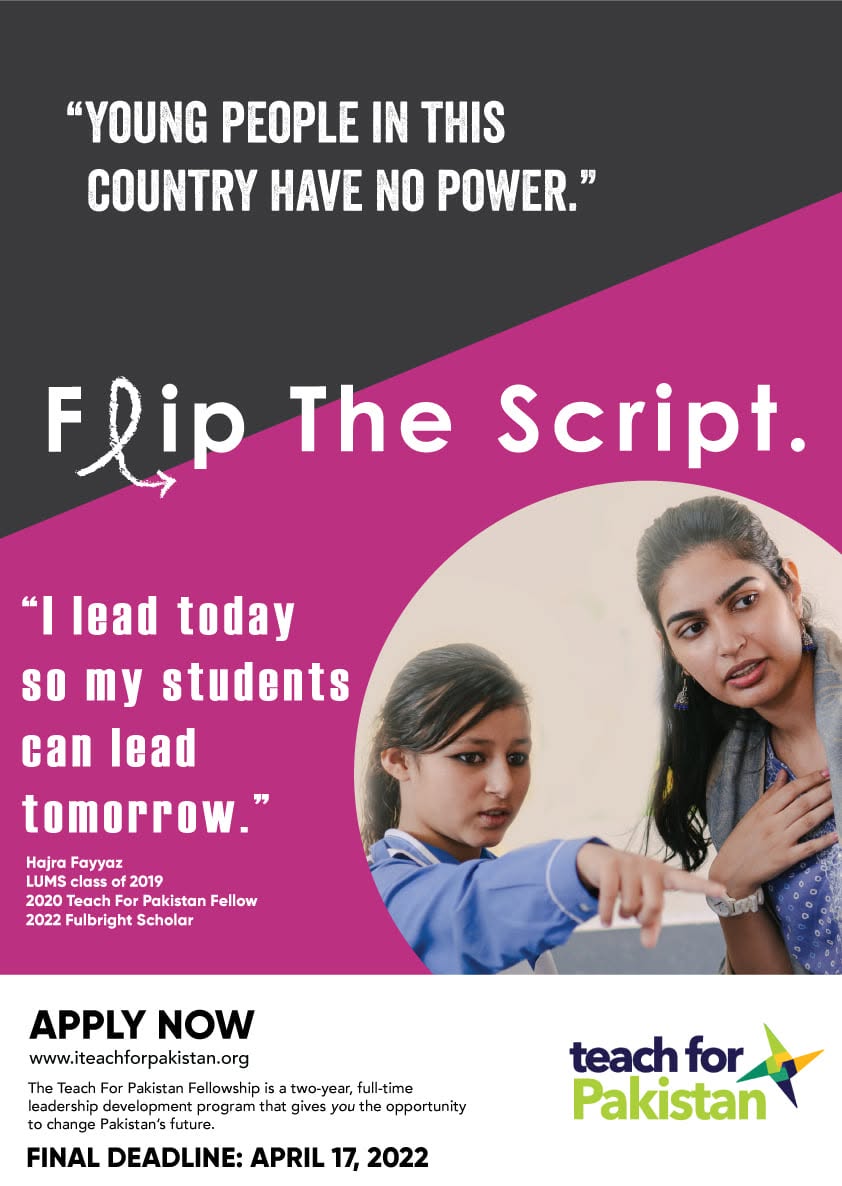
Flip the Script
Context
The national story about education was written almost entirely in deficits. Every conversation started with what was broken, and almost never with the people already fixing it.
Narrative
We put the lines people repeat about Pakistan at the top of the poster, then handed the rest of it to Fellows and alumni who had gone and done something about it. Zain, Hajra, Mamoon and others answered in their own words.
Chapter 03
2023—2025
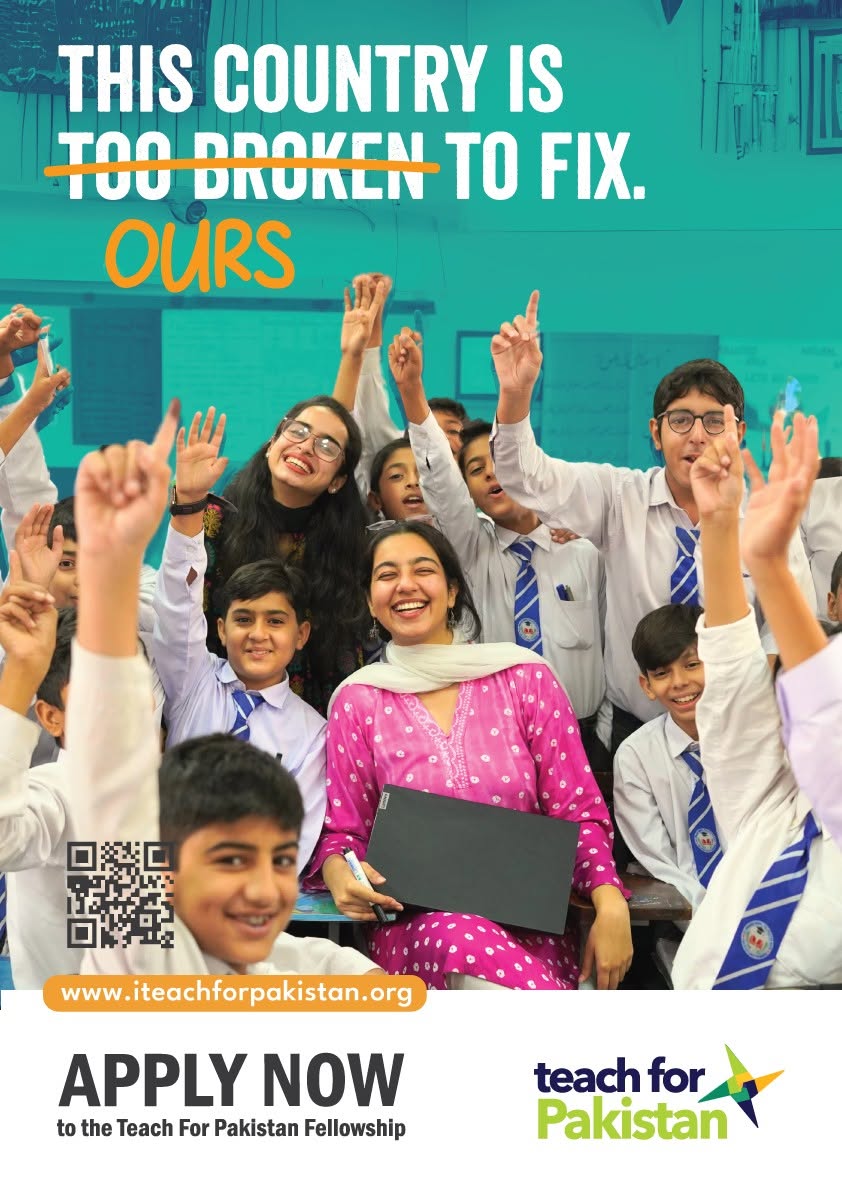
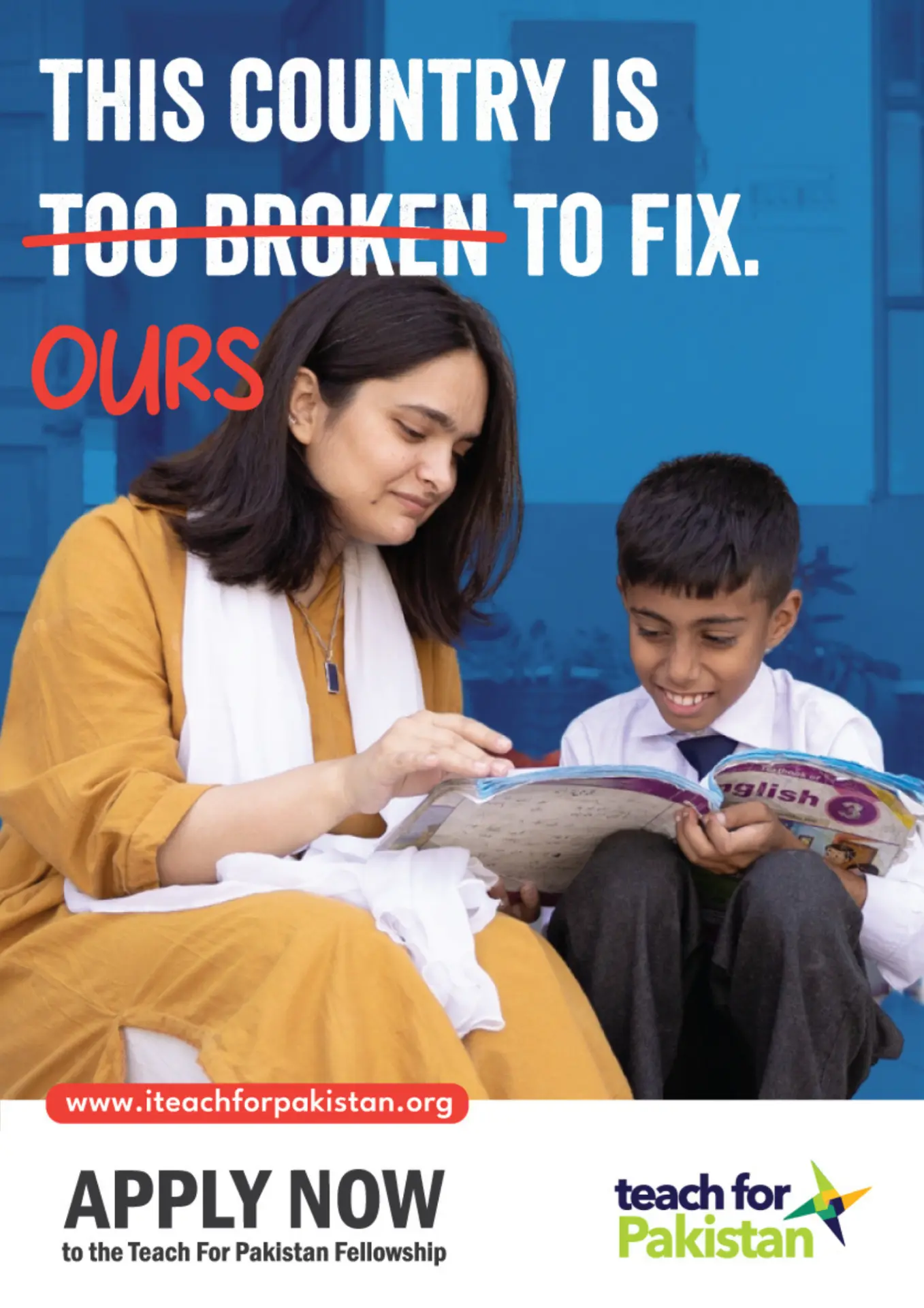
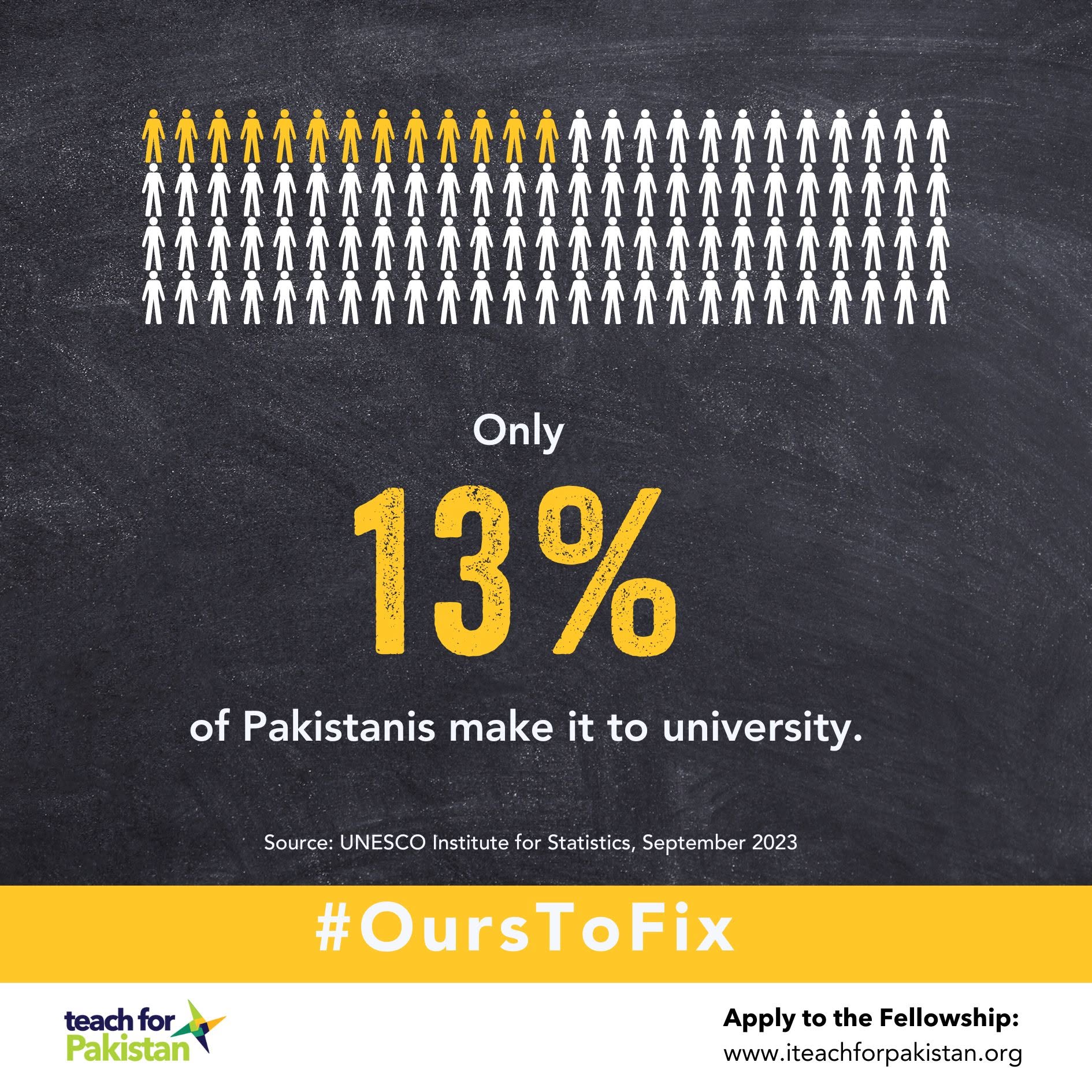
#OursToFix
Context
More and more talented graduates were leaving, and the ones staying were being told the country was beyond repair. We wanted to change the pronoun in that sentence.
Narrative
The campaign took the line young people hear all the time, that this country is too broken to fix, and replaced one word with ours. It spoke to graduates deciding whether to stay, and asked what they were willing to take responsibility for.
Campaign system
One narrative, carried across everything.
Each cycle's idea sat in the middle, and every surface around it had to say the same thing in its own way.
The campaign
narrative
- Campaign identities
- Posters
- Publications
- Recruitment films
- Social media
- Website assets
- Presentation decks
- Event branding
- Environmental graphics
- Campus collateral
- Merchandise
- Digital advertisements
Outcomes
10,000+
Fellowship applications across five cycles
250+
Fellows recruited into classrooms
3%
Fellowship selection rate
A narrative of hope that young people carried further than we did, in their own words, on their own feeds and in their own universities.
A communication system that became Teach For Pakistan's flagship recruitment identity, nationwide and on the ground.
Reflections
What the campaigns taught me.
- 01
Work that is about people needs people to carry it.
The posters that travelled furthest were the ones Fellows, alumni and students shared themselves. No paid campaign did what a Fellow posting her own classroom could do, because trust does not transfer through a budget.
- 02
Messaging works as an invitation, not an instruction.
Early drafts told people what they should care about and they landed flat. The lines that worked left room for the reader to arrive at the thought on their own. Nobody wants to be lectured into a life choice.
- 03
Choosing an audience is part of the design.
A final-year student in Karachi, a parent in Lahore and a working professional considering a switch all need different entry points. Trying to speak to all three at once produced messaging that reached none of them. We learned to design for one conversation at a time.
- 04
This cannot be done alone.
Every campaign came out of long sessions with the recruitment team, Fellows and alumni. The best lines were rarely mine first. My job was to notice them in conversation and give them a form that could travel further.
- 05
People are not data.
Learning gaps and application numbers make the case, but they do not make anyone move. The numbers only mattered once a face, a name and a classroom sat next to them. The story always came first.
Challenges
What stayed difficult.
Competing with the safe choice.
For most graduates the default path is a management trainee programme or a corporate role with a clear title and a clear salary. We had to make two years in a classroom feel like a serious professional decision rather than a detour from a real career.
Parents are part of the decision.
In most families the choice is not made alone. The campaign had to speak to a parent reading over a shoulder, someone who wanted to know their child would be safe, supported and still employable in two years.
Making hope tangible.
Hope is easy to say and hard to show. We kept looking for proof small enough to be believable: a specific child, a specific gain, a specific Fellow saying what changed in her classroom.
Asking people to trust themselves.
The real barrier was not ability. It was the belief that nothing could change. A large part of the work was holding up small, believable proof that hope was warranted, without promising it would be easy.
Gallery
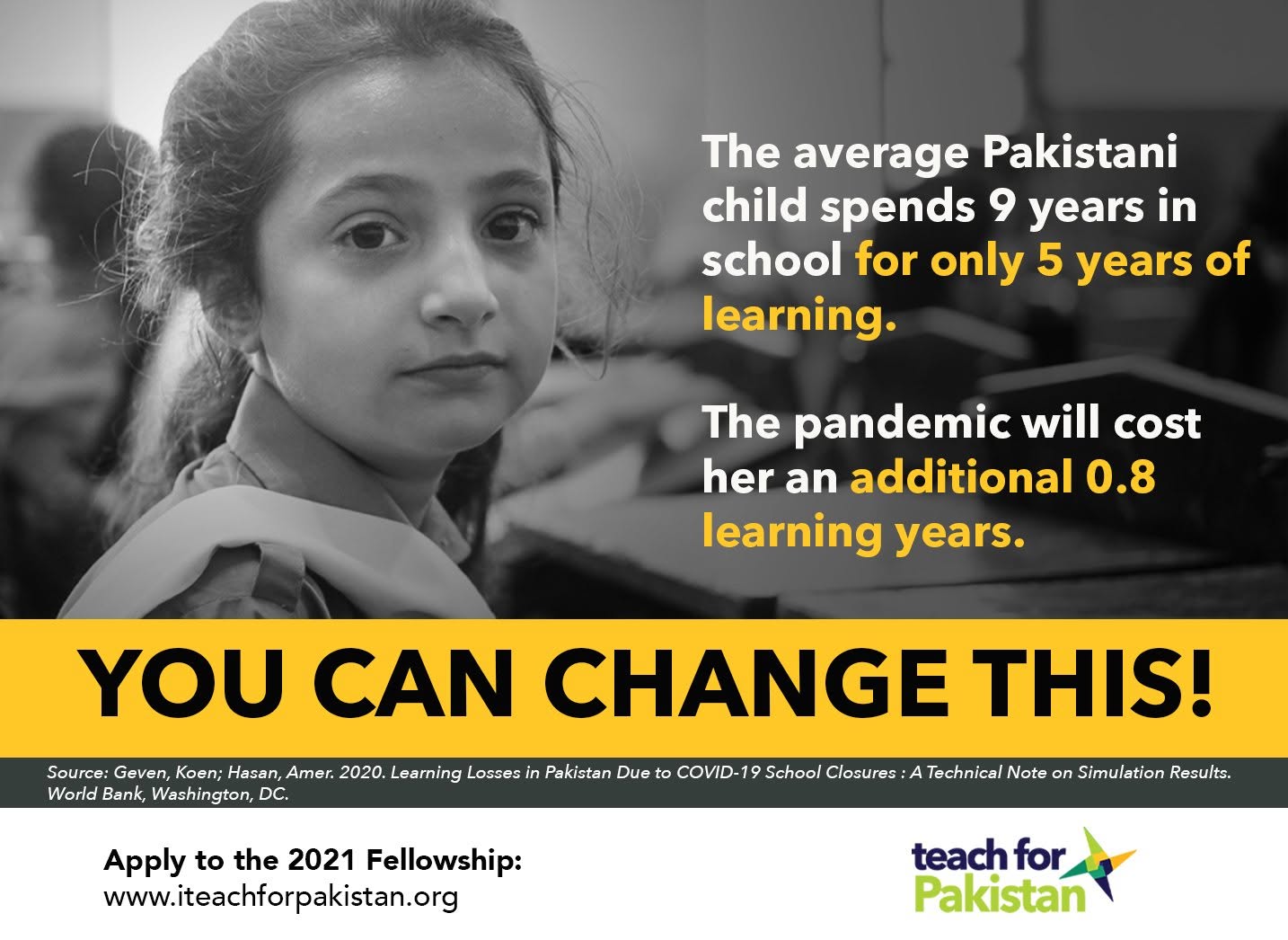
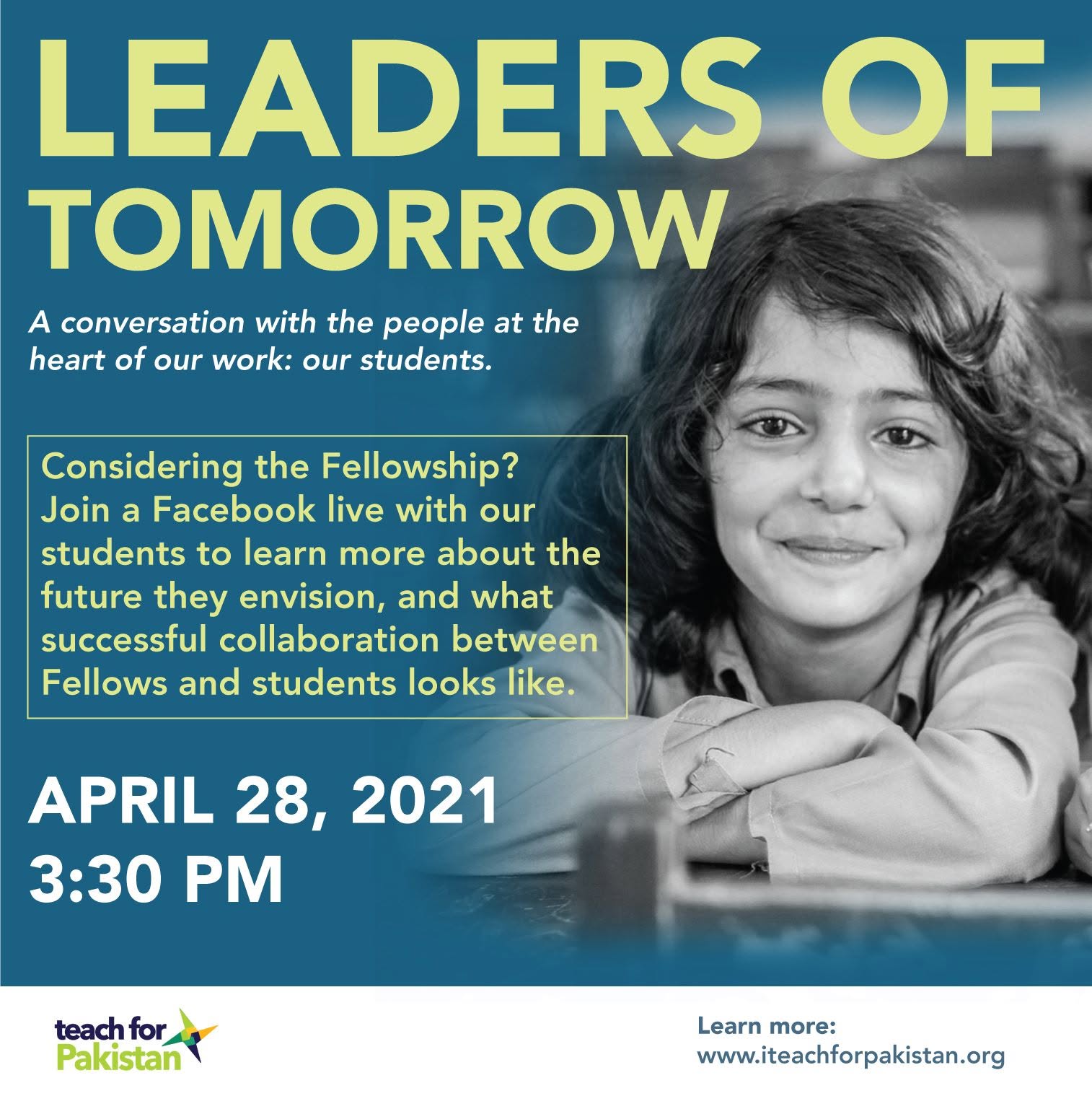
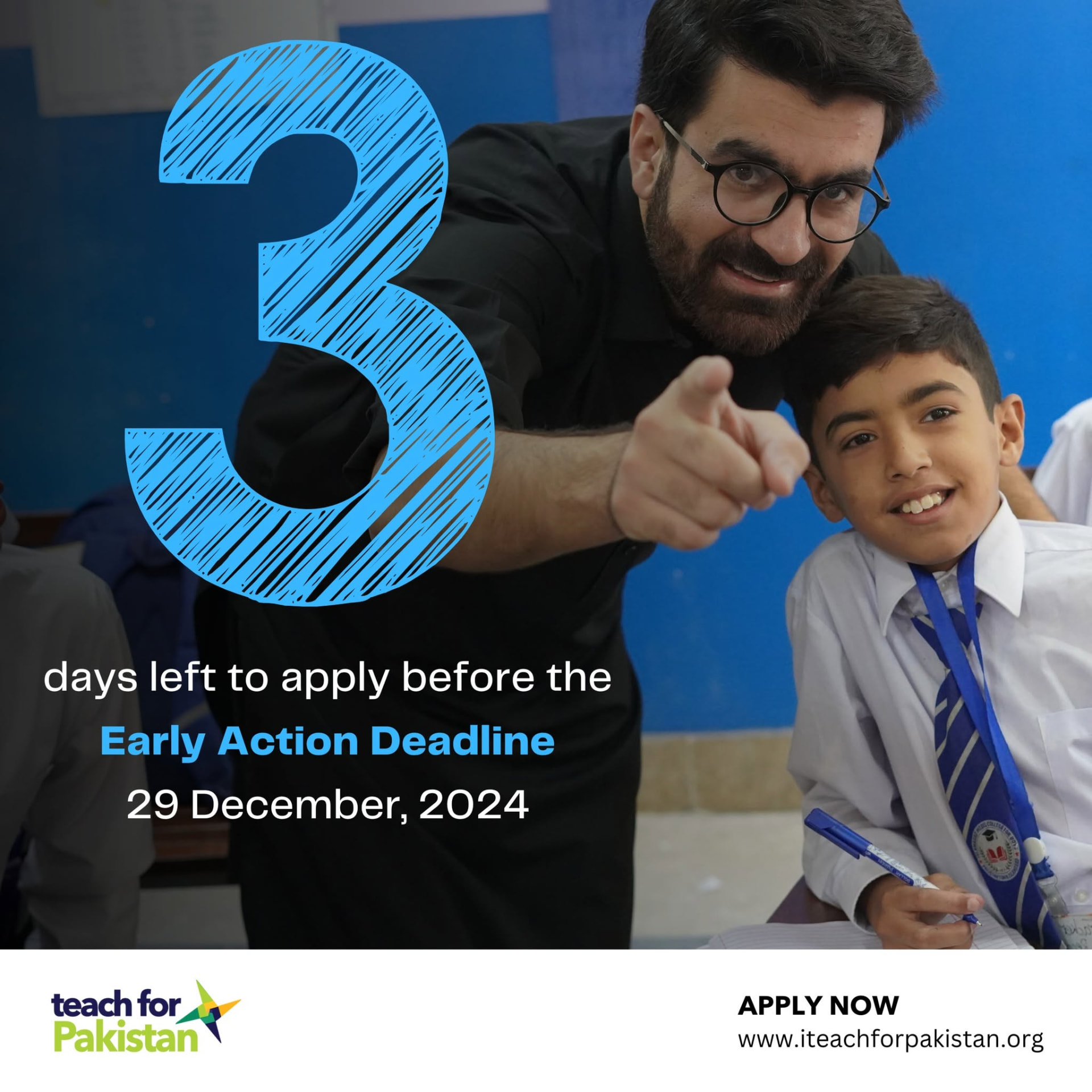
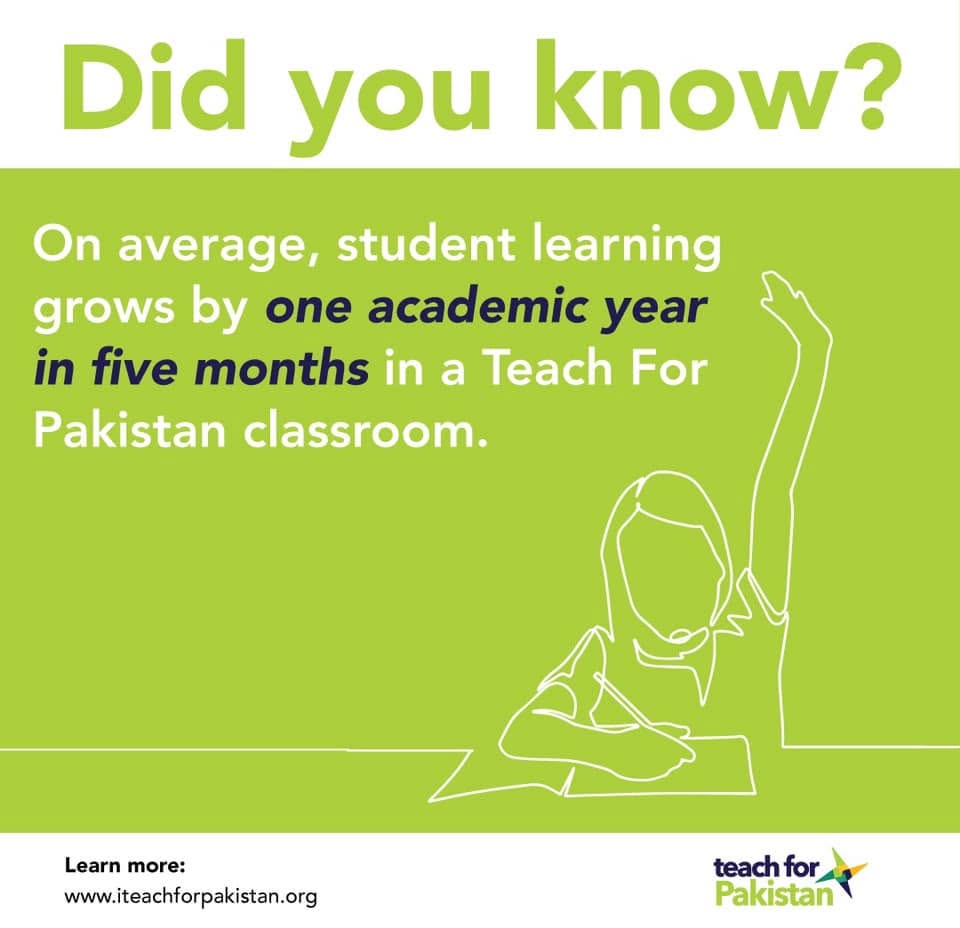
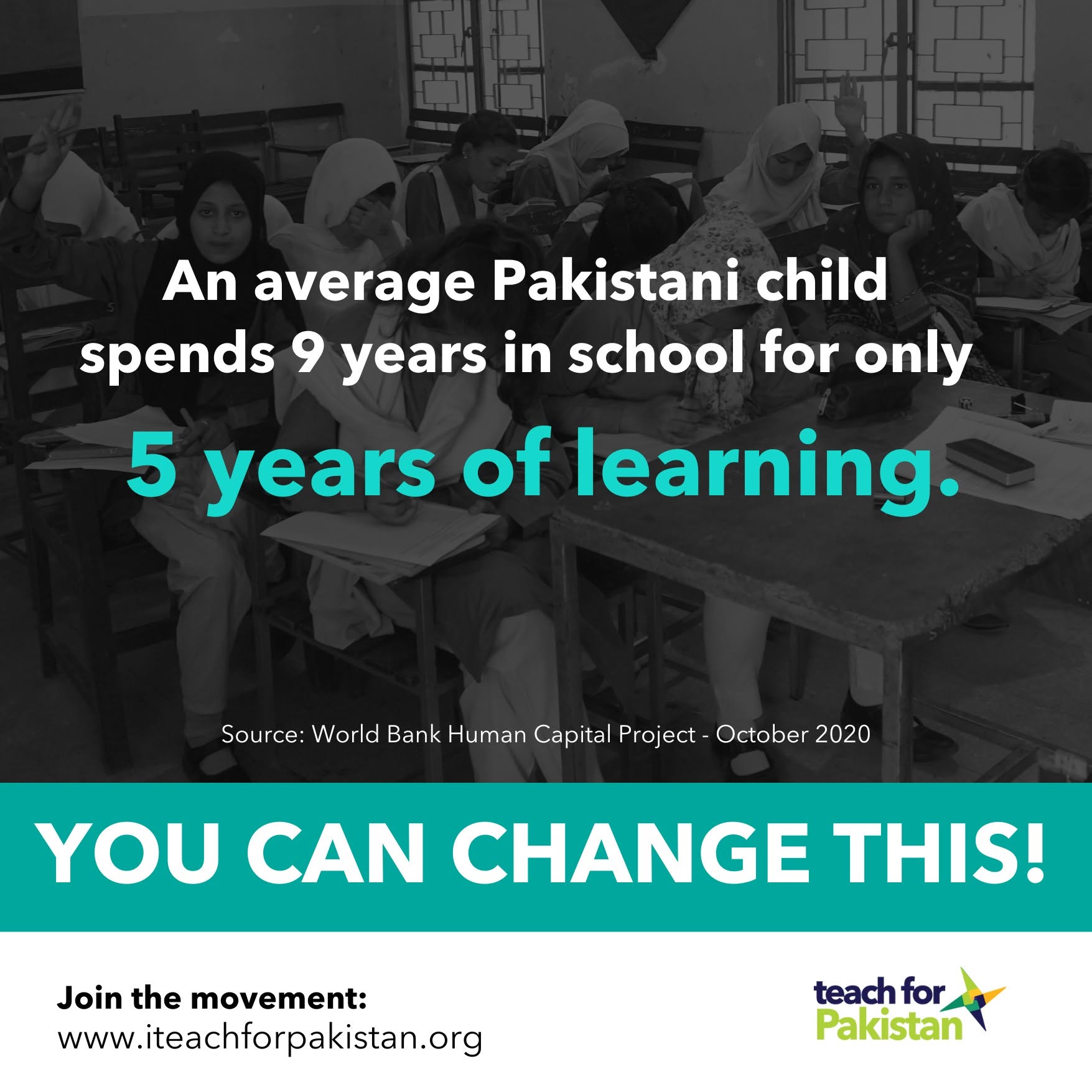
Campaign work up close.
Read more about the work Teach For Pakistan does.
Explore Teach For Pakistan ↗