← All work

Narratives & Interventions · 2026

after the flow.

A design-led health literacy project exploring how illustrated storytelling can make menopause knowledge more human, relatable, and accessible.

Role
Researcher, narrative designer, illustrator
Context
Semester project · University of Aveiro, Portugal
Duration
4.5 months
Year
2026
Participants
6 women across 6 countries

Challenge

Menopause is one of the most universal human transitions, and yet it remains one of the least visibly communicated.

Most public communication about menopause still relies on clinical formats: symptom checklists, generic medical language, and one-size-fits-all health advice. The result is information without resonance. People may encounter the facts, but still fail to see themselves inside them.

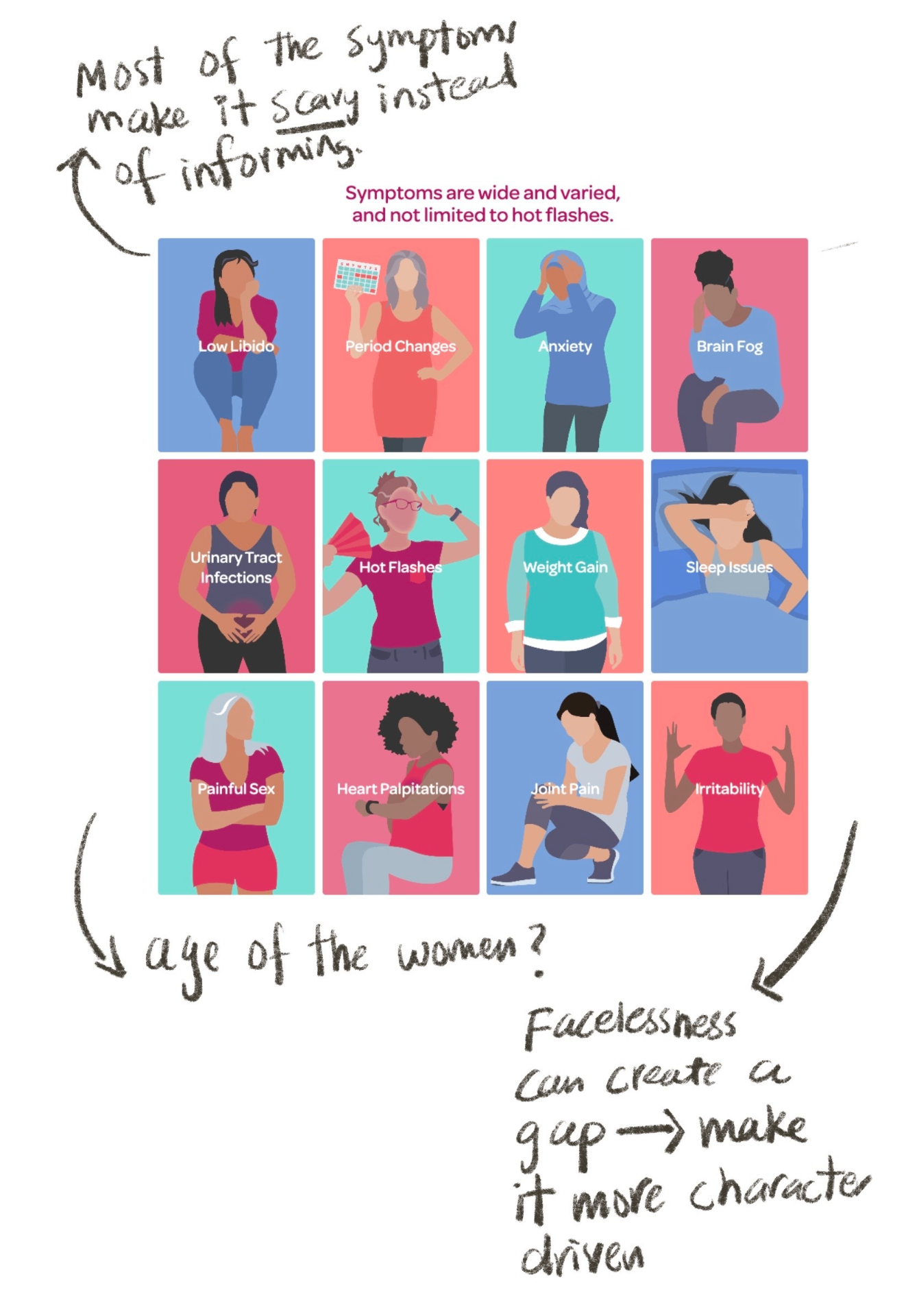
Annotated symptom grid showing how menopause communication often feels scary, faceless, and disconnected from real people
Annotating an existing symptom grid: most communication makes menopause scary instead of informing, and facelessness creates distance from the person living it.

The challenge is broader than better health content. It is a question of how society makes space for a transition that is physiological, emotional, relational, and cultural all at once. How do we communicate menopause in ways that feel human, specific, and emotionally legible, rather than flattened into medical shorthand?

Facts

What dominant communication still misses.

94%of women say they have not received any education about menopause.

Public narratives still over-rely on symptom lists and generic medical language, even though menopause often includes anxiety, sleep disruption, low libido, grief, confusion, and changes in identity, work, intimacy, and self-image.

The issue is not simply lack of information. It is also a communication problem: the dominant formats rarely create recognition, nuance, or emotional entry points.

Observations

What emerged through listening.

Across different countries and life stages, the women described being unprepared for menopause and having to invent private ways of understanding it. Their stories were rarely organised as medical timelines; they were organised through images, routines, objects, relationships, and metaphors.

A painting practice, a marathon, a kitchen, a camera, a closet, a changing bedroom dynamic. These became more expressive than clinical terminology alone. Illustration proved useful not just aesthetically, but structurally: it allowed privacy, cultural specificity, and emotional texture to coexist.

Framing

The gap is one of form, tone, and access.

The communication gap around menopause is not only about what is being said, but how it is being said. When communication becomes too clinical, too anonymous, or too linear, it can fail to hold the complexity of actual lived experience.

How might we make menopause communication more human, emotionally resonant, and narrative-driven, without sacrificing accessibility or clarity?

Values

What guided the project.

  1. 01

    Anonymity as dignity.

    Participants are represented through illustration rather than photography, with identifying details anonymised. Privacy is protected while specificity is preserved.

  2. 02

    Lived experience as expertise.

    Women navigating menopause are positioned as authors of their own transitions, not subjects of inquiry. Their metaphors and routines shaped the system.

  3. 03

    Emotion as information.

    Grief, confusion, shame, frustration, and relief are treated as meaningful knowledge, not noise around the medical facts.

Participants

A small but diverse narrative sample.

The project was built through long-form conversations with six women across six countries, each navigating a different form of menopause. Rather than treating them as case data, the project approached each participant as the author of her own transition. All identifying details have been anonymised.

Leena

56 · Portugal

Late menopause

Jaspreet

28 · Canada

Premature ovarian insufficiency

Chloe

41 · UK

Early menopause

Sarah

51 · Belgium

Natural menopause

Samantha

44 · Philippines

Medical menopause

Amina

48 · Pakistan

Perimenopause

Process

Building the archive through story, illustration, and iteration.

  1. 01

    Research & framing

    I began by studying how menopause is typically communicated across health platforms and public discourse, identifying a dominant clinical tone that often leaves little room for emotional nuance or lived complexity.

  2. 02

    Conversations & listening

    I conducted long-form conversations with six women across six countries, treating interviews as moments of trust and narrative building rather than information extraction.

  3. 03

    Editing, synthesis & consent

    The transcripts were edited collaboratively and distilled into narrative arcs, while illustration created a way to protect identity without losing specificity, dignity, or emotion.

  4. 04

    Metaphor & visual translation

    Each woman's experience was translated into a distinct visual world, using objects, settings, and metaphors to communicate forms of menopause that are often flattened into medical shorthand.

  5. 05

    Illustration & archive design

    The final outcome was shaped as an illustrated archive: a slower, more human communication format where readers move through stories rather than through an impersonal symptom checklist.

Process sketches

Sketches, scene studies, and early visual thinking.

These drawings trace how each narrative was translated into an illustrated world, moving from rough structure to more resolved scenes, metaphors, and character-based storytelling.

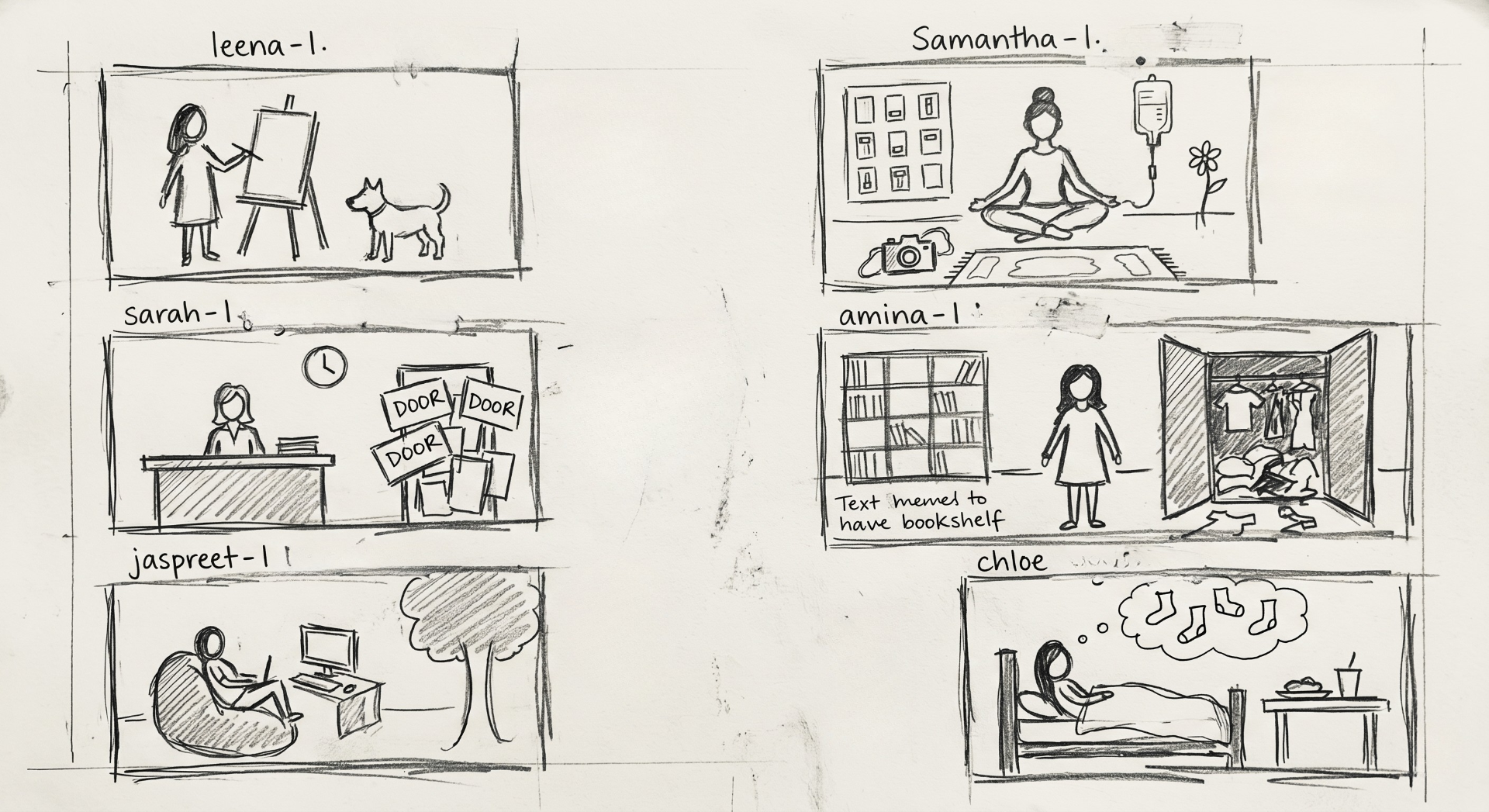
Storyboarding the six narratives

Storyboarding the six narratives

An early sheet mapping each participant into a distinct visual scene and metaphor.

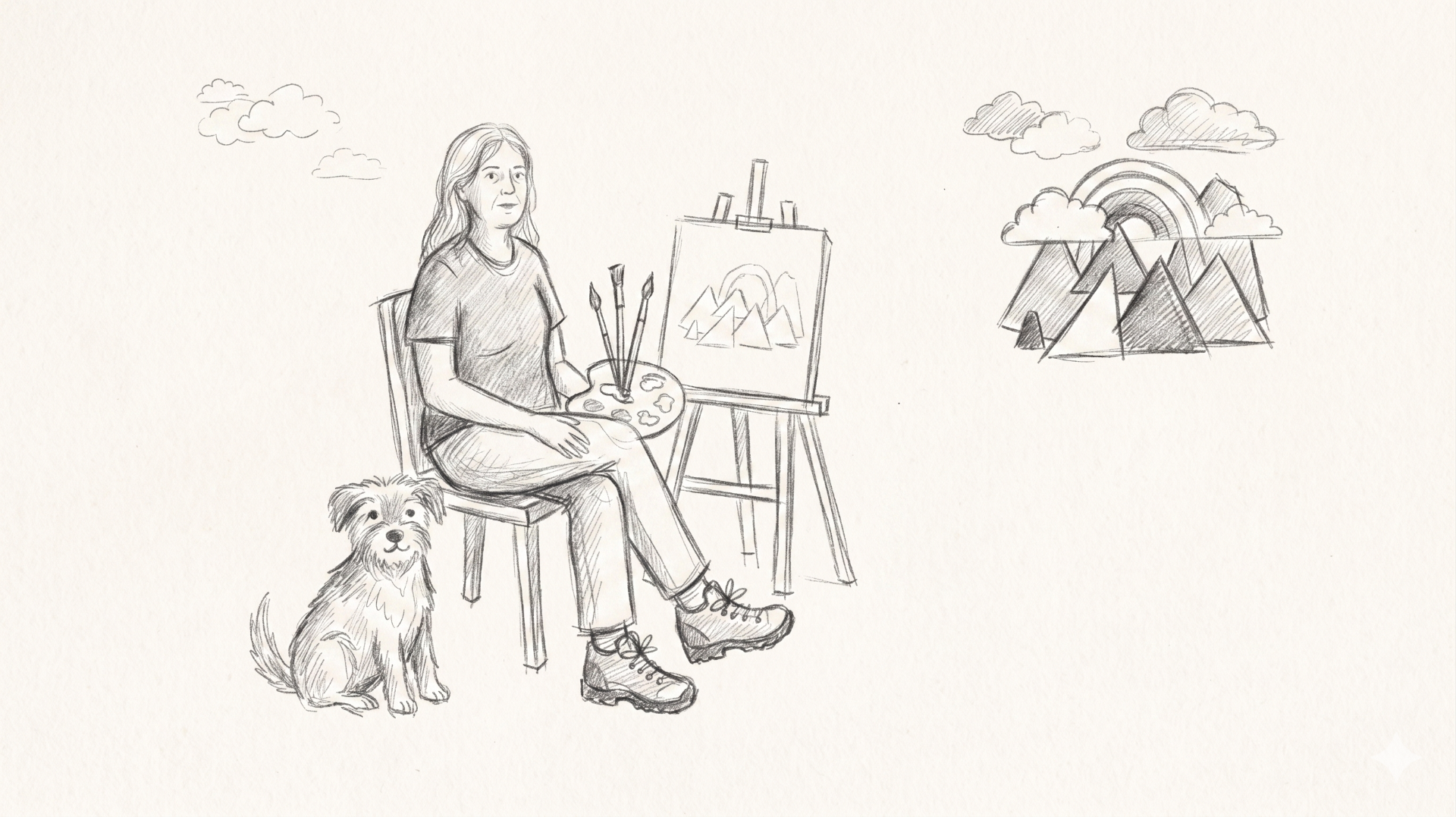
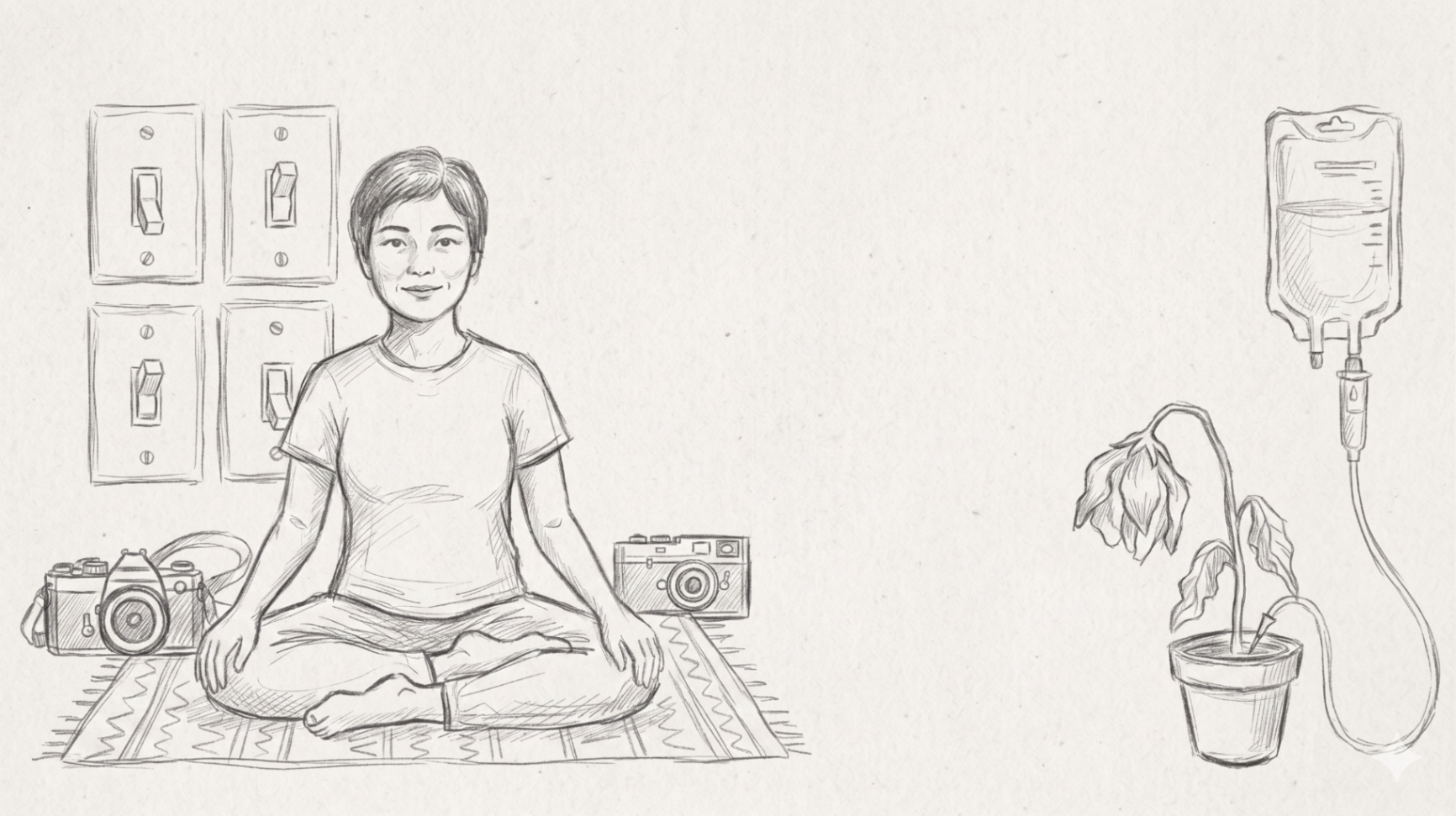
Leena, first scene study

Leena, first scene study

Early composition work exploring painting, landscape, and a companion presence.

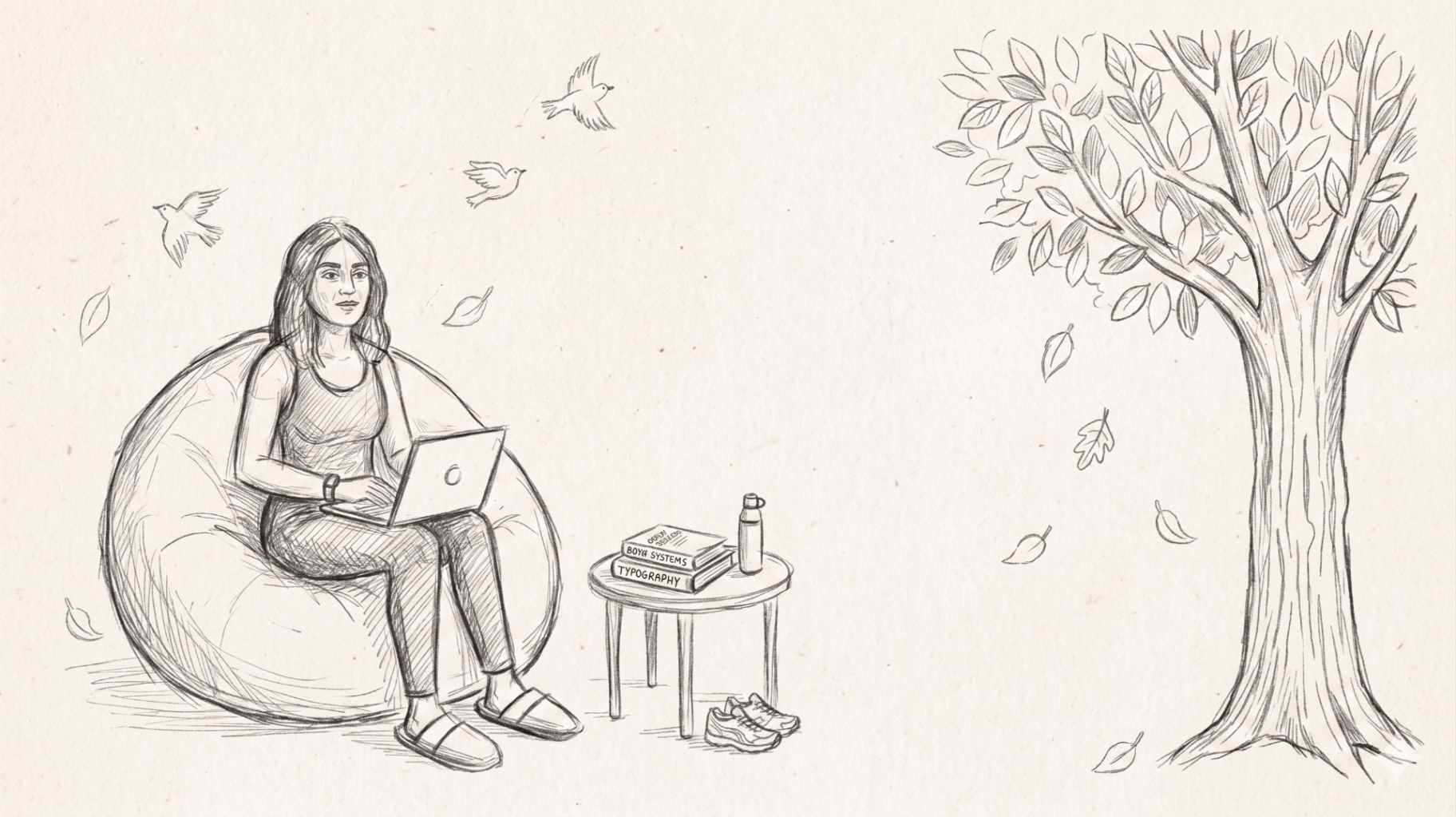
Jaspreet, motion and stillness

Jaspreet, motion and stillness

Falling leaves, birds, and quiet study became metaphors for time, transition, and self-recovery.

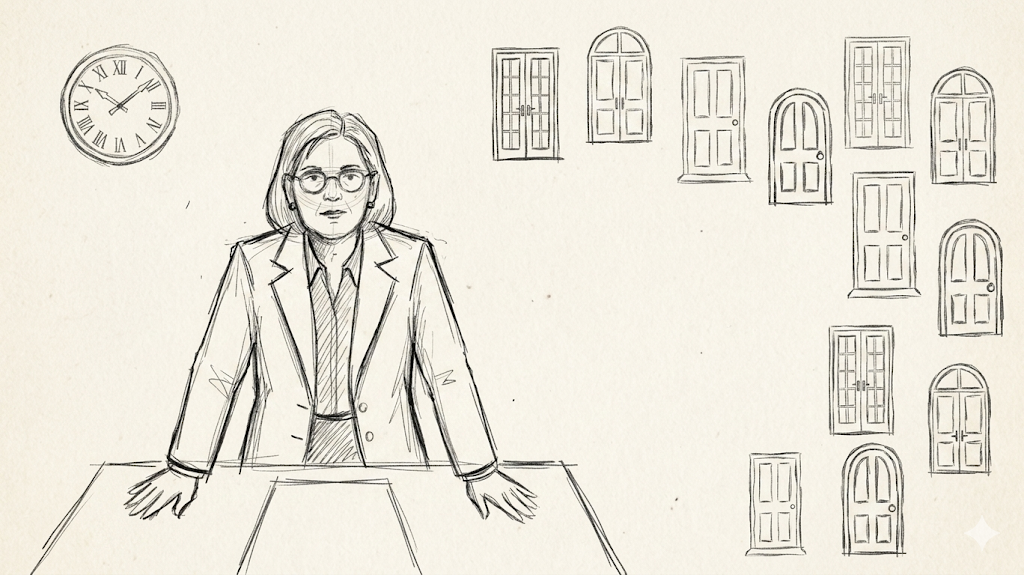
Sarah, metaphor framing

Sarah, metaphor framing

Doorways and office posture became a visual way to talk about transition, pressure, and instability.

Samantha, medical menopause

Samantha, medical menopause

A visual contrast between stillness, treatment, and the quiet resilience of self-composure.

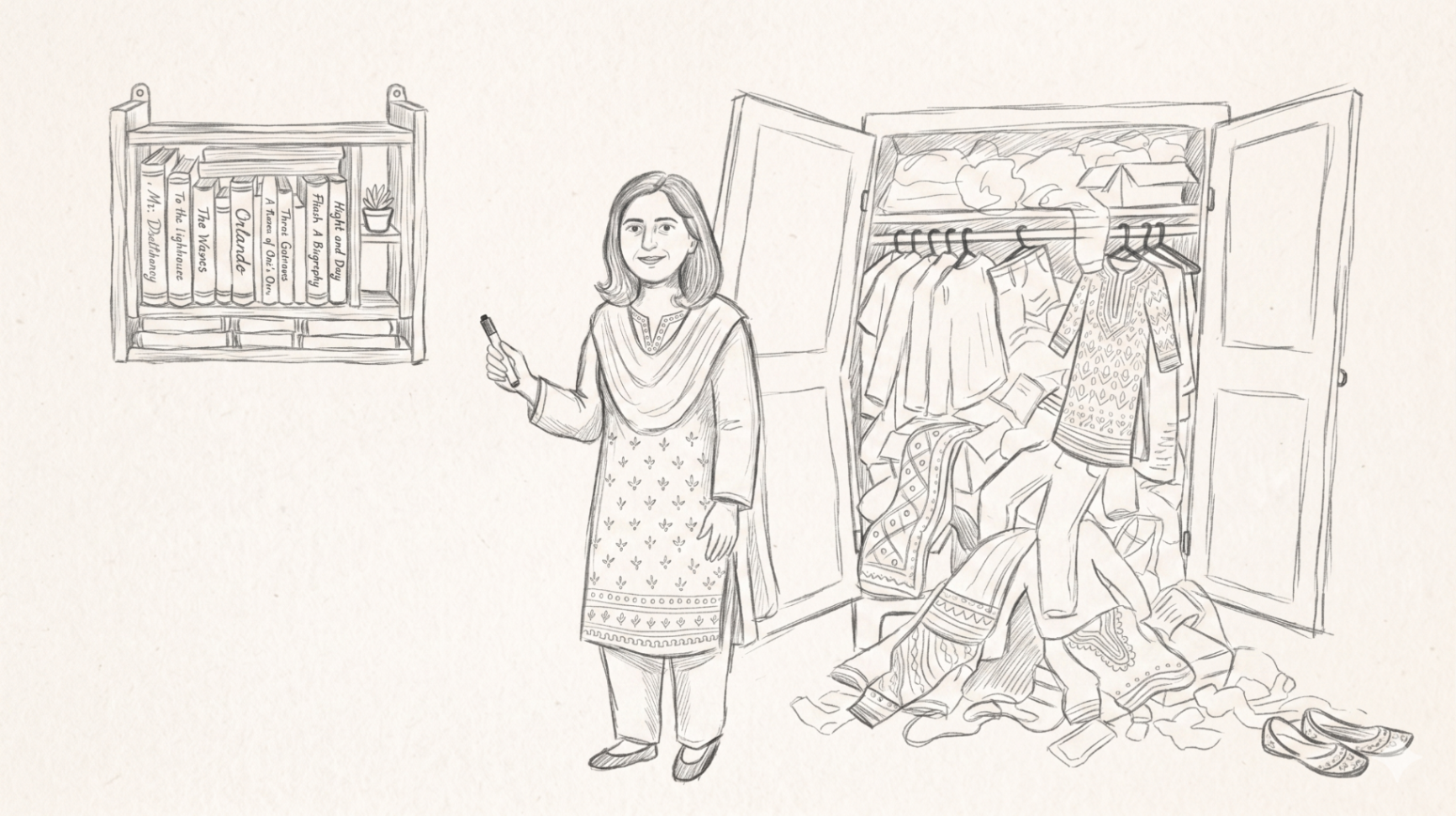
Amina, privacy and overflow

Amina, privacy and overflow

Bookshelf and wardrobe motifs were used to hold ideas of concealment, order, and release.

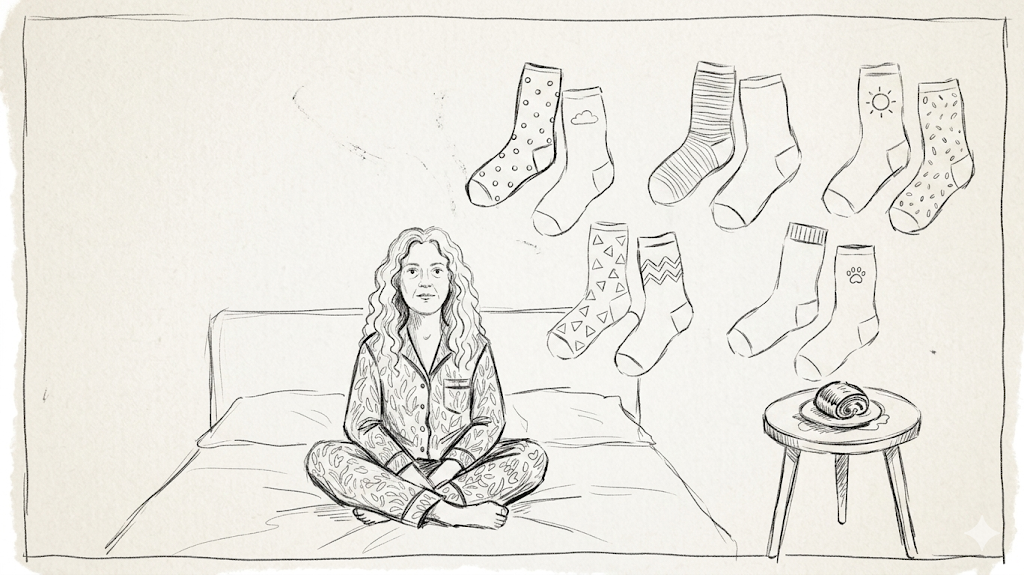
Chloe, intimacy and discomfort

Chloe, intimacy and discomfort

Bedroom objects and repeated socks helped frame bodily discomfort inside the ordinary domestic sphere.

Outcome

A format rooted in lived experience.

The final outcome is an illustrated storytelling archive that communicates menopause through lived narratives rather than detached explanation. It reframes women experiencing menopause as knowledge holders, and positions narrative design as a way to build empathy, recognition, and access.

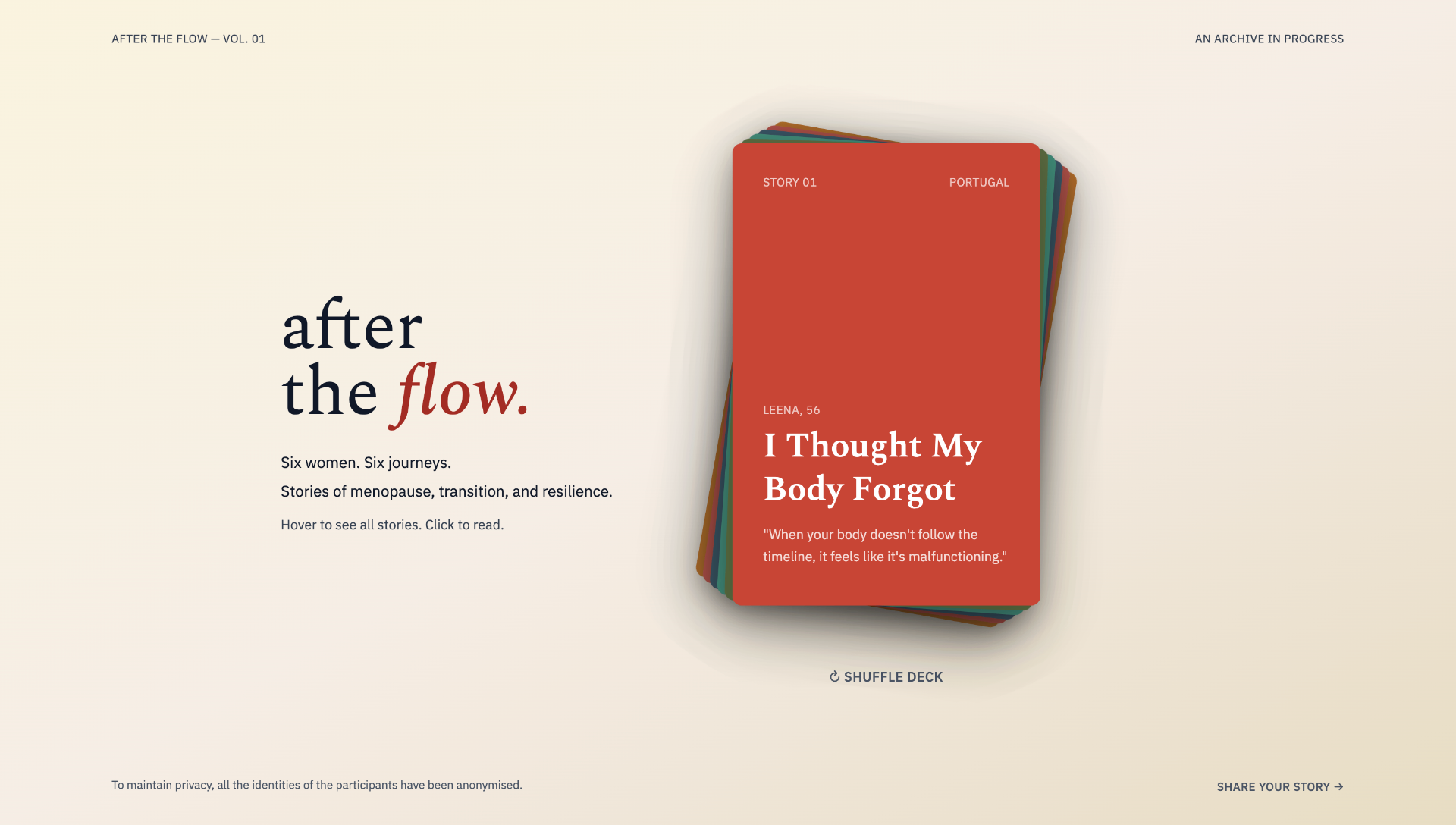
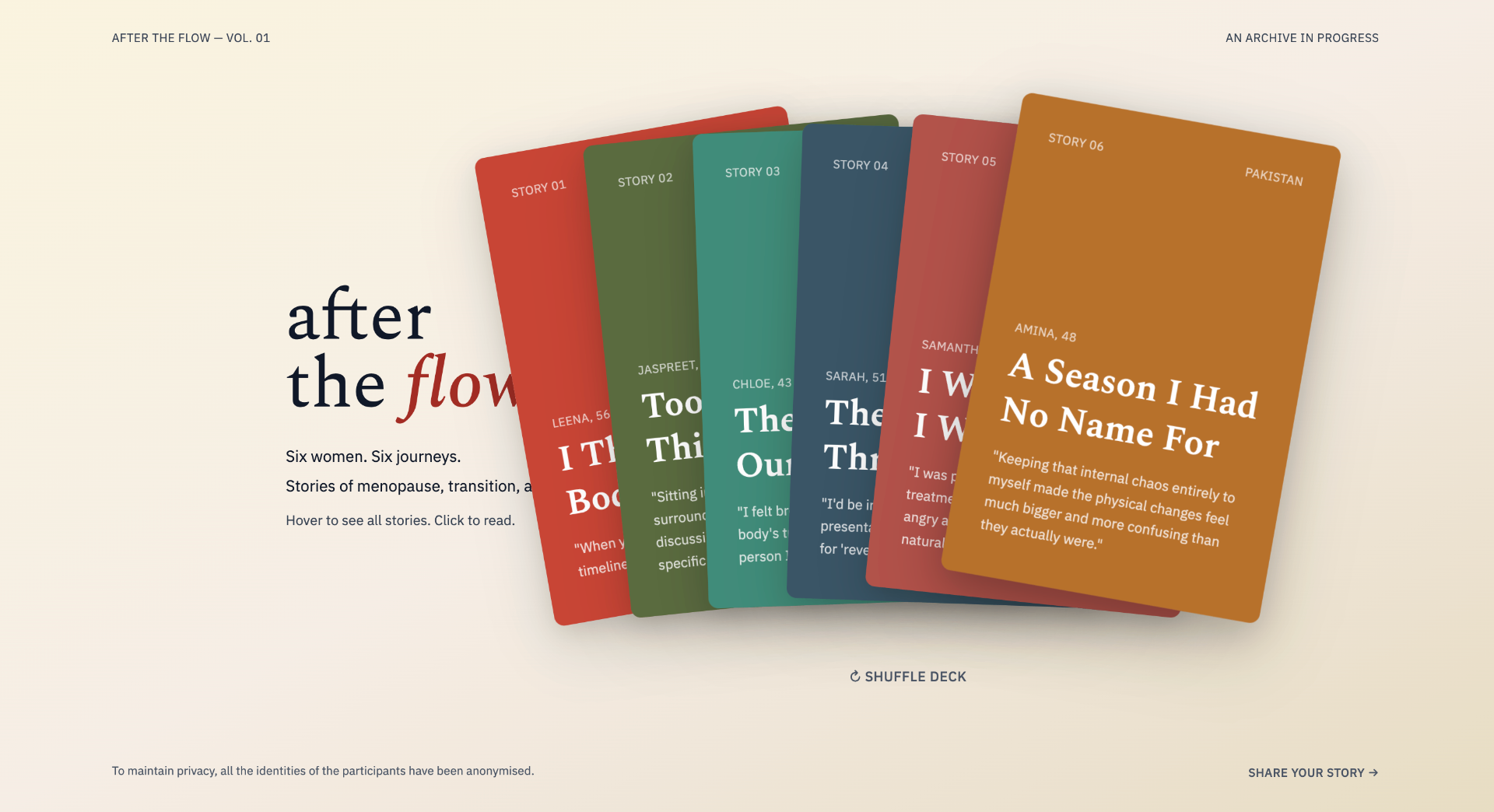
Screenshot of the after the flow archive website, showing six story cards fanned out like a deck
The live archive presents the six stories as a shuffled deck of cards, inviting readers to pick a story rather than scroll a checklist.

The archive holds six stories, but the system is designed to keep growing, inviting readers to move from a first point of recognition toward a broader, more humane conversation around menopause.

Selected stories

A few story glimpses from the archive.

Instead of showing every story here, this page shares a few glimpses from the larger archive and invites readers to continue exploring the full set of narratives.

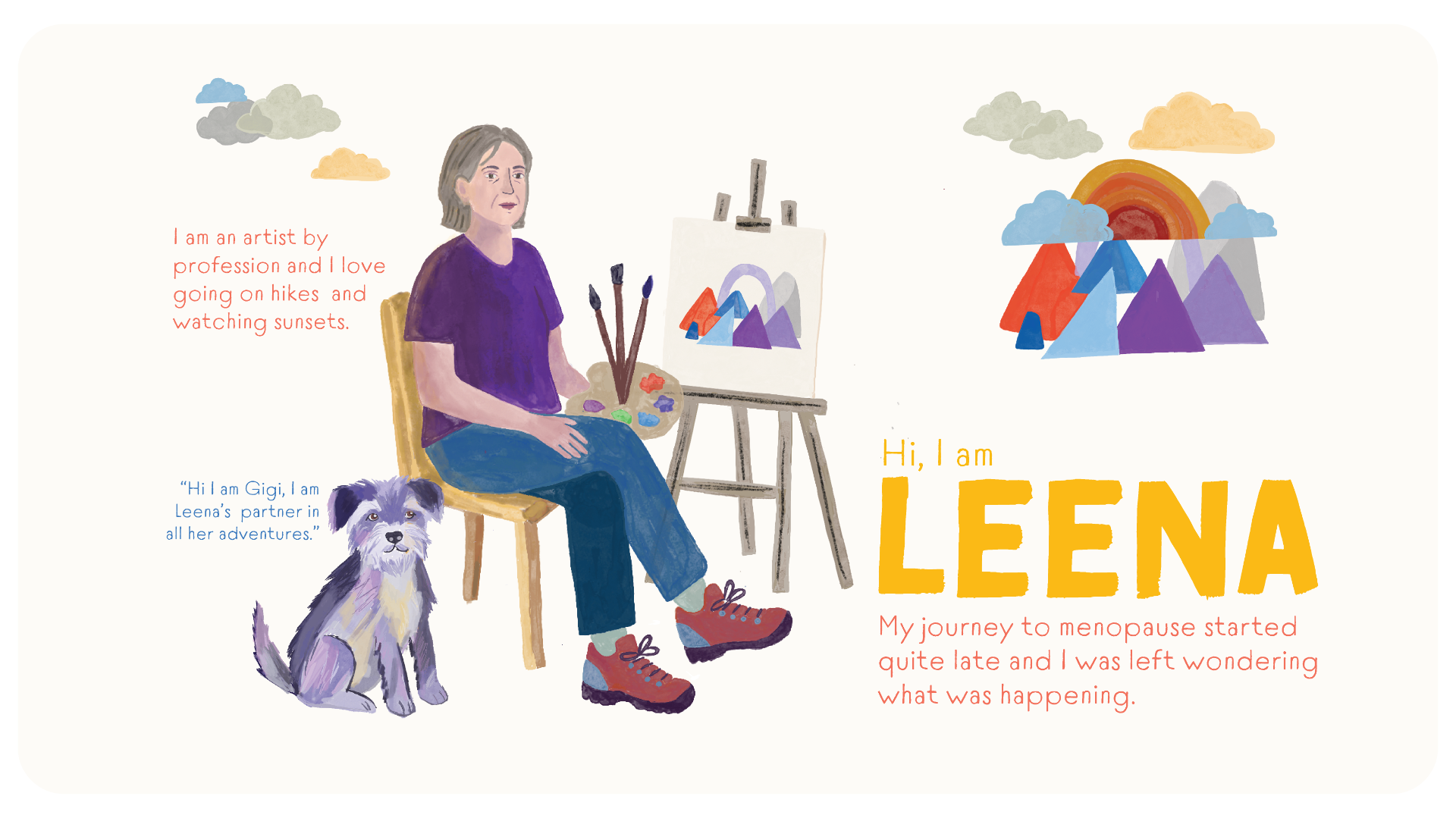
Leena illustrated portrait

Story 01 · Late menopause

I Thought My Body Forgot

Leena, 56 · Aveiro, Portugal

When your body doesn't follow the timeline, it feels like it's malfunctioning.

Leena's period arrived after 55 while her friends had long been swapping hot-flash stories. The delay made her feel outside a supposedly shared timeline, until she began to see menopause less as a failure and more as a recalibration. Painting, walking by the coast, and making space for herself became part of that shift.
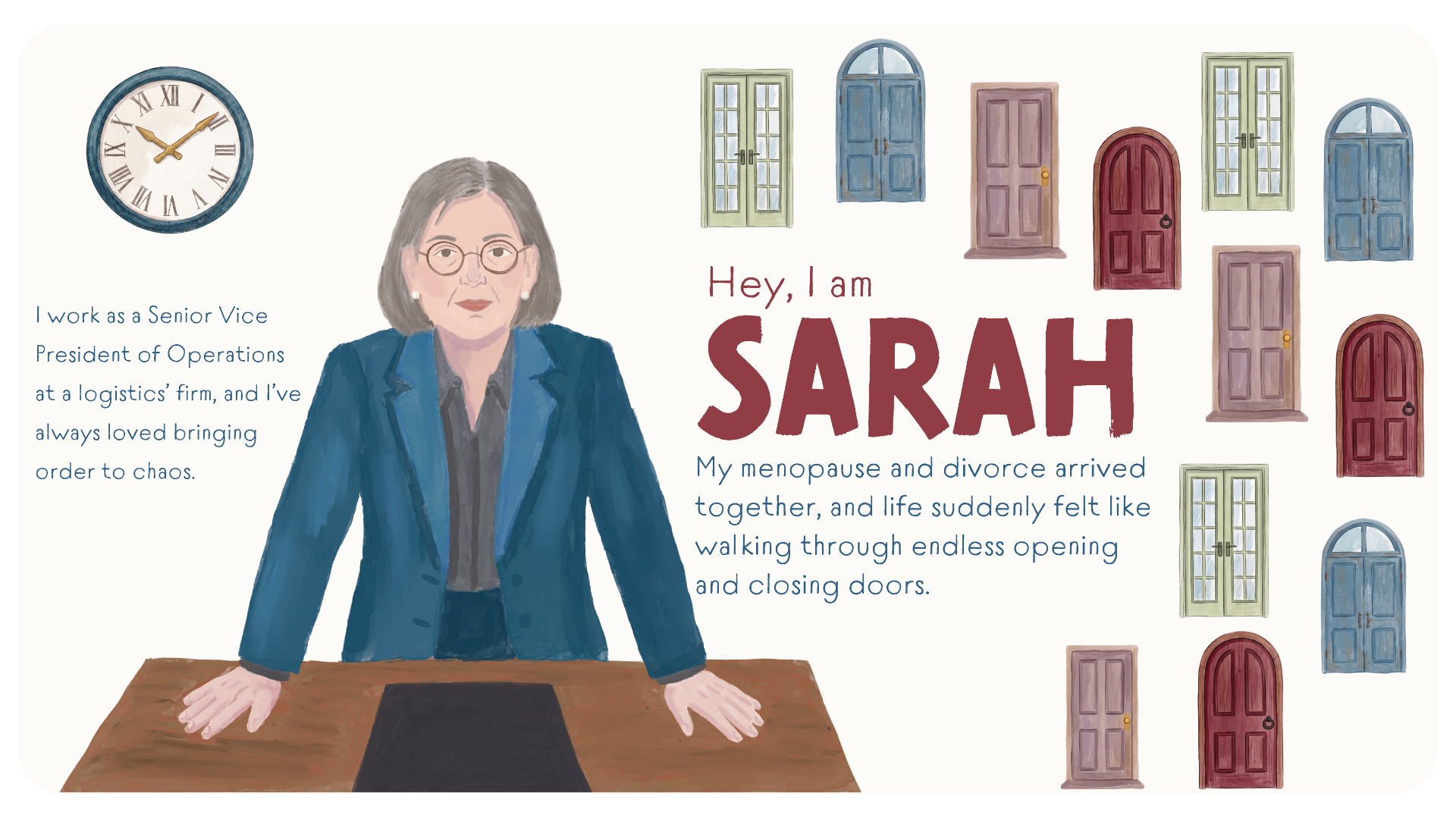
Sarah illustrated portrait

Story 04 · Natural menopause

Restructuring the Deck

Sarah, 51 · Antwerp, Belgium

I couldn't power through this using my old corporate playbook.

Sarah encountered menopause alongside the collapse of a long marriage, and the overlap made ordinary routines feel unstable. Brain fog, anxiety, and insomnia unsettled the professional certainty she had relied on for years. Instead of pushing through, she began to restructure her life on more honest terms.

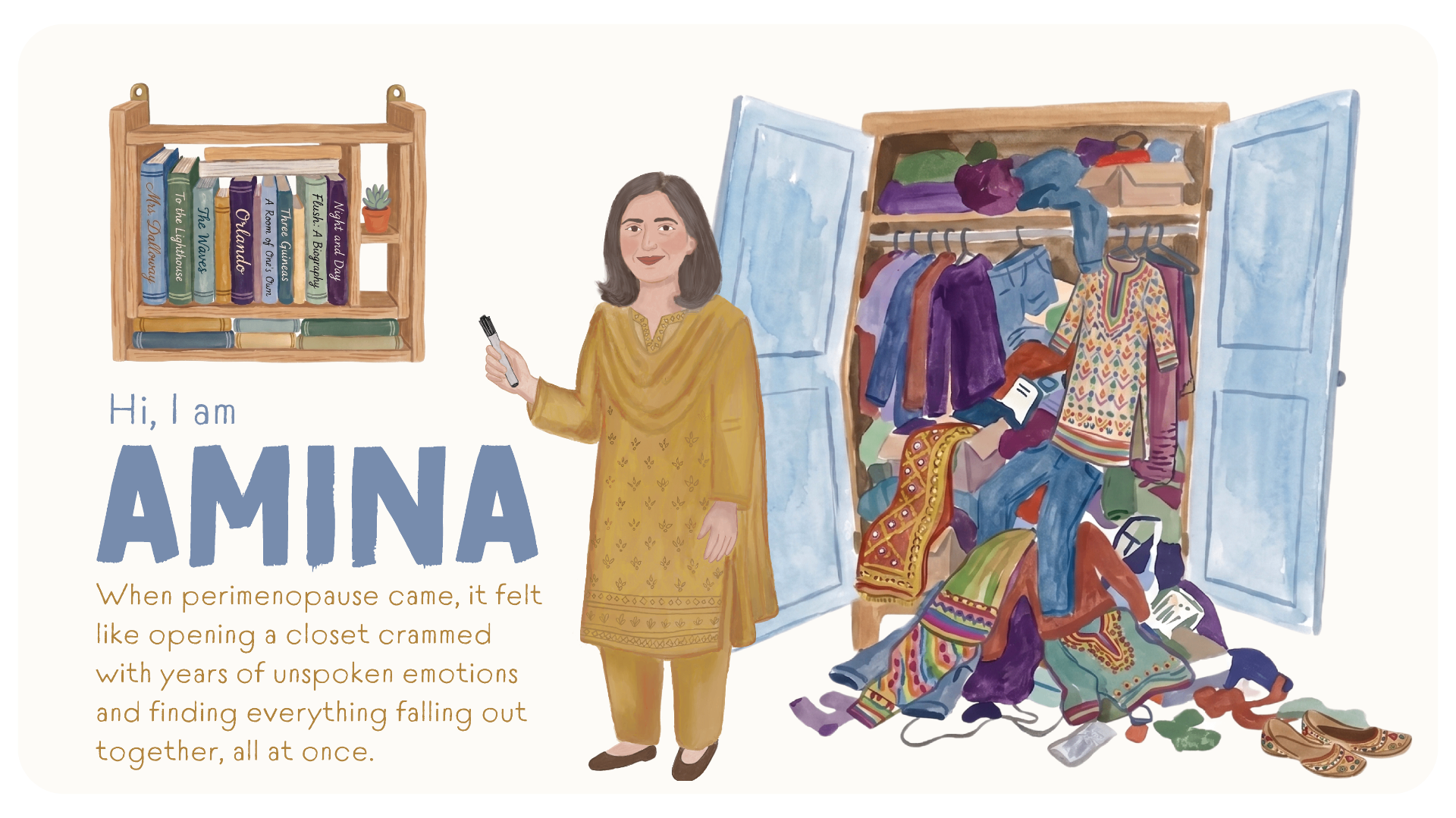
Amina illustrated portrait

Story 06 · Perimenopause

A Season I Had No Name For

Amina, 48 · Lahore, Pakistan

Privacy doesn't have to mean isolation.

Amina experienced perimenopause in a context where these bodily transitions are rarely spoken about directly. Small, private acts of adjustment carried her through, until gentle conversations with loved ones made the experience feel less isolating. Her story shows how silence can be softened without spectacle.

Want to read the full archive?

Explore all six illustrated stories in the live archive.

Explore full stories →

Reflection

What this project taught me.

The women I spoke to were not data points. They were authors of their own transitions. What struck me most was how rarely any of them had been given permission to speak about what they were going through. Illustration became a way to protect dignity while preserving specificity: letting a story be deeply personal without exposing the person. If I were to continue this work, the core insight would stay the same. The best health communication does not explain first. It recognises first.