 01
01Parents
Safety is emotional before it is infrastructural.
- →Supportive of biking in principle
- →Hesitation came from fear, not resistance
- →Busy mornings made the car easiest
Service-learning · City Hall of Genk · LUCA School of Arts · 2025
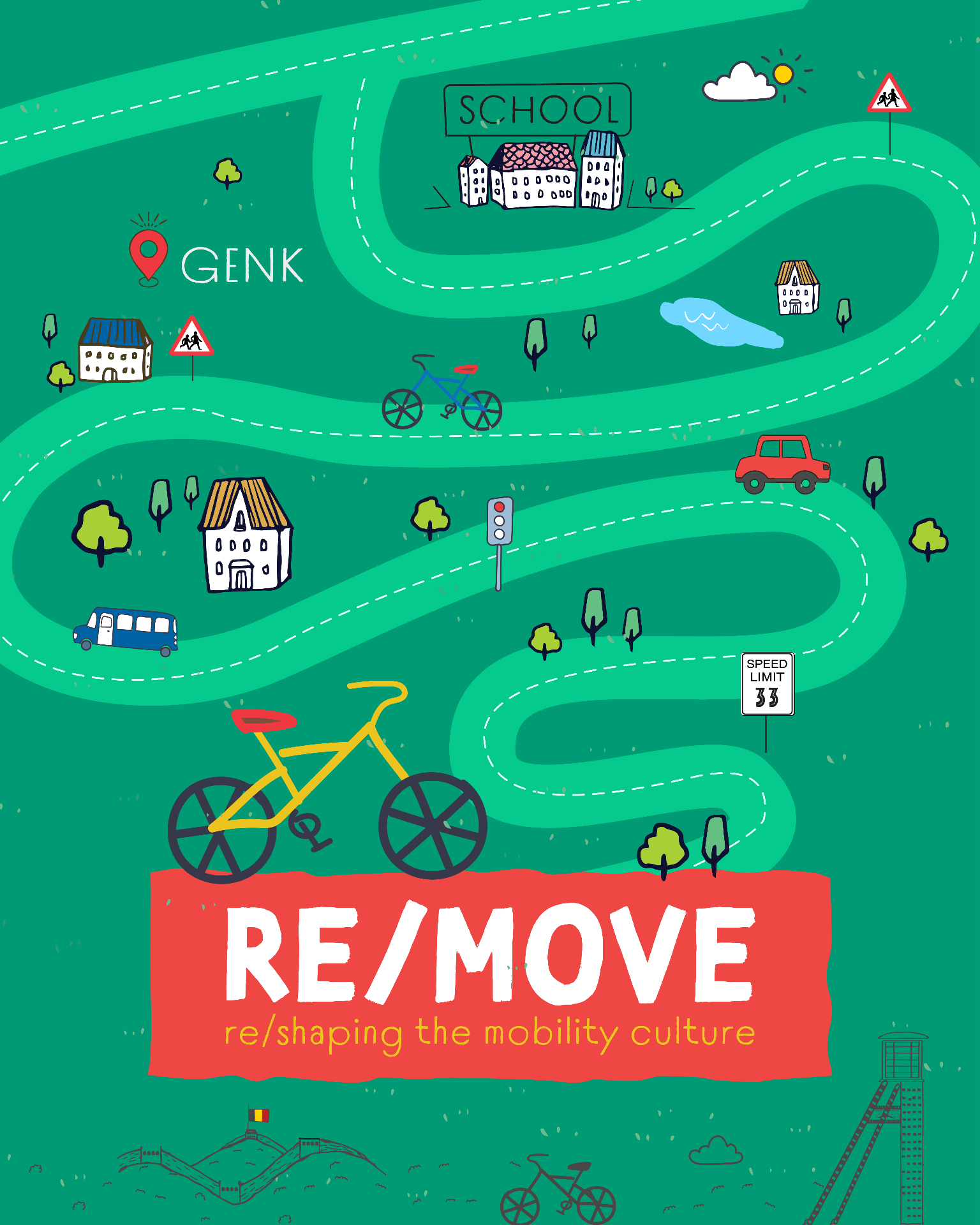
Re/shaping school mobility through participatory service design, with children, parents, teachers, and the city.
Context
Genk is a small, historically layered city in Belgium's Flanders region, with 22 schools across the city. One of the City Hall's ongoing goals is to make school neighbourhoods calmer at drop-off, safer to walk and bike through, and easier for families to move through together.
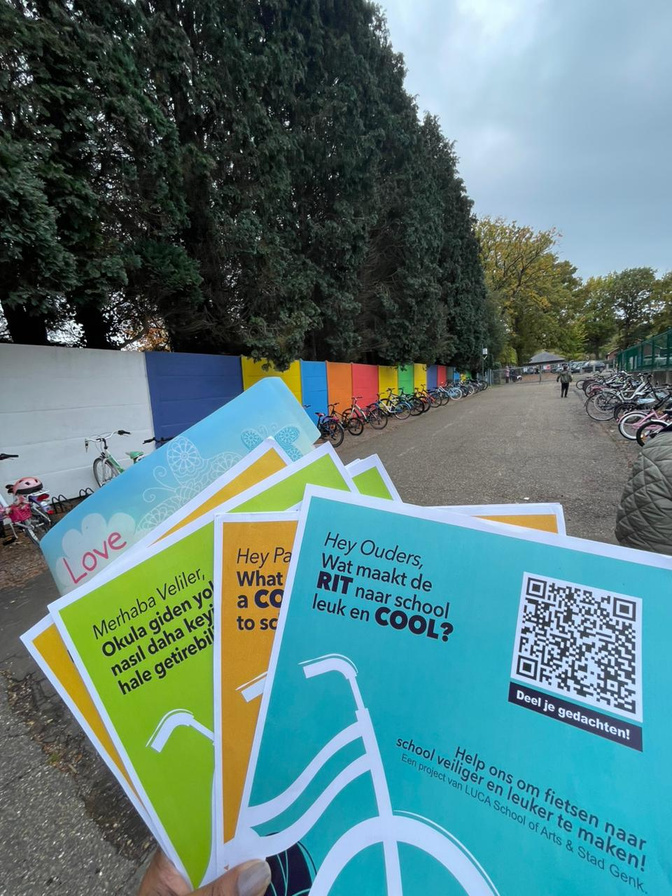
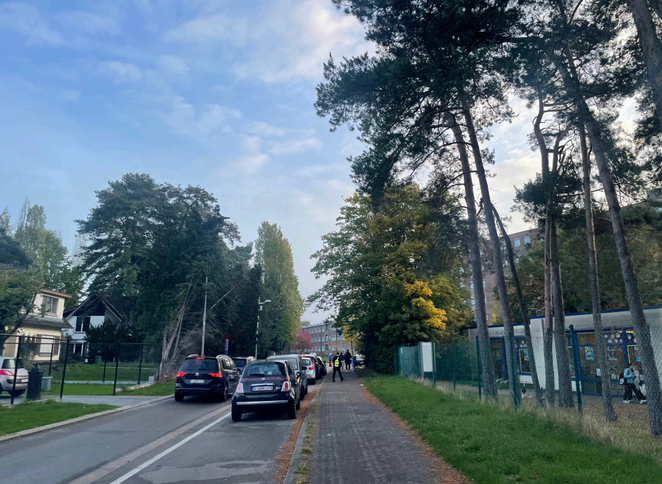
Every morning, hundreds of parents drive their children to school. Not because they want to, but because the city makes safer alternatives difficult.
We wondered how walking and cycling could feel like realistic choices rather than idealistic ones.
Design challenge
Most mobility campaigns talk to individuals: wear a helmet, choose the bike, leave earlier. That puts the entire burden on the parent at 8:15am, and ignores the relational and emotional conditions that made the car feel easiest.
We reframed the question as a service one. Not how do we change behaviour, but how do we redistribute the labour of feeling safe.
Core value
Cities are living systems, shaped by routine, memory, and negotiation. Our role was not to design for a community but with one.
Ramisha and I were outsiders to the school, and both of us come from South Asian backgrounds. It would have been easy to lean on our own experiences of school and streets. We chose instead to let Genk teach us before we offered anything back.
Community
Getting a child to school safely is not a solo act. It is distributed across a web of people, each with a different stake, a different rhythm, and a different kind of care to give.
Children
The ones making the trip
Parents
Carrying the daily worry
Teachers
Holding the school day
Neighbours
Sharing the street
Police & crossing guards
Present at the gate
City Hall
Setting the conditions
The school
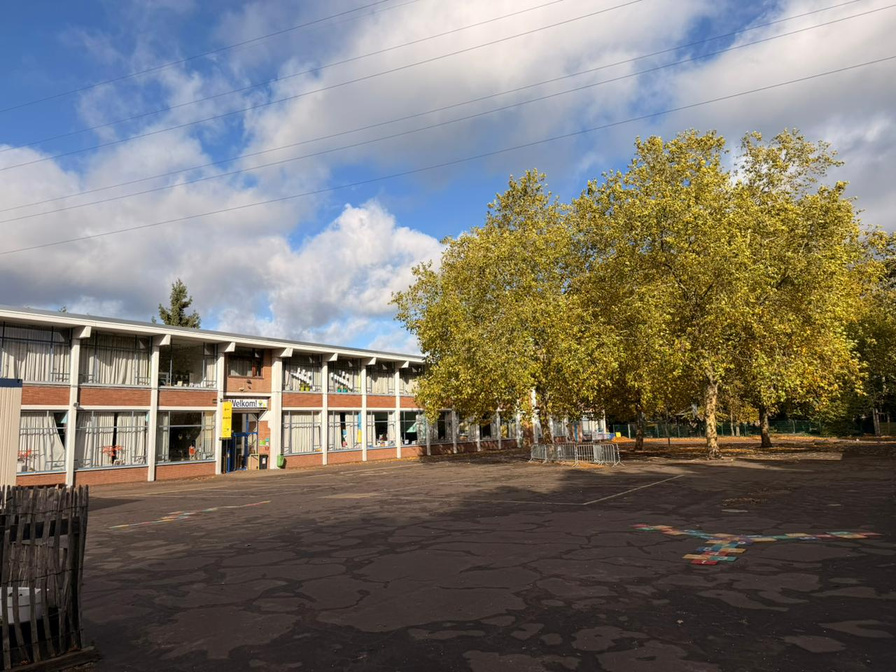
One school, open to us for the length of the project. We spent time at arrival and departure, sat in on lessons, and ran sessions with children and staff.
Approach & methods
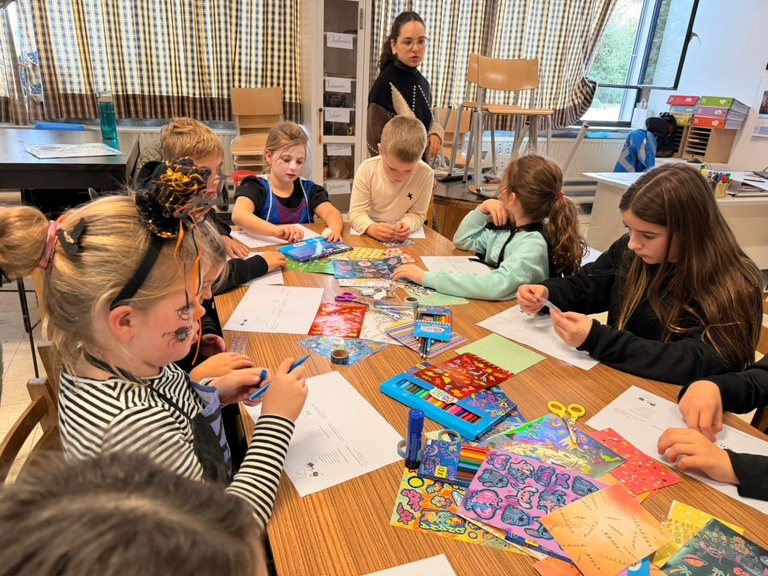
Children became co-designers through games and drawing. Parents shared routines and worries. Teachers surfaced what schools can and cannot carry. Observation kept us grounded in behaviour as it actually happens.
Phase
Listening
Being present in the everyday, without an agenda.
Phase
Co-creating
Making with people, not for them.
Phase
Making
Prototyping fast, reflecting honestly.
Participation as method, not just as data collection.
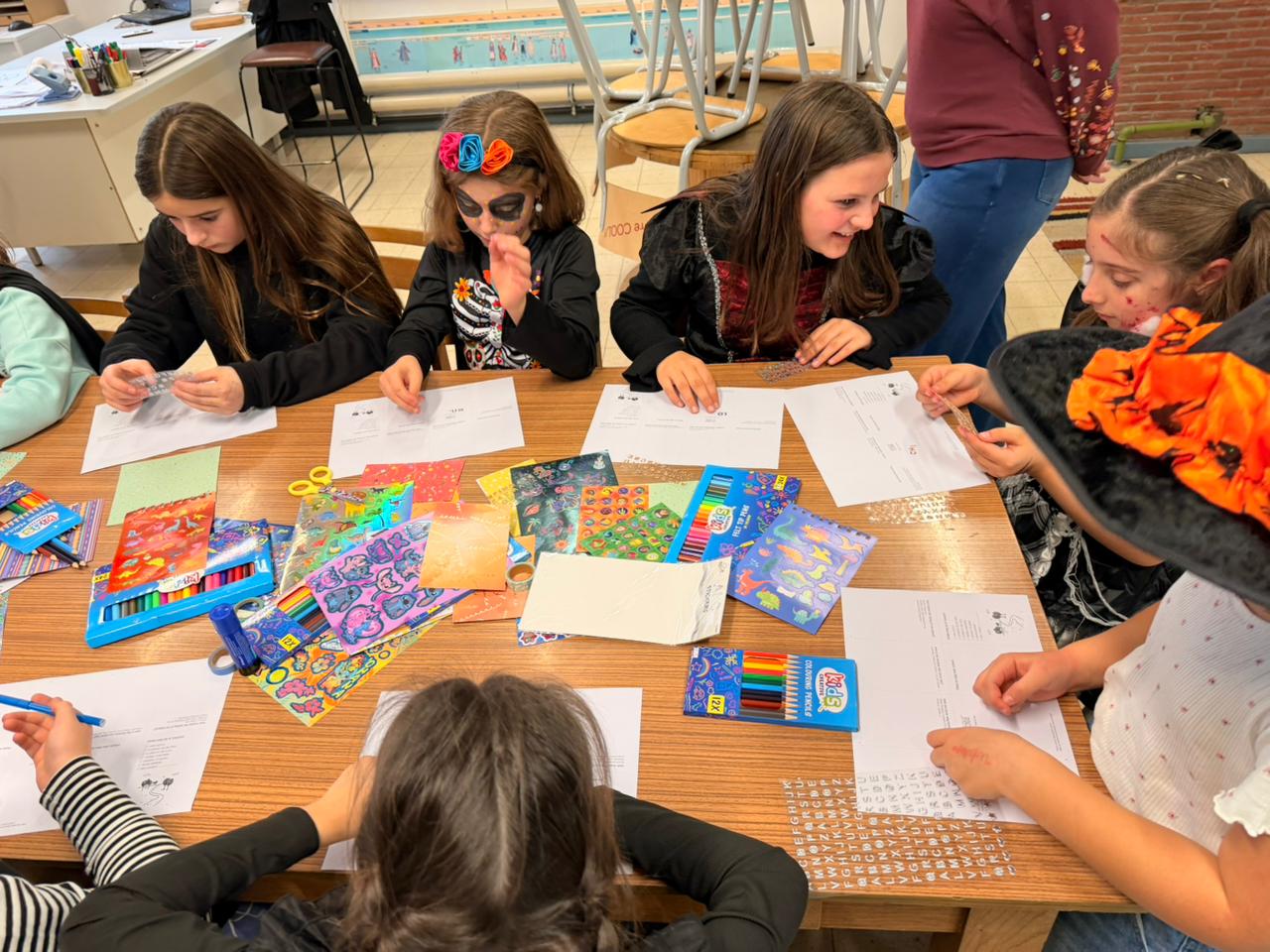
Co-creation with children
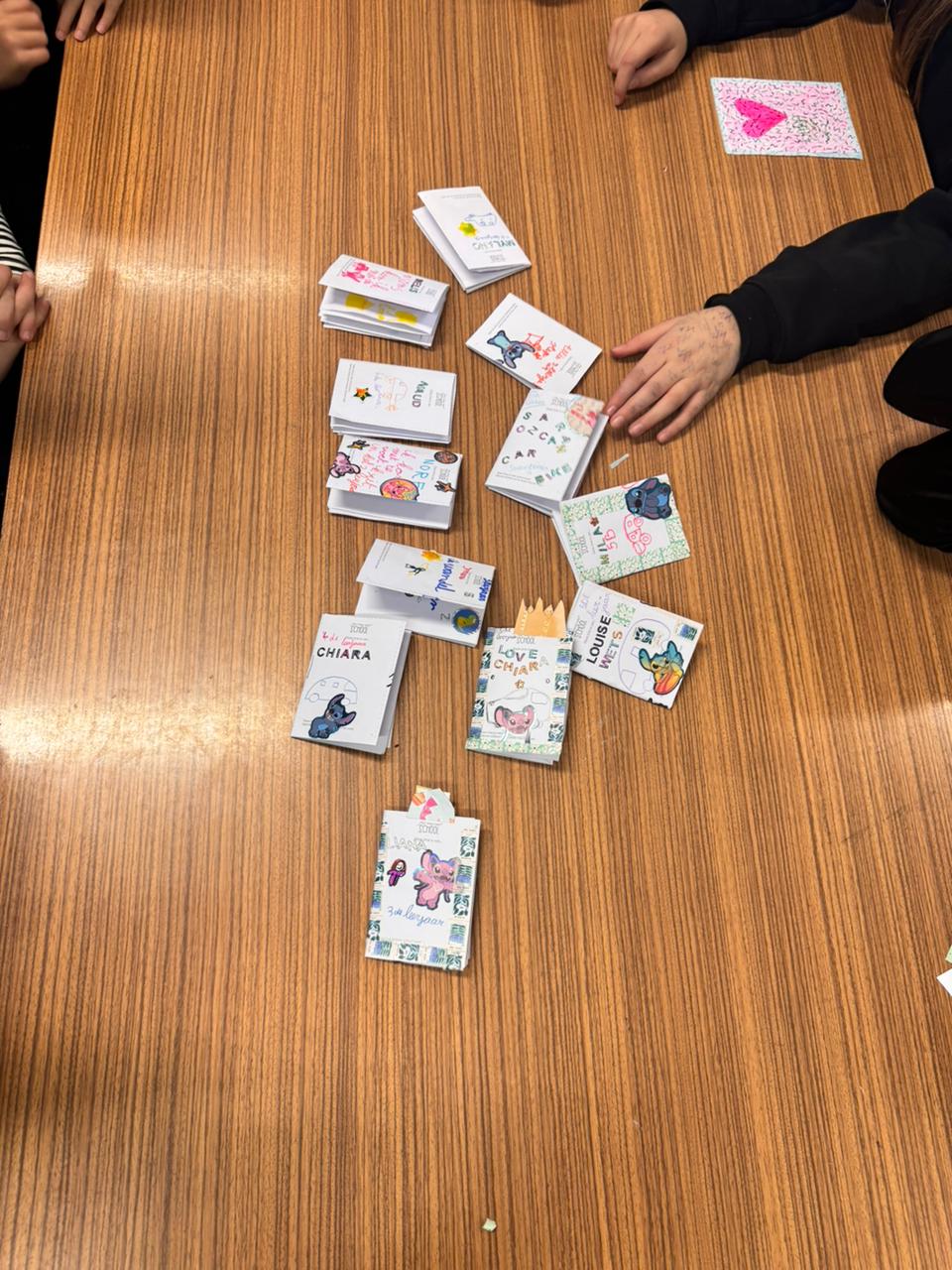
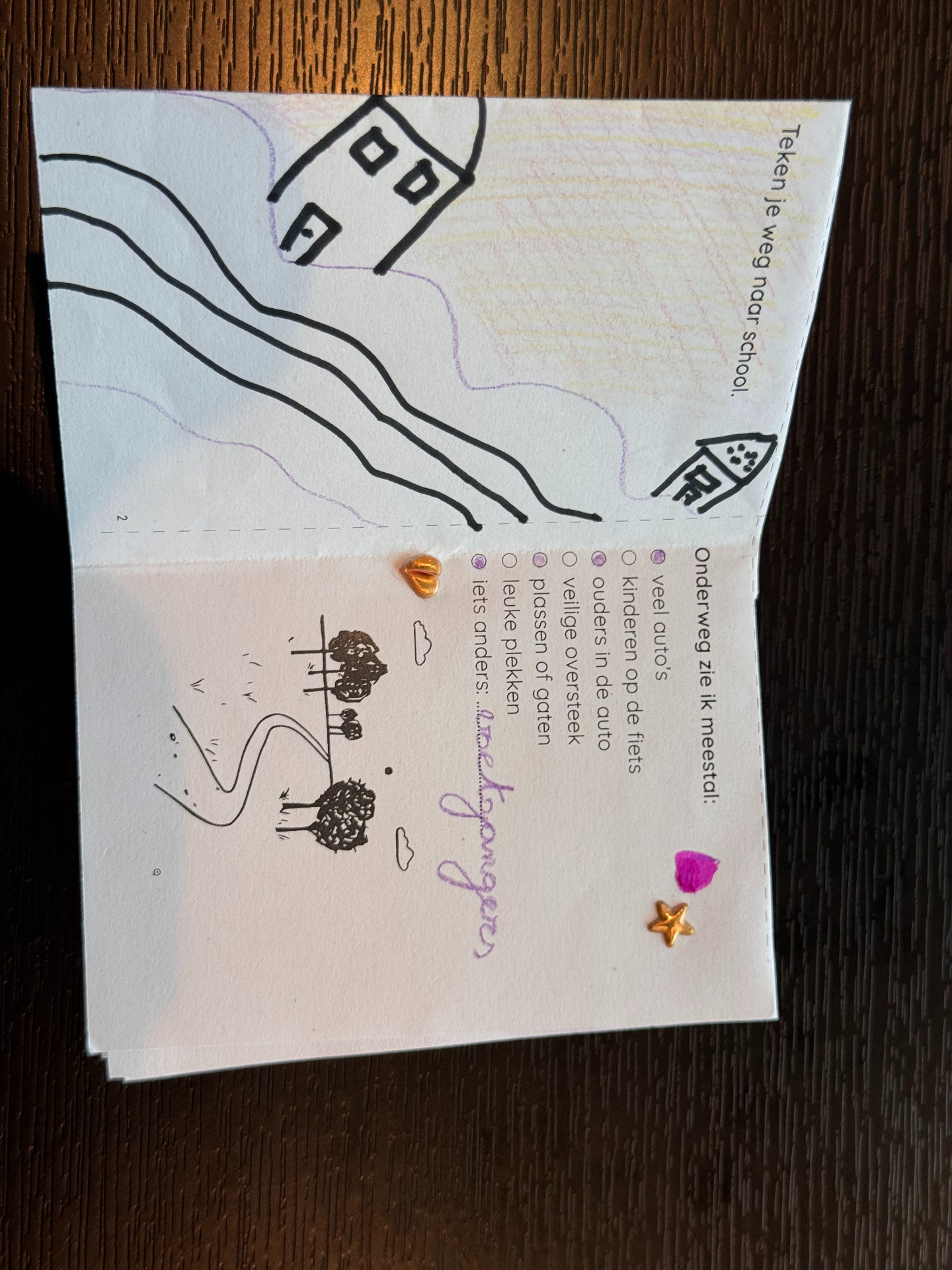
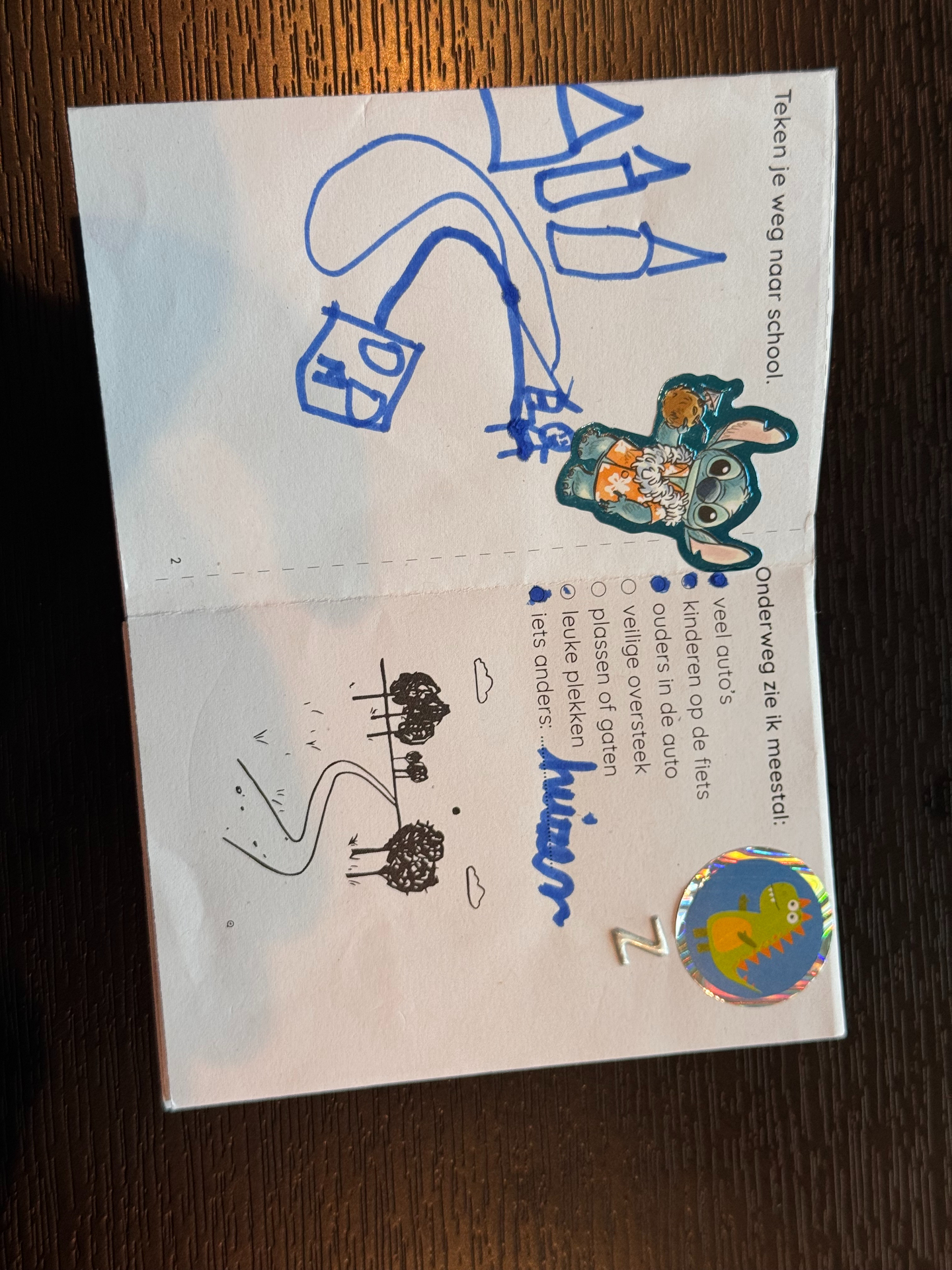
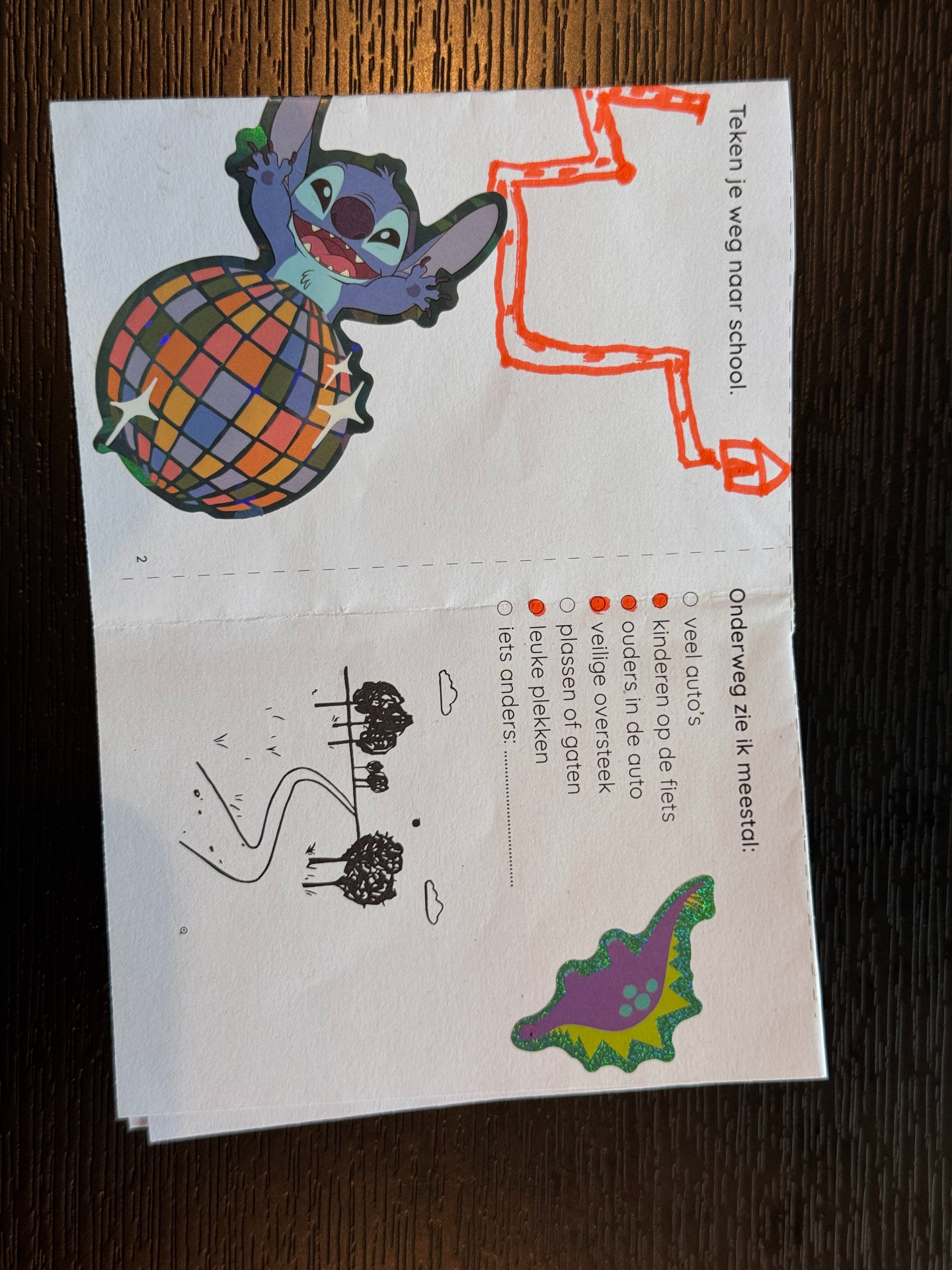
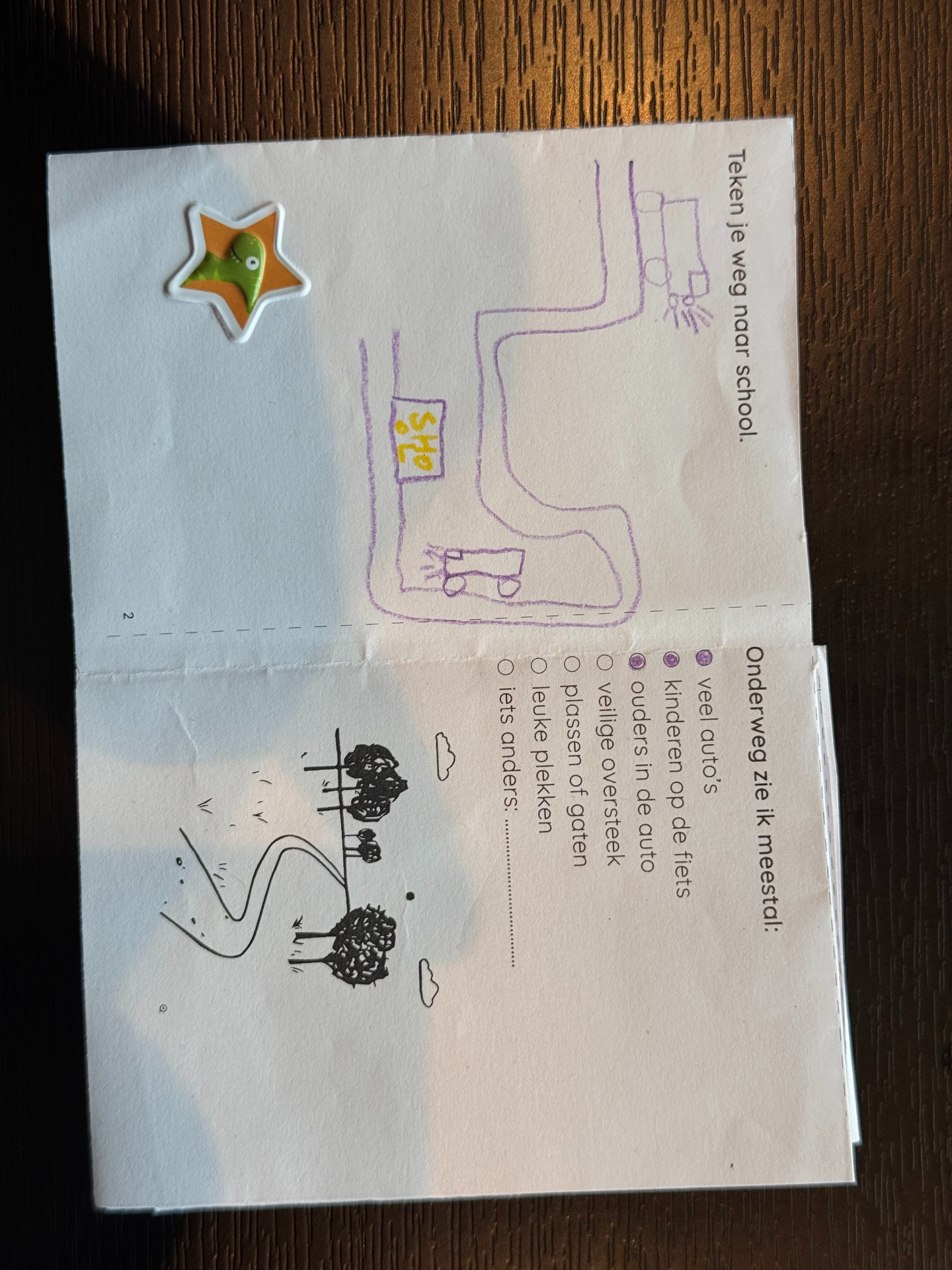
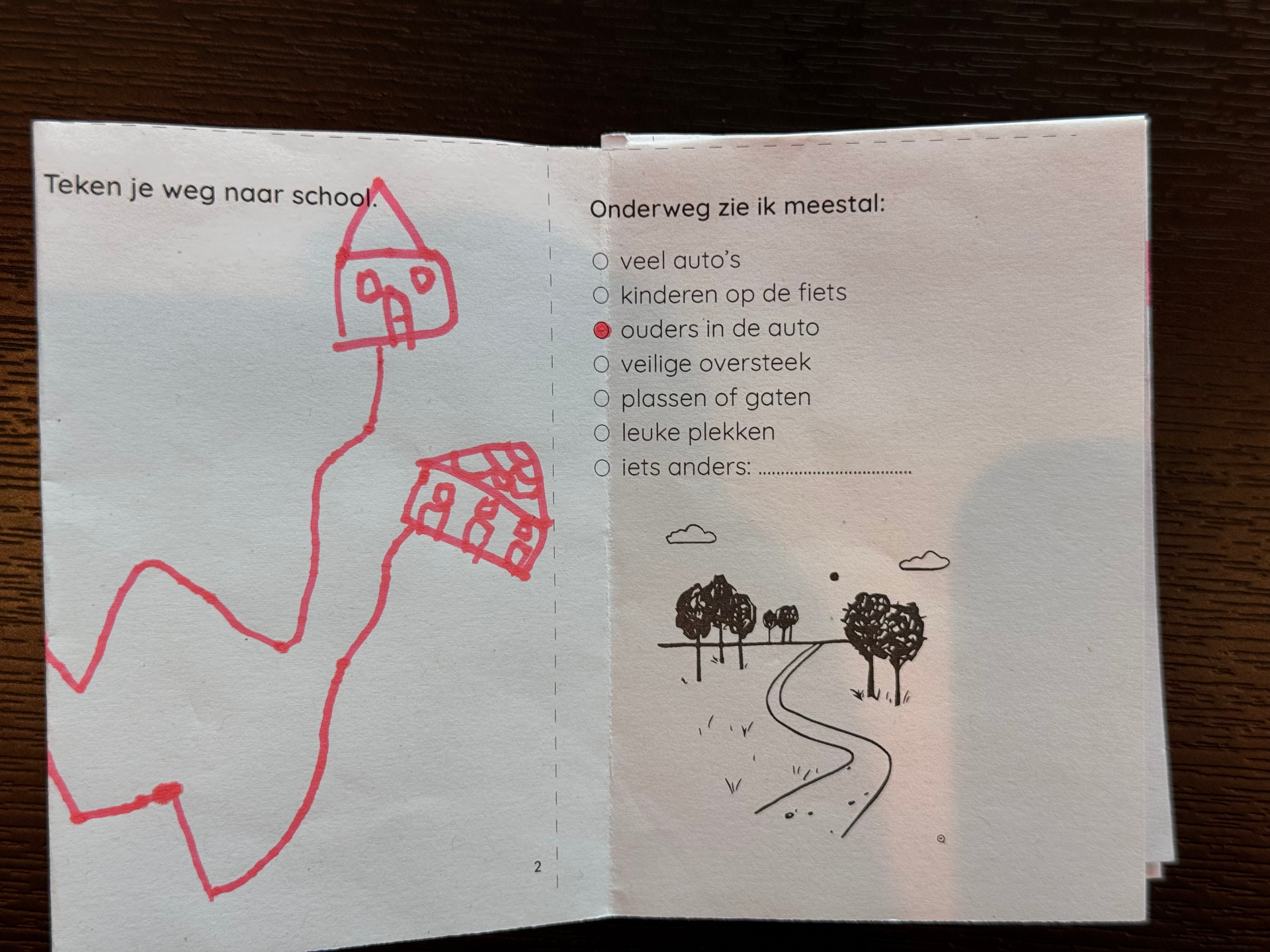
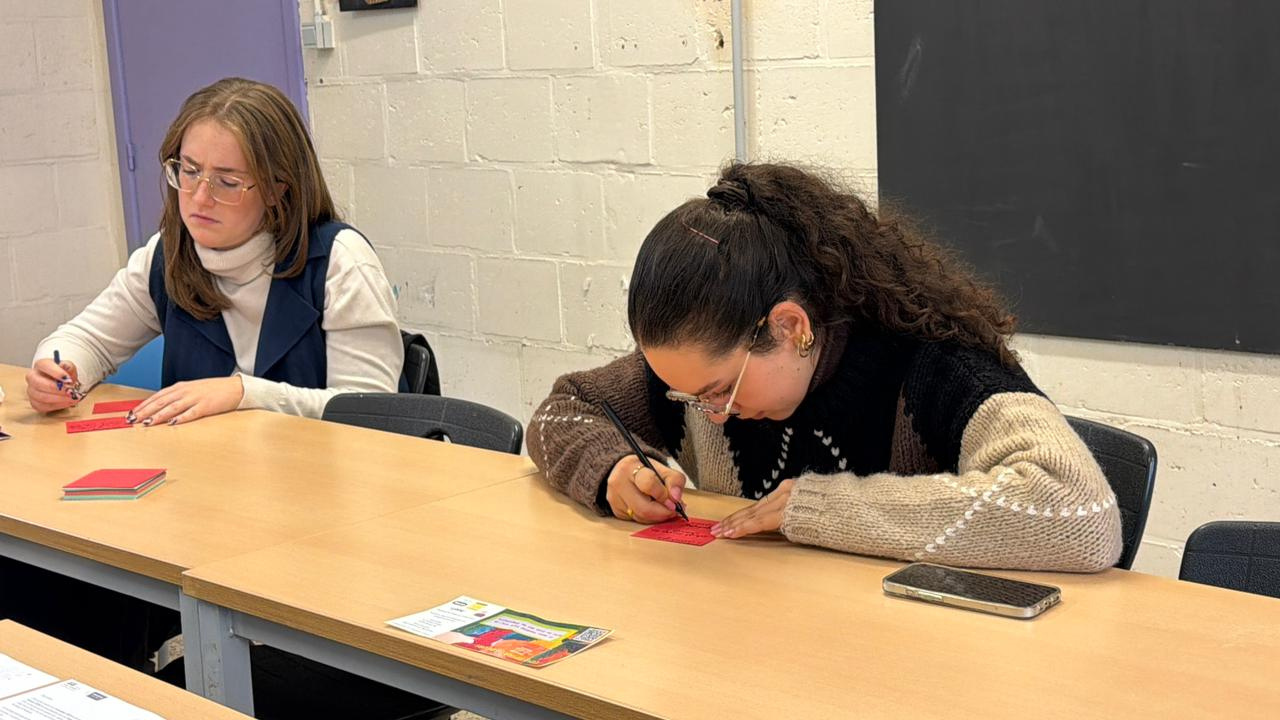
We gave each child a blank zine, a pile of stickers and coloured pens, and one invitation: show us your way to school.
What came back was a small archive of joy and hesitation. Some drew the exact turns from their door to the school gate. Others drew the friend they wait for, the puddle they always jump over, a disco ball for the fun bit, a shark for the scary crossing. A child's account of their commute turned out to be as legitimate a source of design knowledge as any traffic count.
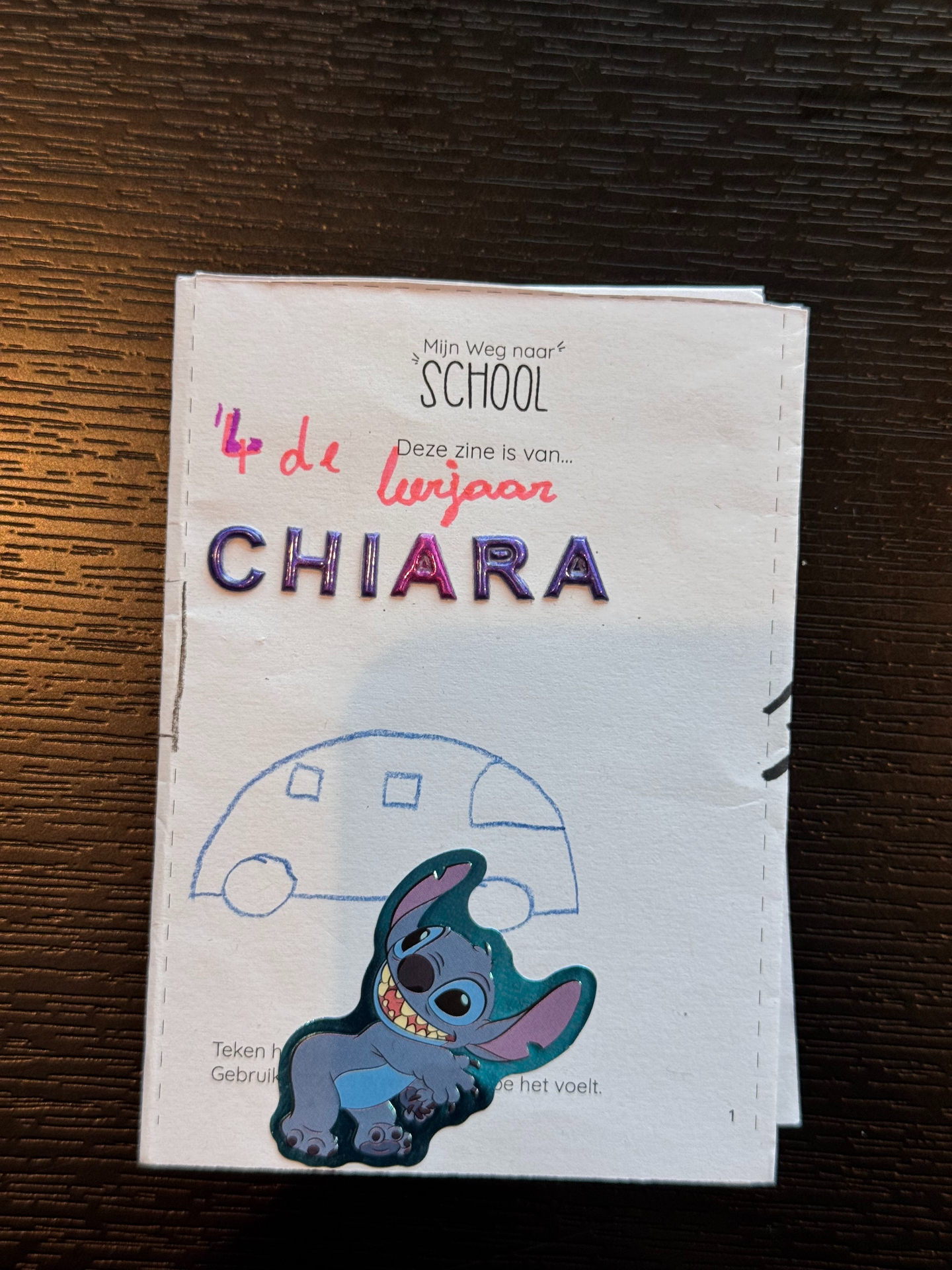
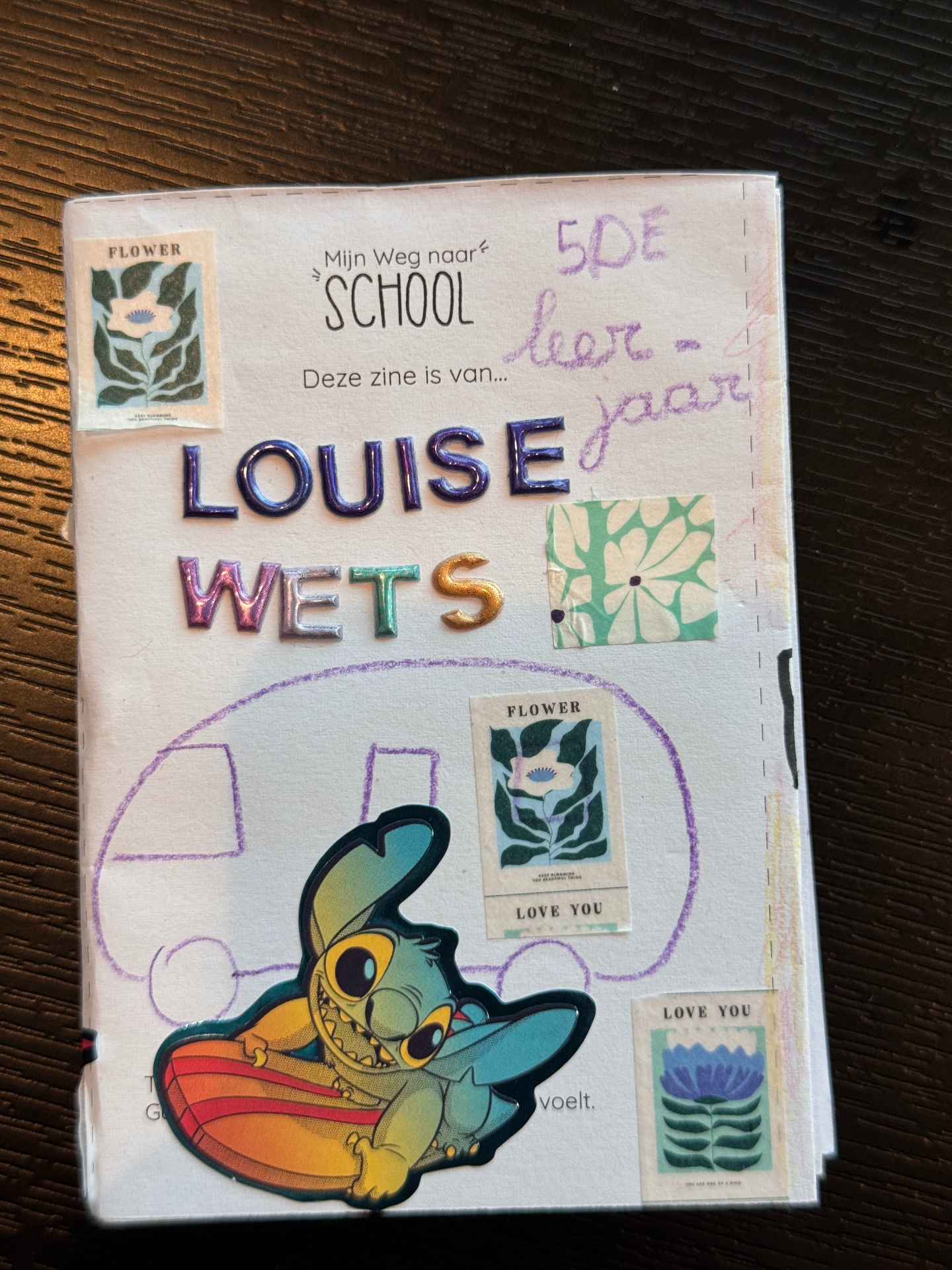
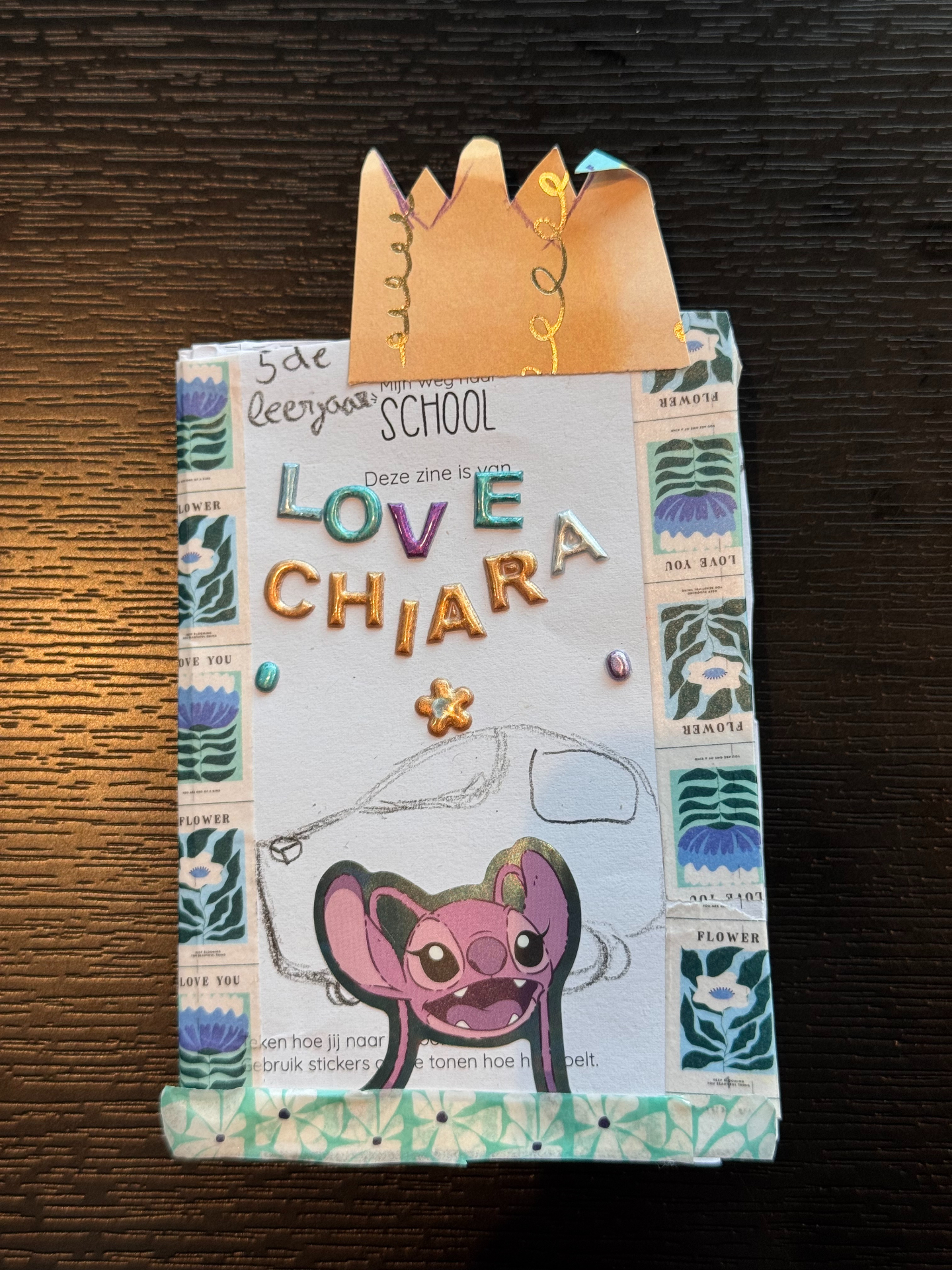
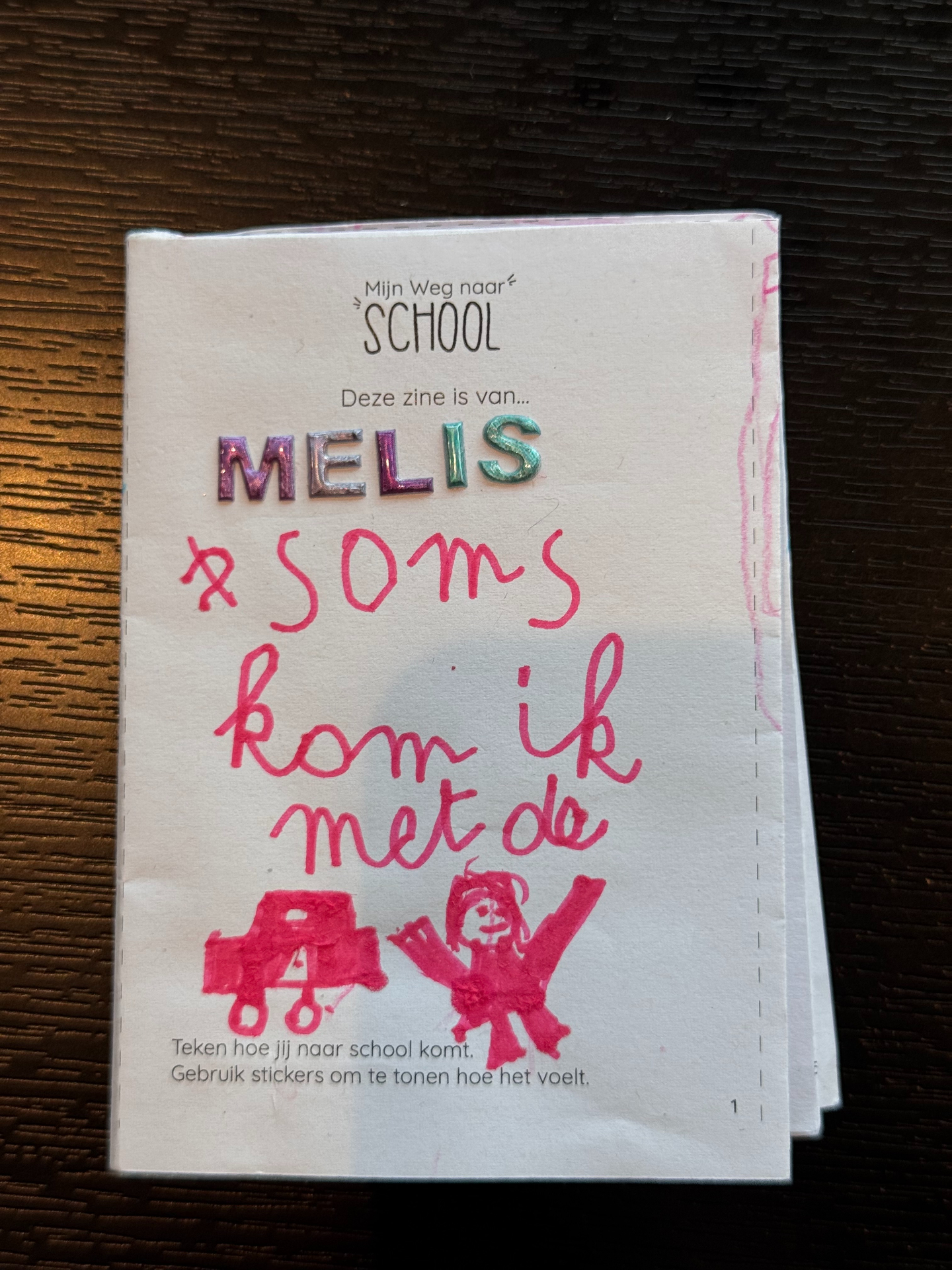
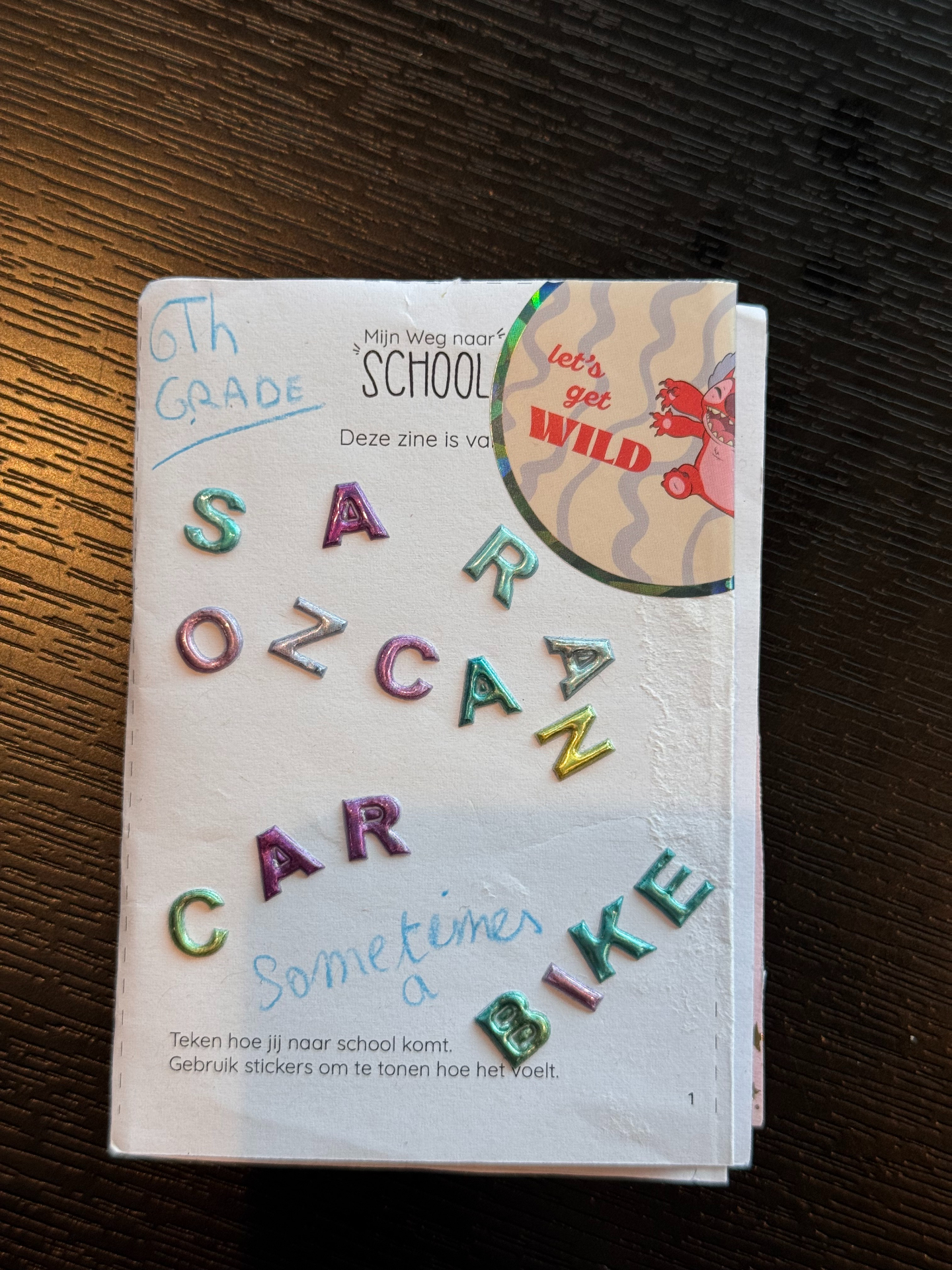
Inside, the children mapped their route to school and ticked what they see on the way: cars, other children on bikes, parents in cars, safe crossings, puddles, nice places. Then they added something of their own, a drawing, a sticker, a word, that turned the checklist into a small self-portrait of the journey.
Key insights
What surfaced was less about missing infrastructure and more about missing conversation and missing confidence.
01Parents
Safety is emotional before it is infrastructural.
 02
02Teachers
Recognised the value, lacked practical tools.
 03
03Children
The desire exists. The missing piece is confidence.
Mobility decisions are relational, not individual. That shifted our focus from products to interactions.
Process
The work was not linear, but it did follow a clear arc: from listening, to naming what mattered, to sketching many possibilities, to testing and trimming until the toolkit held its shape.
Research
Observation, interviews, school visits.
Insights
Patterns across parents, teachers, children.
Opportunity areas
Where a small nudge could shift routine.
Concepts
Sketching many possible responses.
Testing
Playtesting with children and families.
Iterations
Refining language, rules, illustrations.
Final toolkit
Board game, cards, storybook.
Design principles
Participation over persuasion
People change when they shape the solution.
Dialogue over instruction
Trust builds through conversation, not campaigns.
Play before policy
Play creates safe space to experiment.
Confidence before independence
Emotional readiness matters as much as cycling skill.
Design rationale
Before landing on a toolkit, we sketched other directions and asked what each would carry, and what it would quietly leave out.
Not an app
Would live on the parent's phone, in the same place as the calendar making them anxious. It also assumes everyone in the family has equal access.
Not posters
Instructional and one-directional. They tell, they do not invite conversation between parent and child.
Not a campaign
Persuasion frames families as the problem. We wanted to work with them, not at them.
A toolkit, because…
It sits on the kitchen table, the classroom floor, the family evening. It invites talking, playing and returning to it, which is how routines actually shift.
Board game for children (play surfaces what instruction cannot). Conversation cards for families (a low-pressure prompt beats a lecture). Storybook for bedtime and class (a story a child can carry into their own street).
Service concept
A toolkit rather than three separate products. Each piece supports a different stage of the family's journey and reinforces the others.
Children
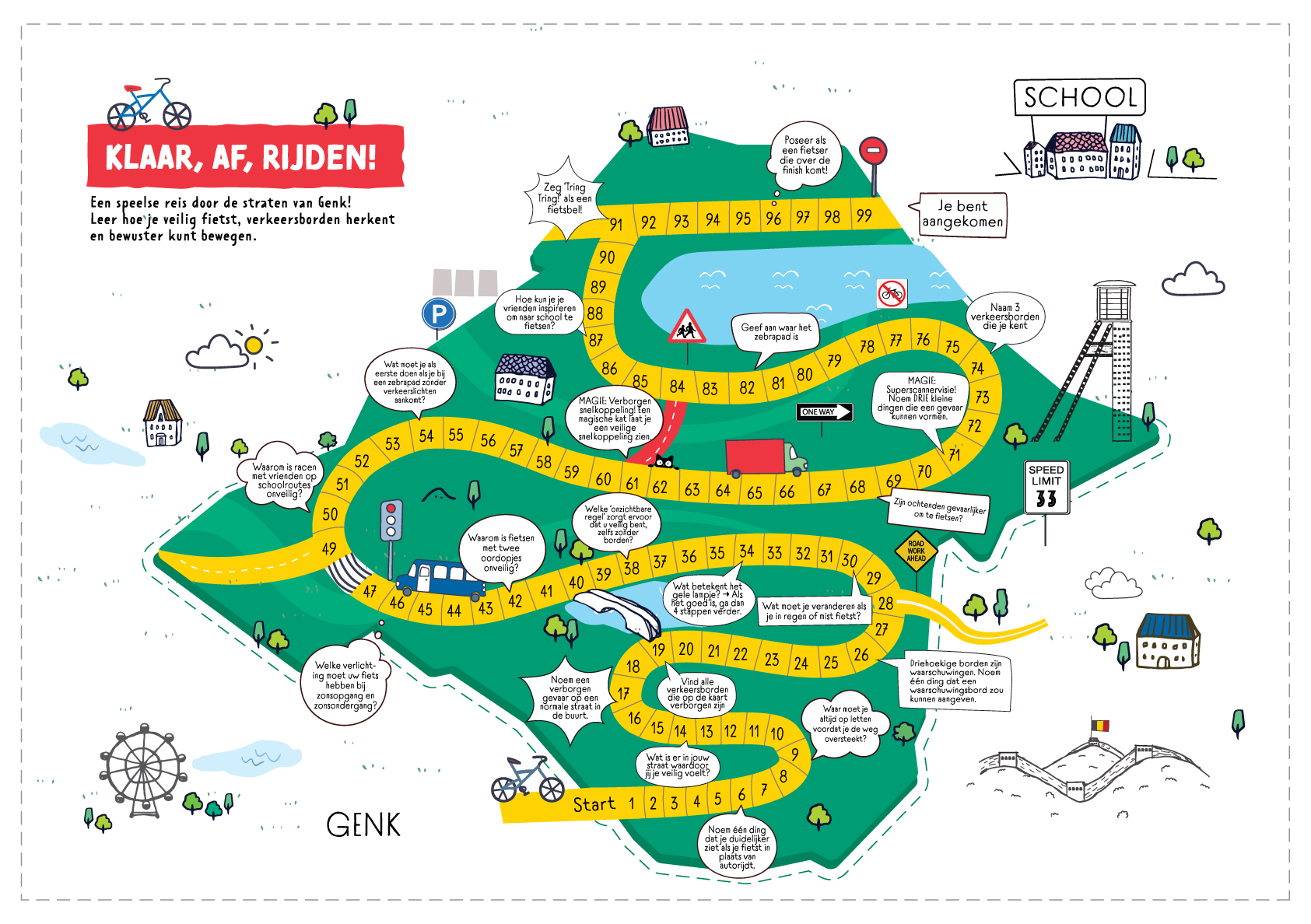
Educational board game
A playful ride through the streets of Genk. Prompts on the board come directly from what parents, teachers and children shared with us: hidden dangers on their street, what makes a route feel safe, why racing on a school route is unsafe. Their words become the questions children answer together, turning the school commute into a shared conversation instead of a solo instruction.
Parents & children
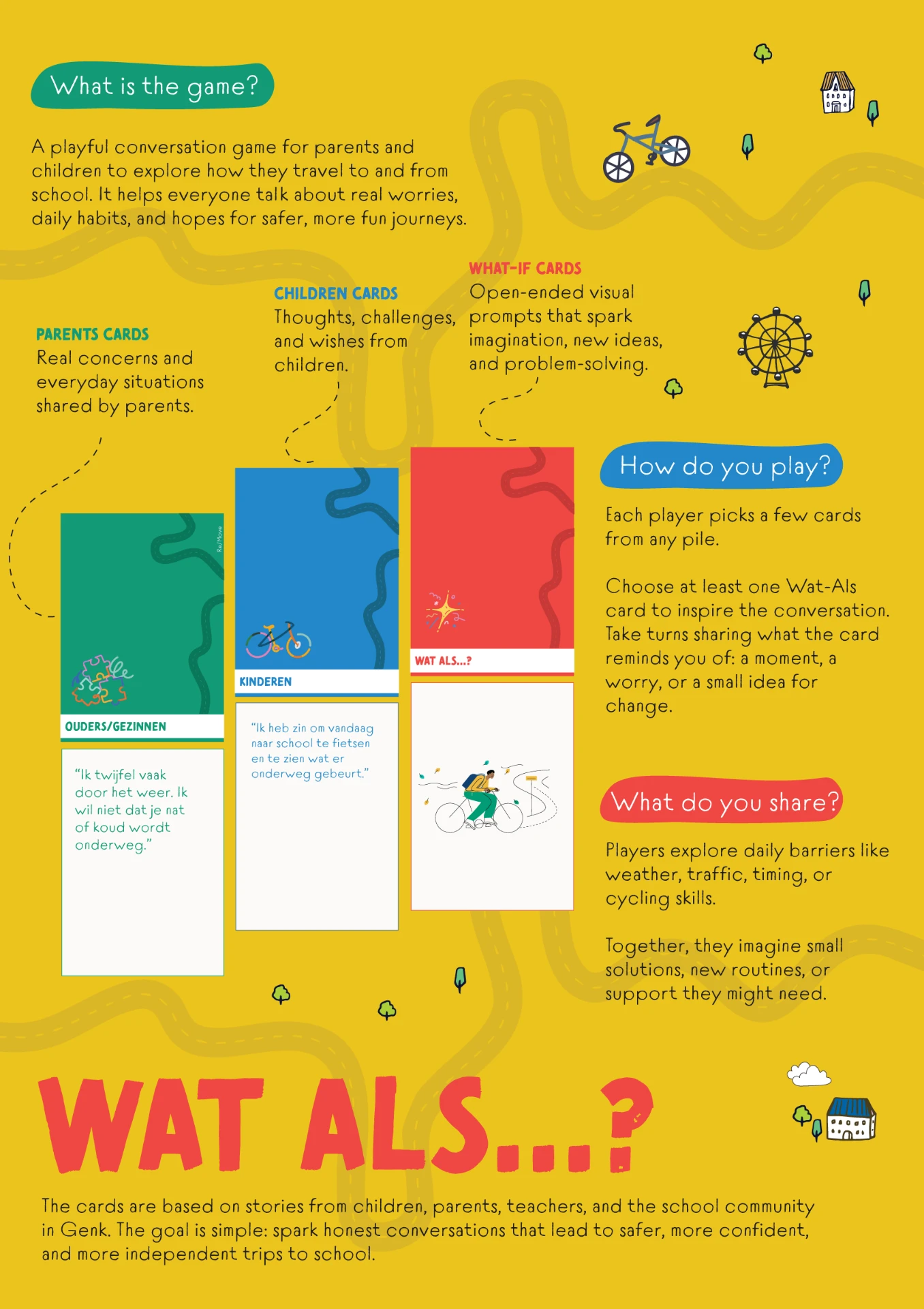
Conversation cards
A deck designed to sit on the kitchen table or the classroom floor. Each card carries a prompt, a wish or a worry that we heard during fieldwork: what makes you nervous about the ride, what would make you feel braver, who could you go with, what would you change about your street. The cards give families a low-pressure way to name fears, negotiate boundaries and imagine safer routines together, without turning the school commute into an argument.
Children
Storybook
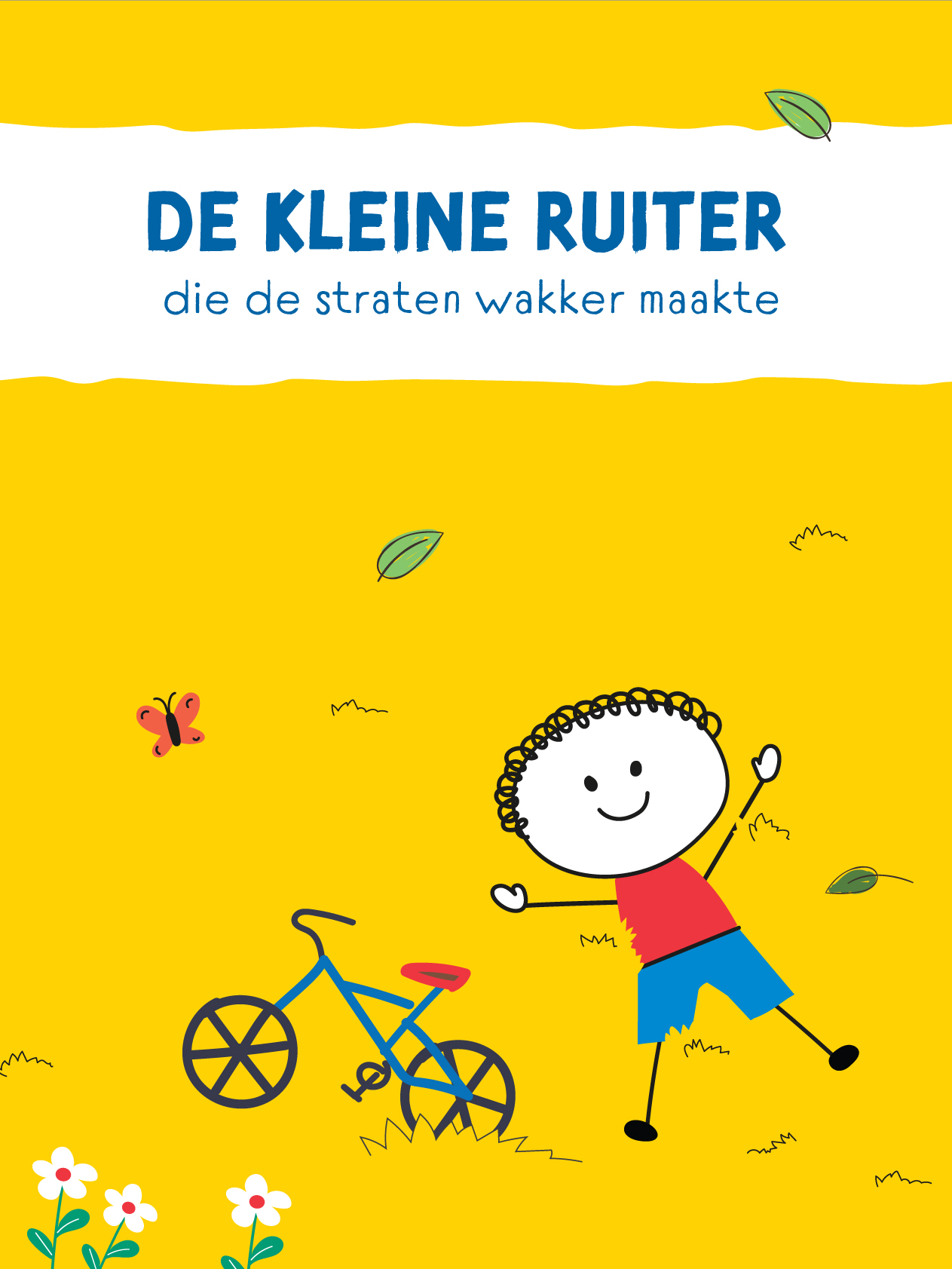
De Kleine Ruiter die de straten wakker maakte. A picture book about a small rider whose everyday trip to school slowly wakes up the streets around her, drivers, neighbours, other children, until the route feels like it belongs to her too. Written to be read at bedtime or in class, it normalises biking as ordinary and joyful, and gives children a character to hold onto when their own street feels a little too big.
Service journey
The toolkit does not replace infrastructure. It strengthens the social ground infrastructure needs to actually be used.
Parent concerns
Parents
Conversation
Family
Shared understanding
Family
Playful learning
Child
Road awareness
Child
Confidence
Child
Positive imagination
Child
Readiness
Family
Active school mobility
Community
Public exhibition
Our work was shown at Desire_Able City, a public exhibition at C-Mine museum in Genk held in collaboration with URBACT Europe. The show opened the research to citizens of Genk, inviting families, teachers, and city staff to engage with the toolkit and continue the conversation about child-friendly mobility.
Exhibition
Desire_Able City
Venue
C-Mine museum, Genk
Partner
URBACT Europe
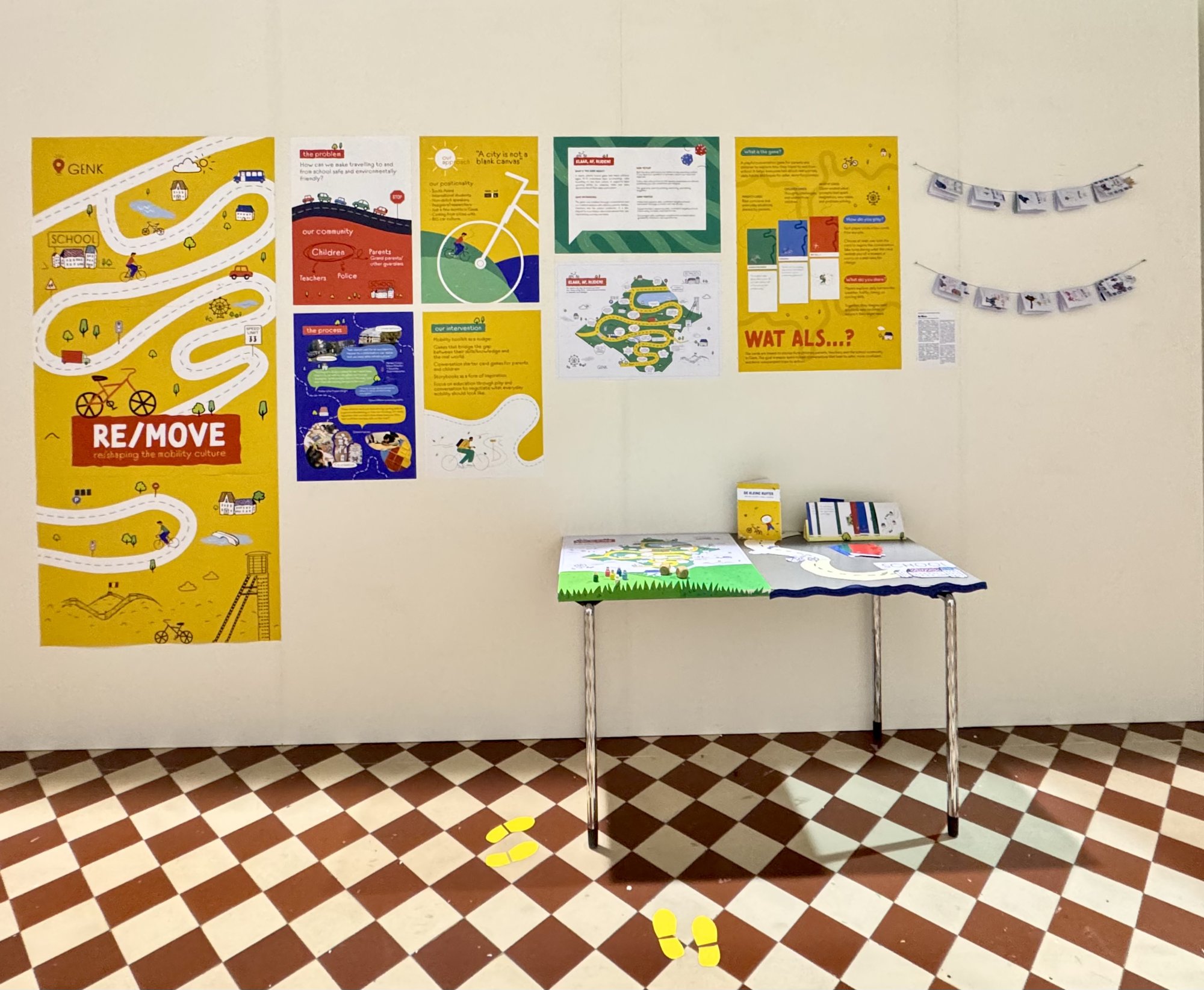
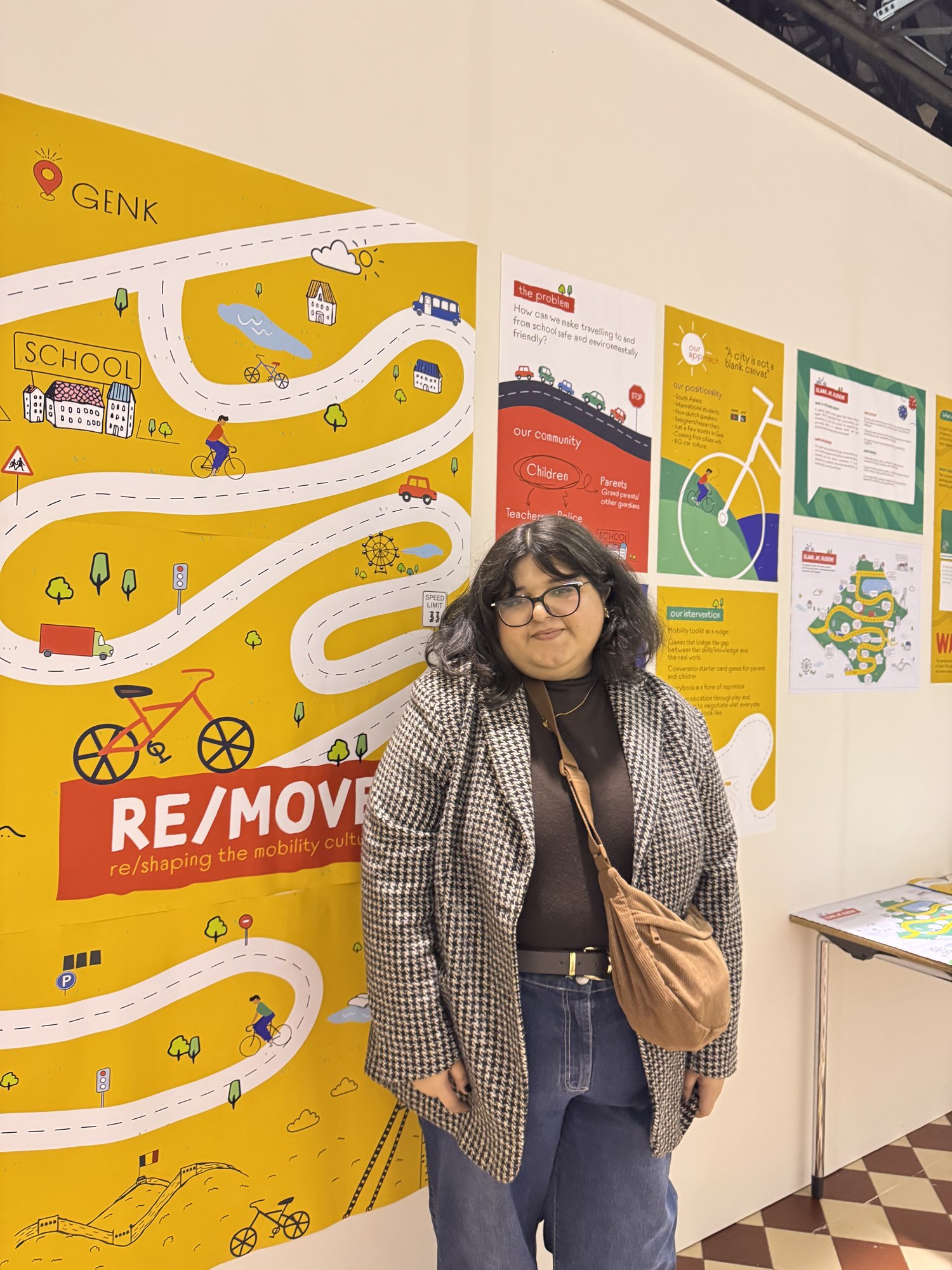
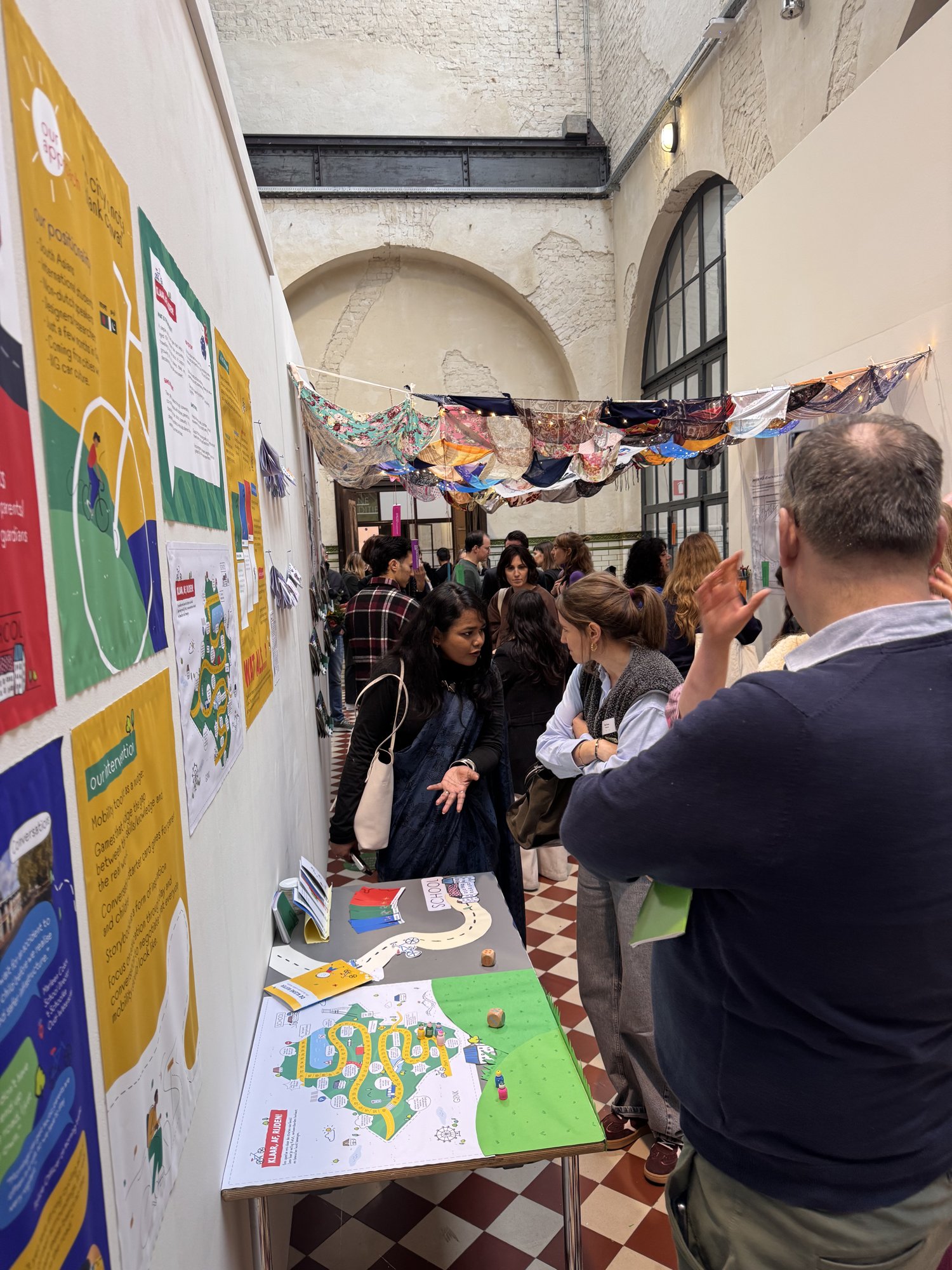
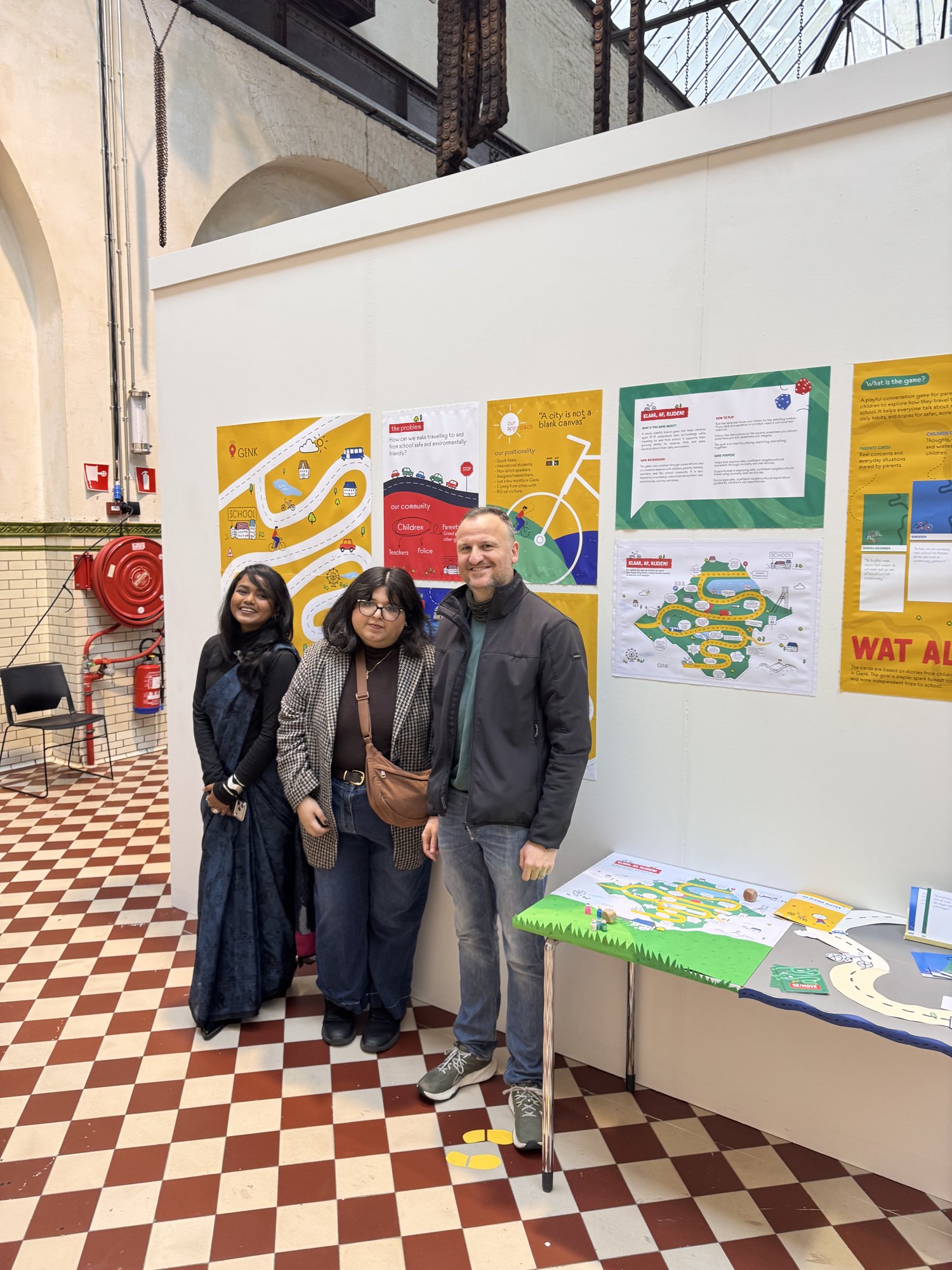
Desire_Able City at C-Mine, Genk, with URBACT Europe.
Impact
The project closed with a working prototype and a body of research the school and City Hall can carry forward.
Schools
't Schoolke Oud-Waterschei responded positively and asked to keep the toolkit for use with future cohorts.
Teachers
Teachers wanted to reuse the board game and cards in class, especially around road-safety weeks.
Children
Children engaged for longer than a typical classroom activity, and kept referring back to their own zines.
City Hall
The municipality is exploring how the toolkit could travel to other Genk schools as part of its child-friendly mobility work.
Public
Exhibited at Desire_Able City (C-Mine, Genk) with URBACT Europe, opening the work to families and city staff.
For the field
A working example of participatory service design applied to child mobility.
Reflection
what changed
Infrastructure is not the whole story.
I came in thinking safer streets would move the needle. The bigger barriers were invisible: trust, routine, and how families perceive risk together.
what changed
Design is a relational act.
A service is only ever as strong as the relationships holding it up. That reframed how I judge my own work.
what I'd improve
More time with fewer people.
I would spend longer with a smaller group of families and revisit them across weeks, so the toolkit could evolve from lived use rather than a single round of testing.
what I'd improve
Bring the city into the room earlier.
Involving City Hall in co-design sessions, not just briefings, would have made the handover feel less like a delivery and more like a shared next step.