Immersive project · Sint Gerardus · Belgium · 2025
CareCards.
A small set of cards and icons to help PE teachers keep track of what each child needs, mid-lesson, with wet hands and no time to spare.
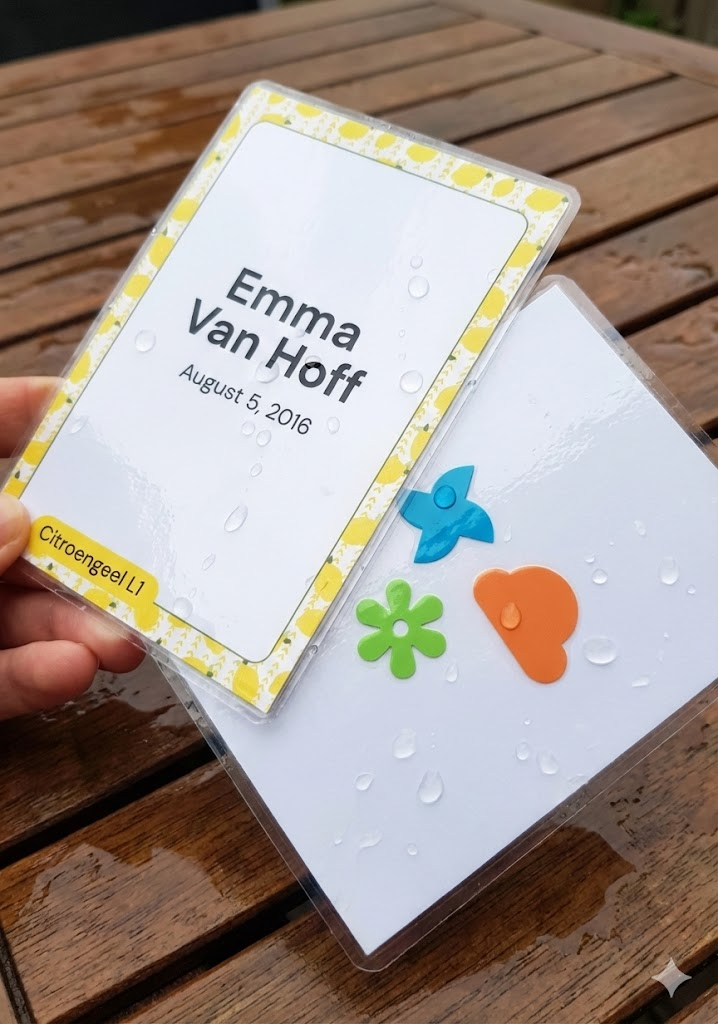
A final CareCard in use, laminated to survive the pool, the gym floor, a school year.
- Role
- Researcher & co-designer
- Context
- Designing for One · Sint Gerardus, Belgium
- With
- Camila Solis · PE teachers Nele & Guy
- Format
- Tactile card deck + digital companion proposal
- Duration
- Two weeks
- Year
- 2025
Brief
We weren't given a brief. We were told: go in, shadow, and find the problem yourself.
Sint Gerardus is a Belgian school for children with a wide mix of needs: physical, cognitive, sensory, communicative. Classes are small but mixed, and every lesson has caregivers and therapists floating in and out.
For the Designing for One module, Camila and I spent two weeks inside the school with one task: watch, listen, and let a real challenge emerge.
Nele and Guy
Two PE teachers, eighty-plus students, and most of it stored in their heads.
Nele has been at Sint Gerardus for eight years. Guy has been there for thirty-five. Together they run PE for eleven classes, ages four to twelve, across a pool, a gym, and whatever outdoor space they can claim.
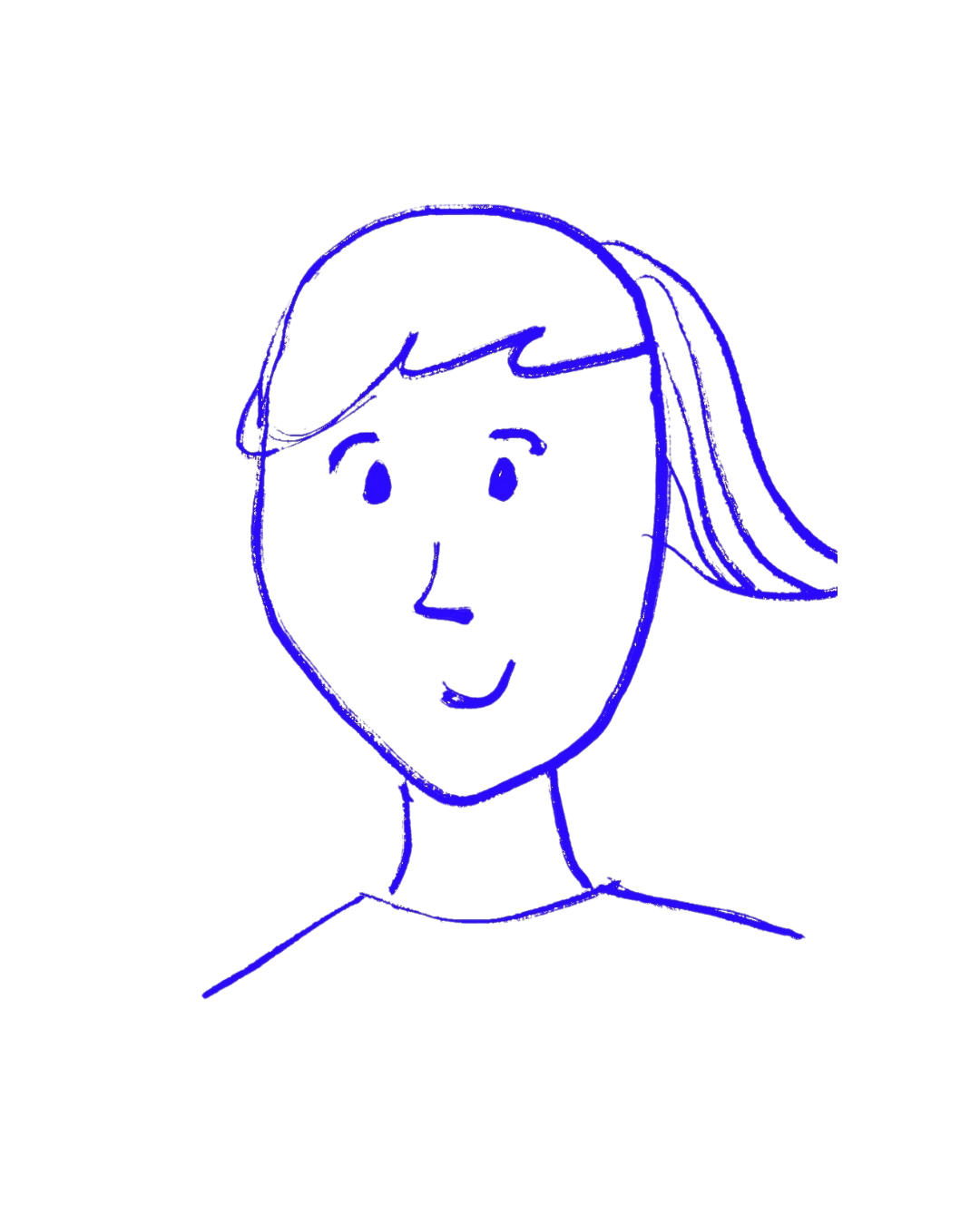
Nele
Eight years in. She knows the water, the routines, and which child needs a hand before they ask.
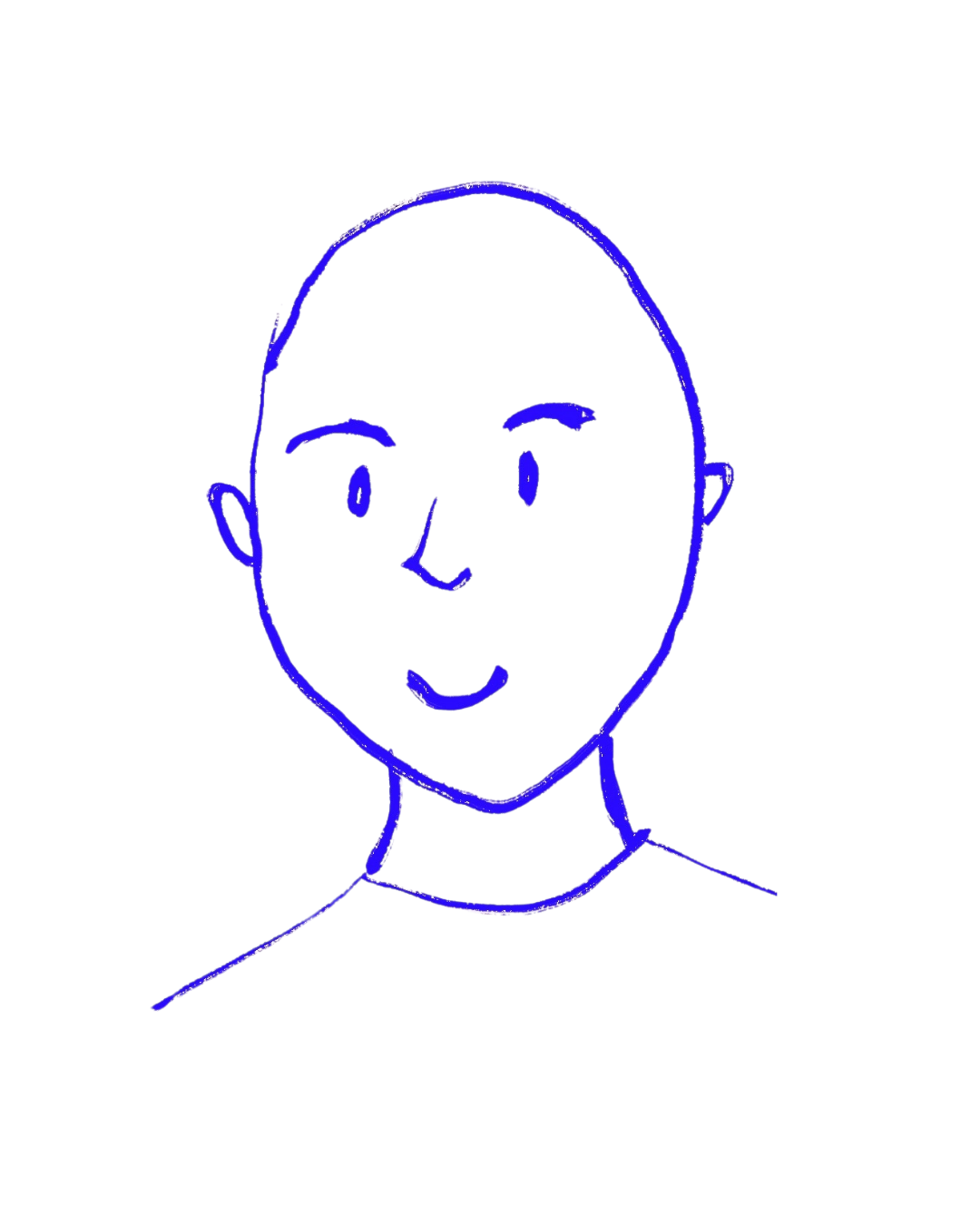
Guy
Thirty-five years in. He carries the long memory of the school, lesson by lesson.
That memory turned out to be fragile. When Guy broke his arm and was away for six months, a replacement walked in with no way to catch up on eighty children.
The challenge
Eighty-plus students, eleven classes, and a system that lives in two people's heads.
PE at Sint Gerardus is one constant adjustment. Every lesson means changing the game, watching for triggers, and remembering small but vital things: medication that can't be late, how to hold a child so they aren't startled, ear sensitivities that flare up in the water, hygiene details that slip in a rush.
None of this was written anywhere reachable mid-lesson. The school portal had a PDF per child, but it was too dense to open while a class was waiting. Most of the time the system was just memory, plus quick questions shouted across corridors. When Guy was away for six months, that memory system collapsed, and Nele's workload doubled.
Approach
We made the gym and pool our studio, and listened before we drew a single icon.
Before sketching anything, we asked Nele and Guy what they actually needed to know about a child in the first thirty seconds of a lesson.
The answer was always small: what the child loves, what they don't, what to remember, how they communicate. The card had to be a nudge, not another task. Nothing complicated. Nothing that added steps to an already packed schedule.
The setting
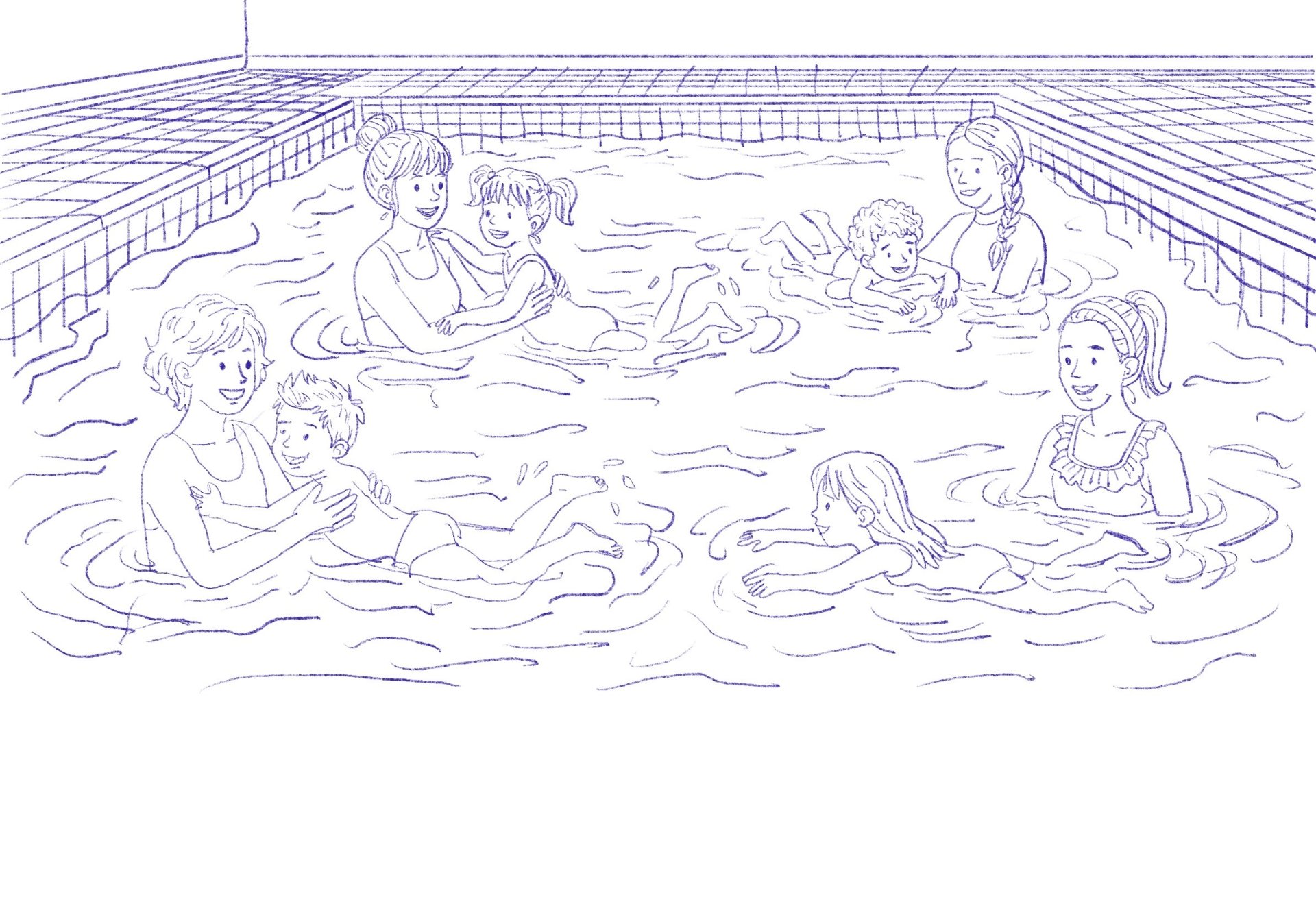
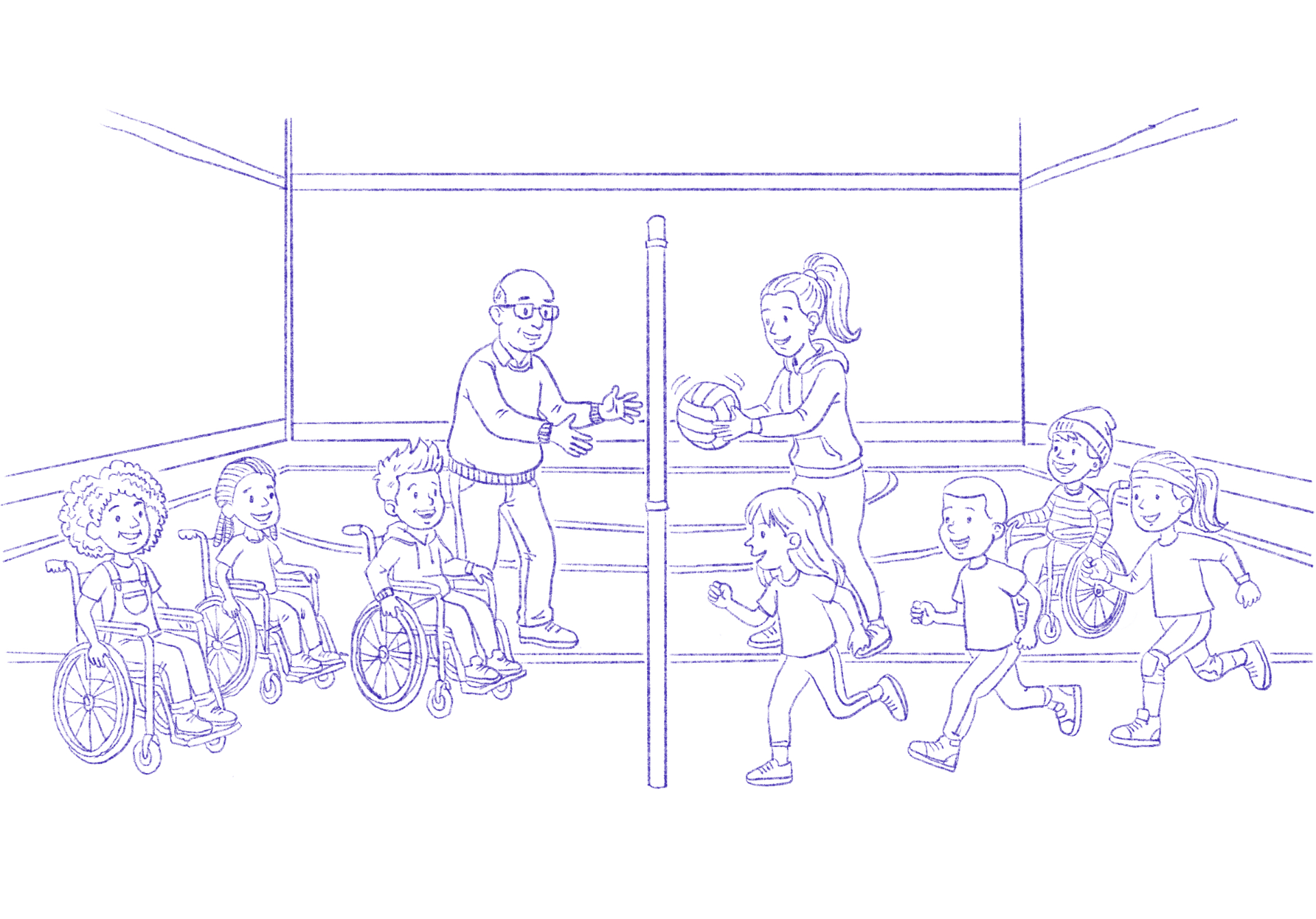
A pool, a gym, eighty-plus children, and not much time to check a screen.
I sketched the scenes as we went: quick drawings from the field that kept the children at the centre of every decision.
Listening
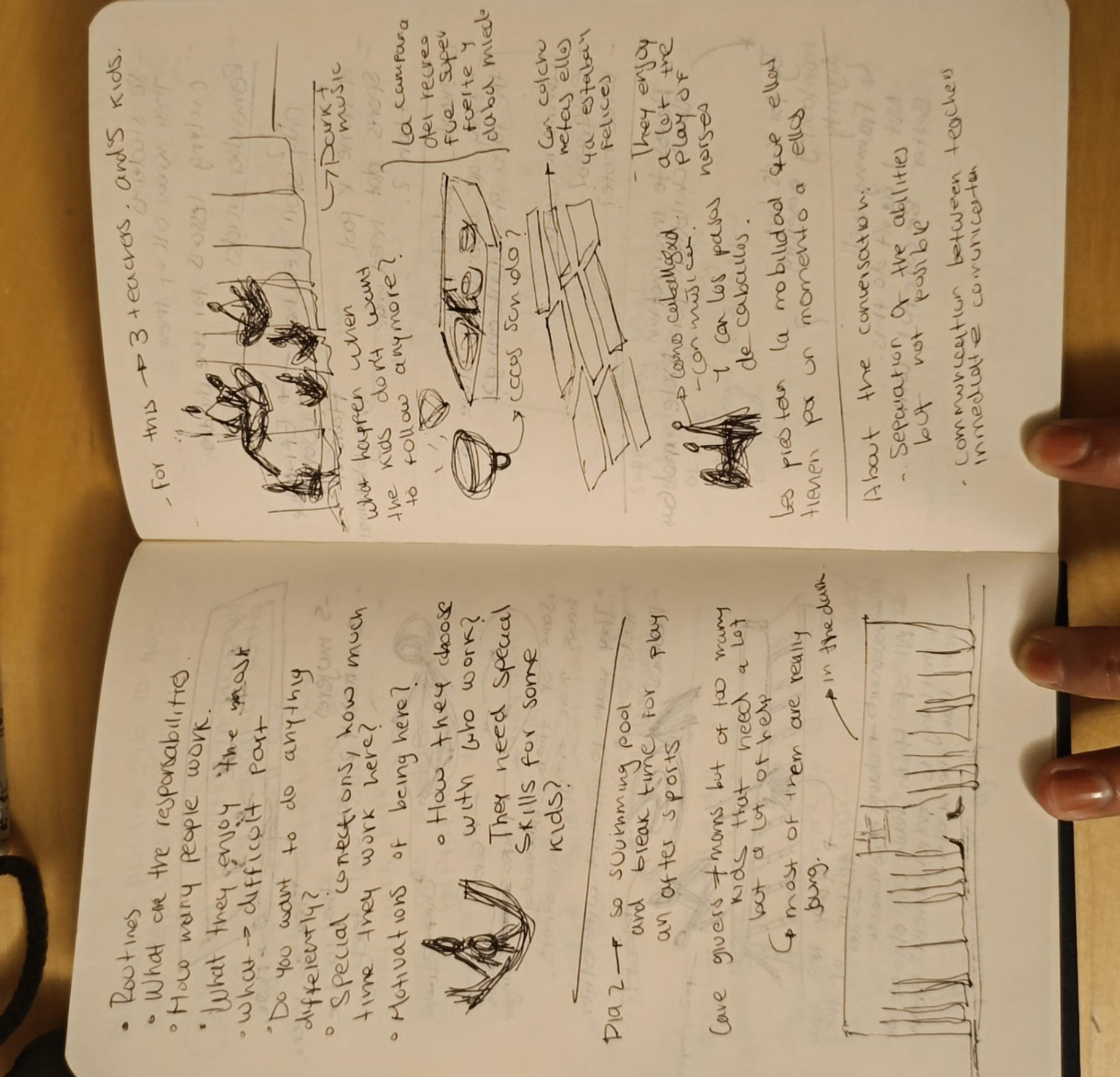
The needs they were holding in their heads.
Nele and Guy described the same small details again and again, not as data, but as things they worried about forgetting.
Behind all of it sat a quieter question: how do we design something that fits their routine without giving them more work, and keeps working when a teacher is away or eventually retires?
Prototype
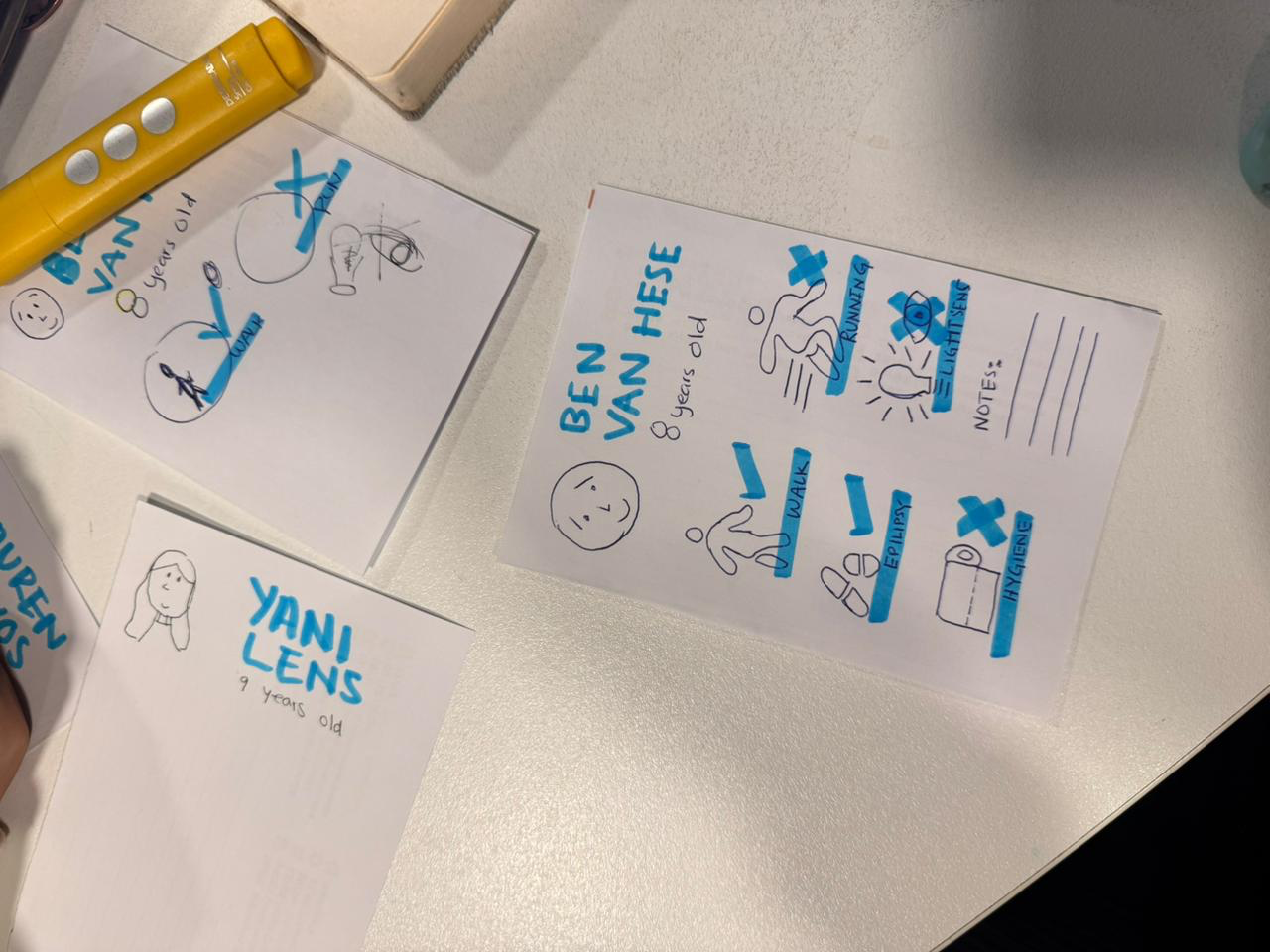
Paper first, marked up with the teachers right there.
The first cards were drawn by hand and tested during real lessons. Blue tape marked what worked. We kept iterating with Nele and Guy until a card could be read in under five seconds.
Iterations
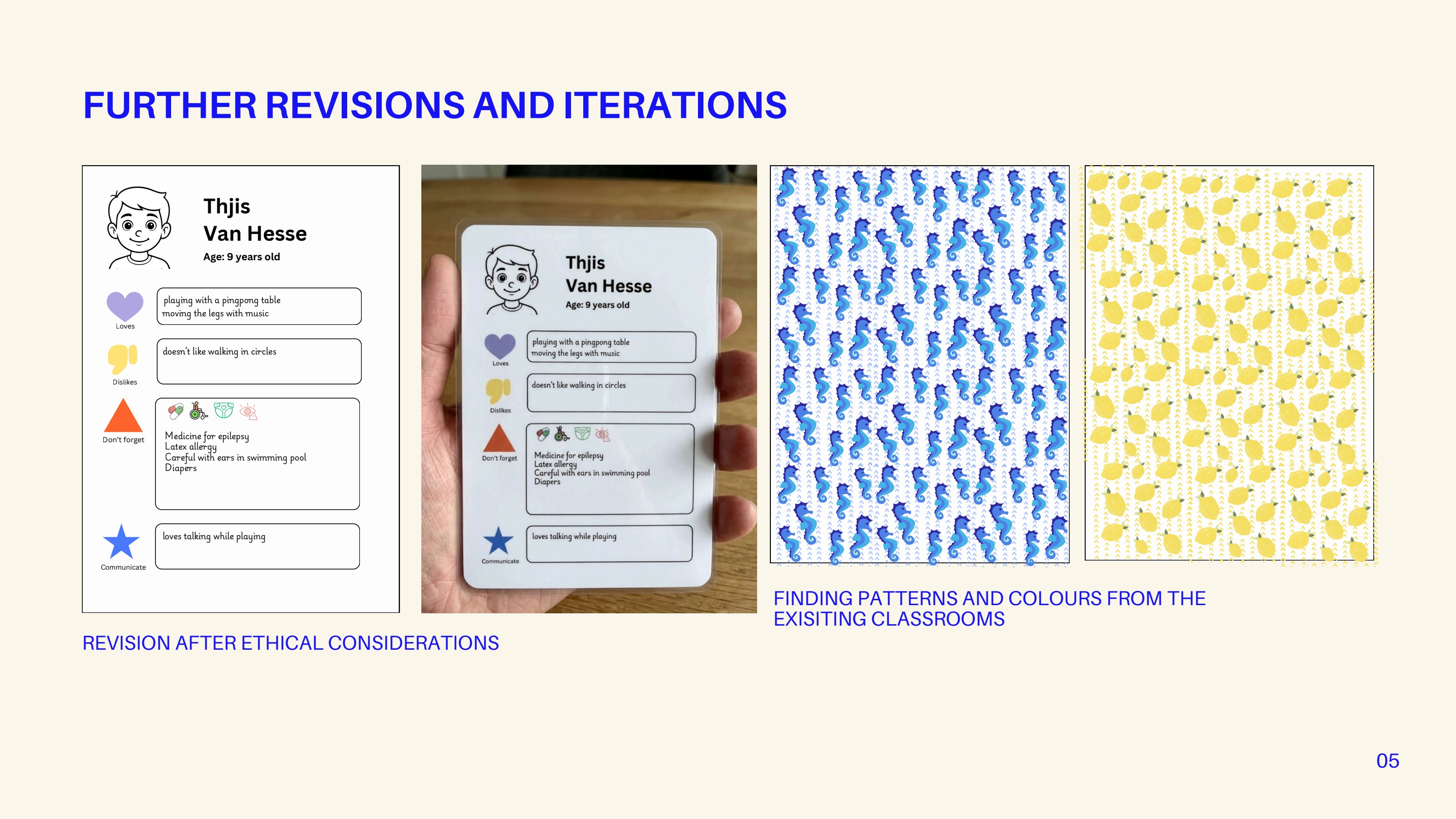
From clinical categories to a softer shape language.
The first card looked like a medical form: diagnoses, equipment, categories. It worked as a reference, but on the page each child became a list of conditions.
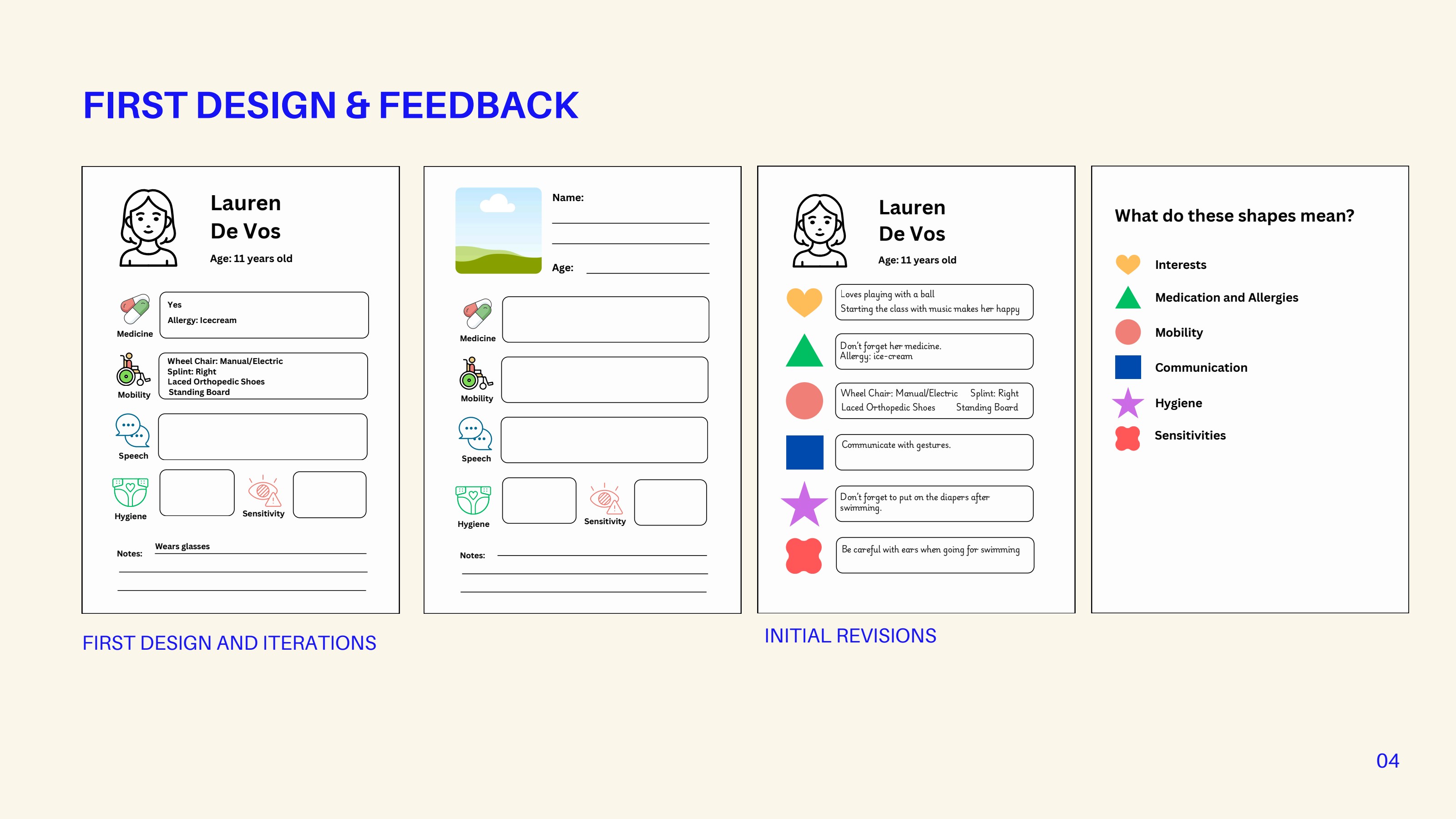
In the next round we replaced the categories with shapes, and borrowed colours and patterns from the classroom walls so each class kept its own identity inside the deck.
Mid-project reflection
What does it mean to draw a child as a set of icons?
Between the first and second iteration we had to ask a harder question: by reducing each child to symbols, were we helping the teachers, or quietly reducing the children to their abilities?
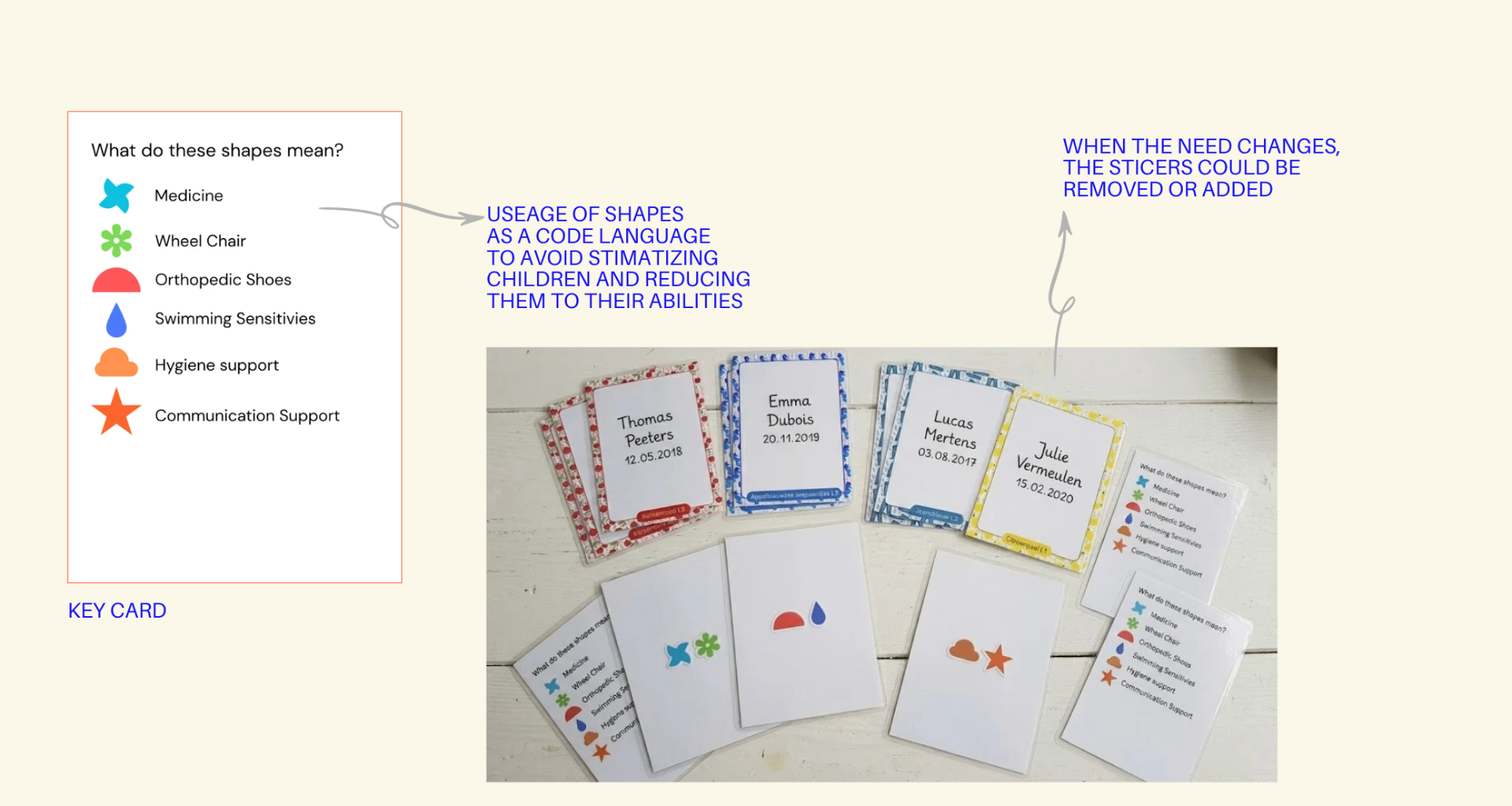
Our response was a code language rather than a label system. The shapes abstract the information enough that a card set down in a noisy gym doesn't announce a diagnosis to the whole room.
It's a tension we couldn't fully resolve in two weeks. The deck is only as careful as the teacher reading it.
Six shapes
A small code, so a card doesn't announce a diagnosis.
Six shapes carry the essentials. Teachers read them against a key card, and stickers can be added or removed as a child's needs change.
Medicine
Wheelchair
Orthopedic shoes
Swimming sensitivities
Hygiene support
Communication support






The final deck
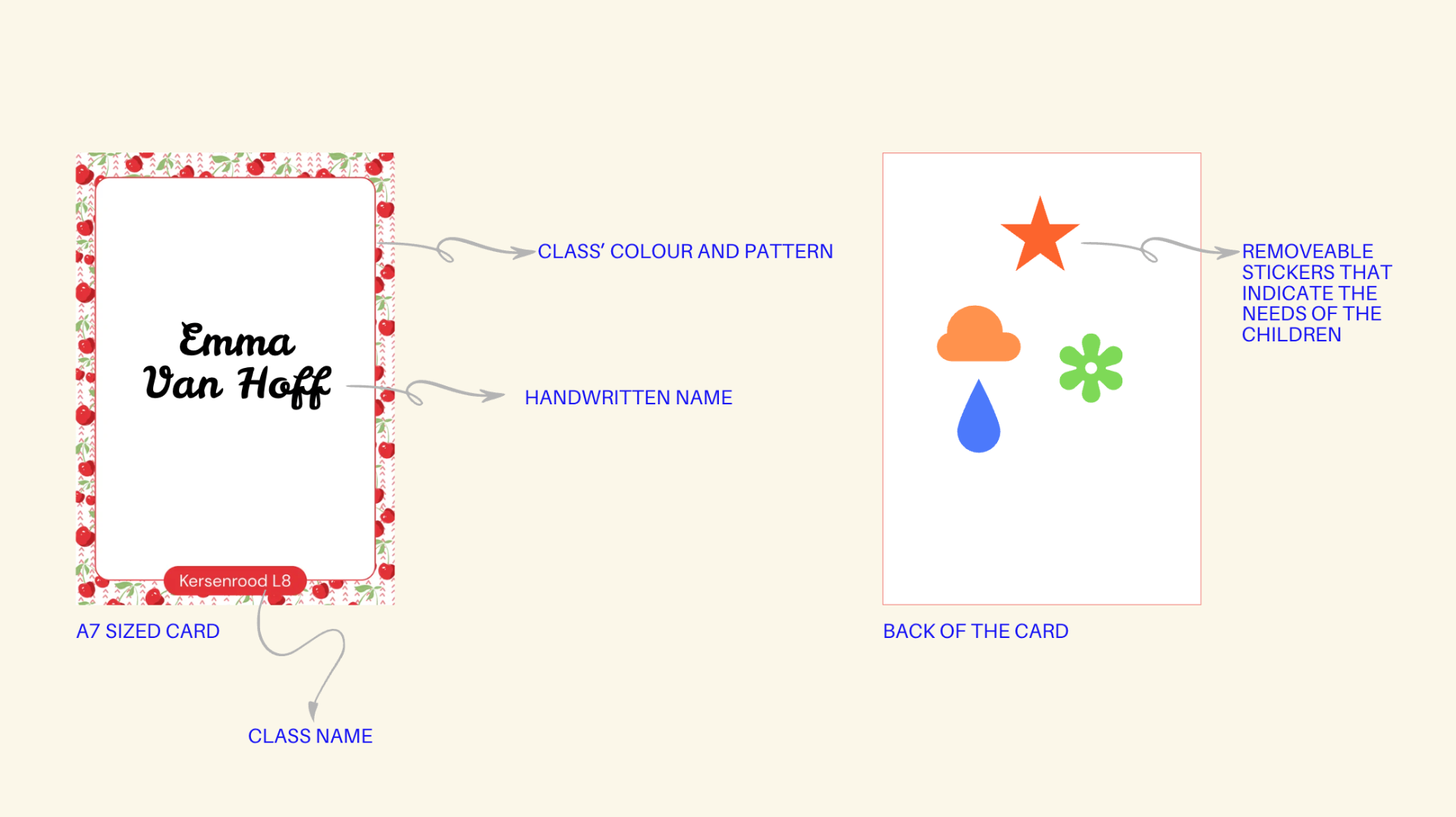
An A7 card, a shape language, a class-coloured border.
Each card is A7-sized, with the child's name handwritten in the centre and the class name and colour band at the bottom. The back carries removable stickers, so the card updates as needs change.
The deck and the detail
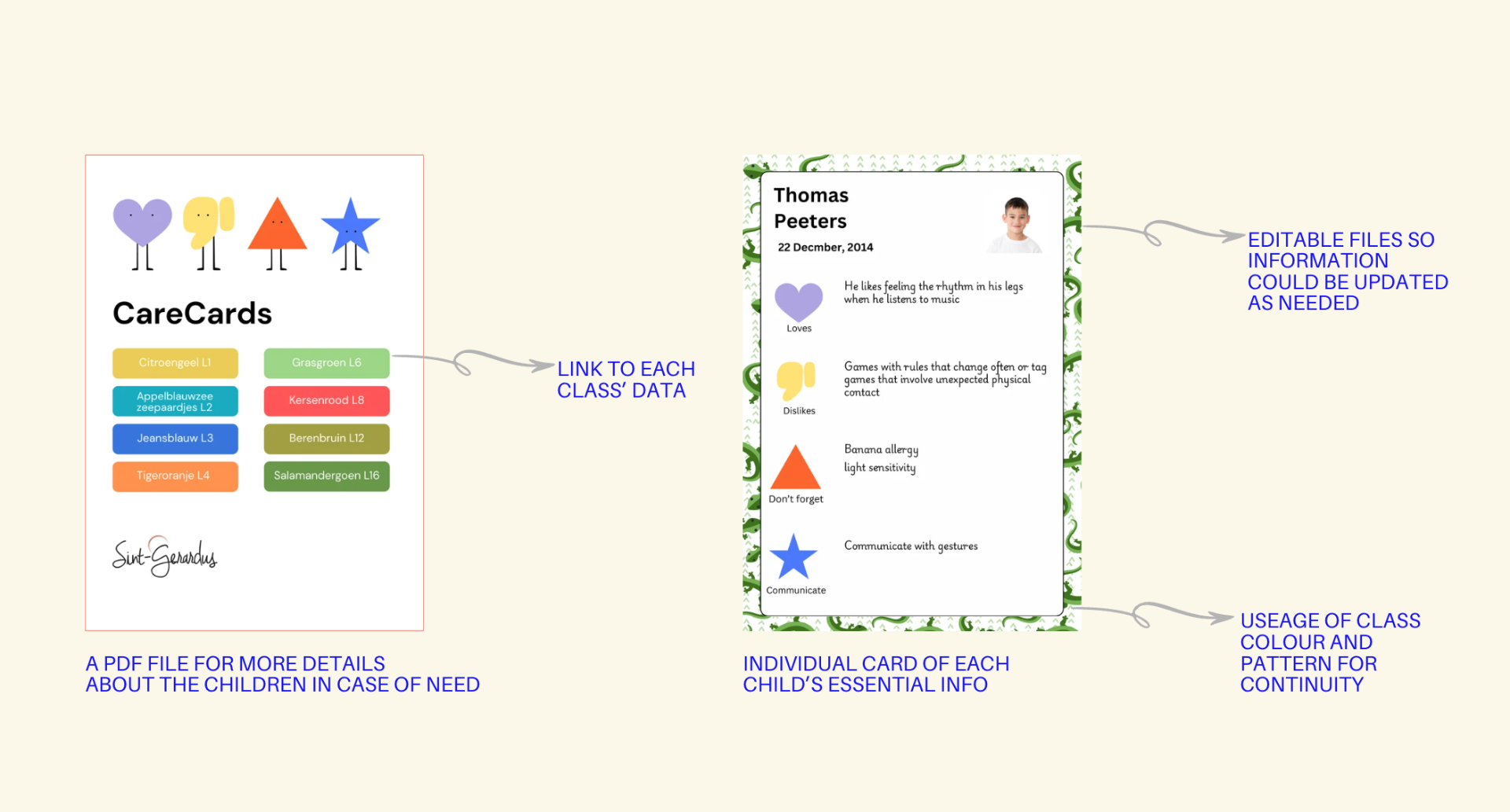
A class index, a card, a PDF for when more is needed.
The deck is organised by class, each with its own colour and pattern. Inside each card: name, date of birth, photo, and the shapes. A linked PDF holds longer notes for when a teacher needs more than a glance.
Digital companion
A proposal: keep the deck alive between lessons.
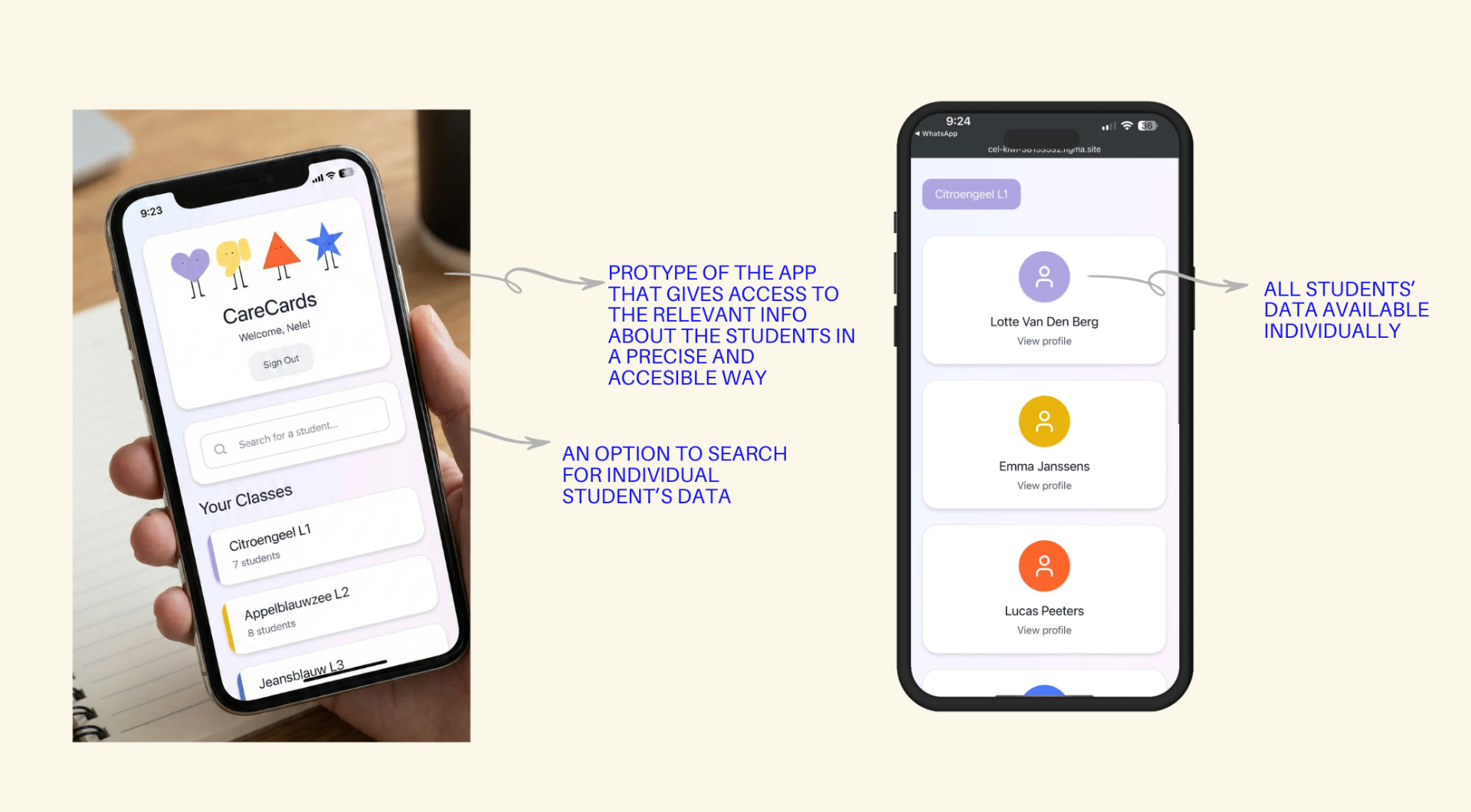
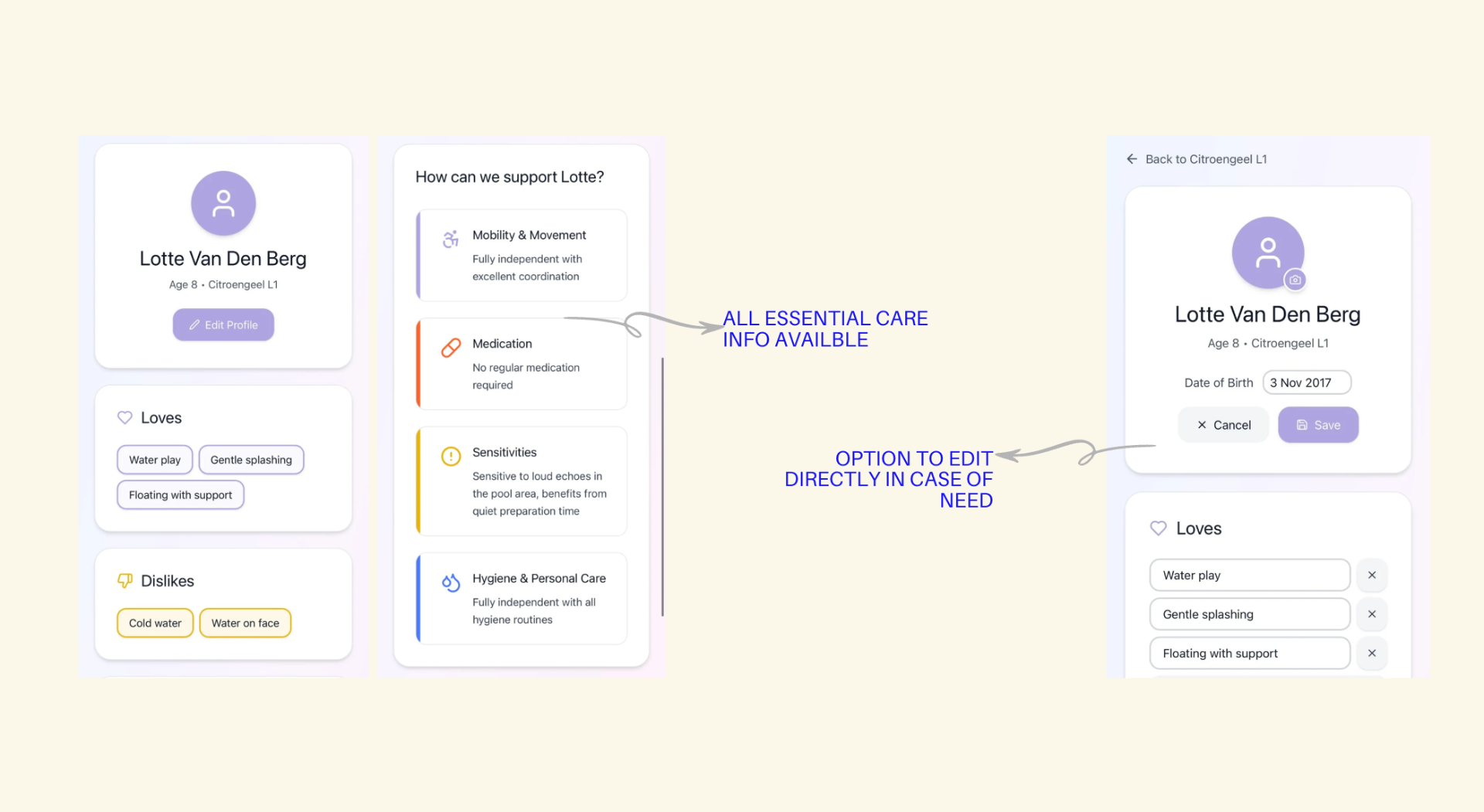
Cards drift out of date the moment a medication changes or a new student arrives. We proposed a lightweight app: class lists, search, quick edits by caregivers, so a teacher can reprint one card instead of rebuilding the whole deck.
Process notes
How we got from watching lessons to handing over a deck.
- 01
Arriving at Sint Gerardus
Two weeks inside PE classes: pool, gym, outdoor games. Eighty-plus students, and a hundred small decisions every session.
- 02
Listening to Nele and Guy
Hours of conversation about what they actually need to know in the first thirty seconds of a lesson, and why none of it lives on paper.
- 03
From notebook to shapes
Scattered notes turned into a small visual code: readable at a glance, in noise, in water, with wet hands.
- 04
Paper, then plastic
Cards drawn by hand with the teachers in the room, then laminated so they survive the pool and a full school year.
- 05
A digital companion, proposed
Class lists, search, quick edits by caregivers, so the deck stays current without becoming another admin task.
Outcome
A small deck doing a lot of quiet work.
CareCards left Sint Gerardus as a usable artefact: a laminated, class-coloured deck the teachers can carry into the pool, the gym, the playground. The companion app stays a proposal, the next step rather than the finished thing.
Reflection
Two weeks was a beginning, not an ending.
In two weeks we could shadow, listen, prototype, and hand over a working deck. That's a short window for a school that runs on relationships built over years.
I'd like to return for longer: observe across a full term, prototype with more students, and test the companion app with caregivers. The artefact is small on purpose; the practice around it is what would make it useful.